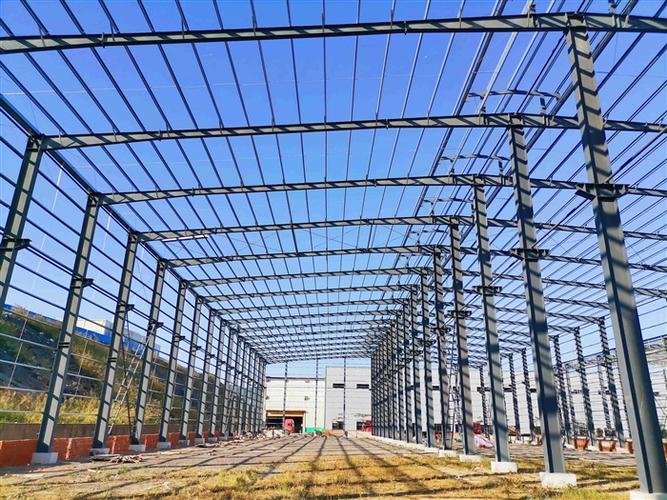
Sourcing an Industrial Steel Building Exporter
The Ultimate Procurement Guide: Partnering with an Industrial Steel Building Exporter
Procuring a heavy industrial facility across international borders requires far more than comparing square-meter prices. When industrial investors, EPC contractors, and mining corporations source structural steel from China, they are looking for scalable capacity, engineering precision, and logistics reliability.
Successfully executing these cross-border mega-projects hinges on partnering with a genuine industrial steel building exporter—a company that integrates structural engineering, heavy fabrication, and international shipping under one roof.
This comprehensive guide details exactly how to evaluate an exporter, understand the engineering standards required for global compliance, and manage the logistical complexities of delivering thousands of tons of steel to your job site safely and on schedule.
Why Experience Matters When Choosing an Industrial Steel Building Exporter
The lowest FOB quotation rarely results in the lowest landed project cost. Inexperienced suppliers routinely underestimate the complexities of international trade, leading to severe downstream consequences.
When structural detailing is flawed, or components are damaged during ocean transit due to poor container packing, site contractors are forced to execute emergency field modifications. Field welding destroys factory anti-corrosion coatings, delays construction schedules, and incurs astronomical local labor costs.
An experienced industrial steel building exporter anticipates these bottlenecks. They utilize 3D detailing software to eliminate spatial clashes, engineer structural connections entirely for bolted assembly, and design custom packing pallets that protect steel during violent ocean transit. Total project success depends on this holistic risk management.
Manufacturer vs Trading Company: Finding a True Industrial Steel Building Exporter
The Chinese export market is saturated with trading companies posing as factories. While traders can facilitate basic transactions, they introduce a dangerous communication barrier during complex industrial projects. If an EPC contractor needs to revise a crane beam load calculation, that request must pass through a sales agent rather than going directly to a structural engineer.
Exporter vs Manufacturer (Trading Company vs Direct Factory)
| Evaluation Metric | Genuine Industrial Steel Building Exporter | Export Trading Company |
| Business License | Explicitly lists “Manufacturing, Fabrication, Production” | Lists only “Sales, Consulting, Import/Export” |
| Engineering Dept. | In-house licensed structural detailing team (Tekla/PKPM) | Outsourced to third-party draftspersons |
| Facility Infrastructure | Located in heavy industrial zones (e.g., Qingdao) | Located in downtown commercial offices |
| Quality Accountability | Direct control over NDT testing and weld traceability | Relies on the sub-contracted factory’s standard |
| Factory Audits | Welcomes SGS/TUV live video audits of CNC lines | Creates excuses to avoid live factory floor tours |
Global Project Experience of a Top Industrial Steel Building Exporter
Structural steel cannot be manufactured using a generic, one-size-fits-all approach. Building codes and environmental stressors vary drastically by region. A globally capable industrial steel building exporter adapts its engineering and logistics to match local realities.
Latin America & Caribbean: High seismic activity requires highly ductile moment-resisting frames. Caribbean coastal projects demand extreme hurricane wind-load engineering and heavy hot-dip galvanizing to combat salt-air corrosion.
Africa: Inland logistics can be brutal. Structural components must be packed with heavy-duty dunnage to survive rough trucking routes from ports like Mombasa or Durban. Bolted connections are mandatory due to a shortage of certified site welders.
Middle East: Extreme ambient temperatures dictate the use of thick Polyurethane (PU) sandwich panels for thermal insulation, alongside specialized epoxy marine paint systems to combat coastal humidity.
Australia & New Zealand: Strict adherence to AS/NZS 1170 standards is non-negotiable. Australian quarantine (AQIS) requires zero untreated timber in packing; all pallets must be steel or fumigated and certified.
Southeast Asia: Monsoon seasons require specific roof pitches, heavy-duty galvanized gutters, and large-diameter PVC downpipes to manage extreme rainfall without overwhelming the drainage system.
Engineering Design Capability of a Leading Industrial Steel Building Exporter
Industrial structures support dynamic loads, vibrating machinery, and heavy overhead lifting equipment. A professional industrial steel building exporter employs engineers who calculate these exact stresses.
Core Engineering Parameters
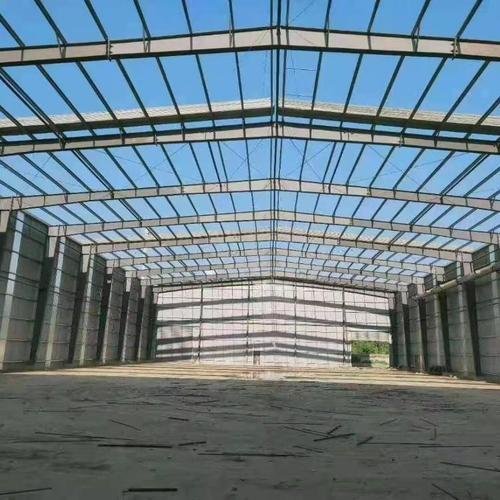
Portal Frame & Large-span Structures: Using built-up H-sections, engineers design clear spans of 30 to 50 meters, eliminating interior columns to maximize factory floor space.
Steel Grades: Utilizing Q355 (Yield Strength ≥ 355 MPa, equivalent to ASTM A572 Gr 50 or S355JR) for primary load-bearing frames. Q235 (Yield Strength ≥ 235 MPa) is utilized for secondary framing like purlins and girts.
Crane Beams: Designing heavy-duty corbels and crane runway beams to support overhead bridge cranes ranging from 5-ton to 100-ton lifting capacities.
Mezzanine Floors: Integrating multi-story platforms within the industrial warehouse using steel decking and composite concrete floors for heavy equipment storage.
Environmental Loads: Simulating regional Wind, Snow, and Seismic loads using advanced software (PKPM, 3D3S) to ensure the structure will not deflect or fail under environmental stress.
Production Capacity of a Heavy Industrial Steel Building Exporter
Delivering a 5,000-ton steel factory on a strict timeline requires massive manufacturing infrastructure. As a highly rated industrial steel building exporter, our facility features continuous, automated production lines. Multi-head CNC plasma cutters guarantee perfect plate dimensions. Automated Submerged Arc Welding (SAW) machines ensure continuous, deep weld penetration on built-up columns, while 3-axis CNC drilling lines place thousands of bolt holes with millimeter precision.
International Quality Standards Maintained by a Certified Industrial Steel Building Exporter
An industrial steel structure exporter must provide verifiable proof of quality. International buyers cannot rely on visual inspections alone.
We maintain rigorous compliance with CE EN1090, ISO 9001, and CWB standards. Quality Control (QC) dictates that all full-penetration butt welds undergo Ultrasonic Testing (UT) to detect internal voids, while critical fillet welds receive Magnetic Particle or Penetrant Testing (PT). Dimensional tolerances are strictly measured against standard GB50205 to guarantee on-site fitment.
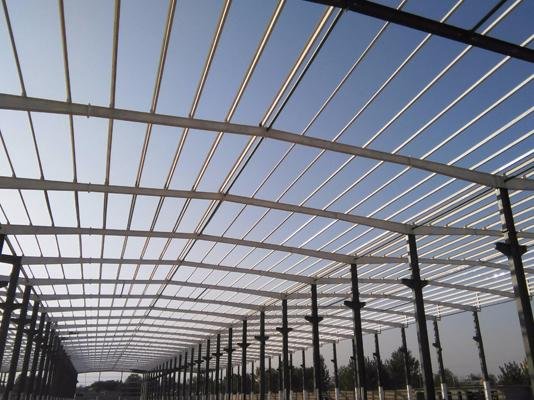
The Project Management Process of an Expert Industrial Steel Building Exporter
Procurement is not a single transaction; it is a collaborative process. Our project management system ensures transparency.
Requirement Gathering: Analyzing architectural plans, local wind/seismic data, and operational requirements.
Preliminary Engineering: Delivering a structural layout, 3D render, and accurate steel consumption analysis for budget approval.
Detailing (Shop Drawings): Producing exact CNC cutting plans in Tekla Structures.
Fabrication & QC: Manufacturing the steel with parallel NDT inspection reporting.
Logistics Coordination: Booking ocean vessels, optimizing container loading, and managing export customs.
Factory Inspection Procedures for Your Industrial Steel Building Exporter
We actively encourage buyers to conduct factory audits. A transparent industrial steel building exporter facilitates seamless third-party inspections (e.g., SGS, Bureau Veritas).
Factory Audit Checklist
| Audit Category | What to Verify Before Placing an Order |
| Material Traceability | Can the factory provide Mill Test Certificates (MTC) linked to specific steel batches? |
| Weld Quality | Do they employ certified welders and utilize in-house UT/PT testing equipment? |
| Surface Preparation | Is the steel shot-blasted mechanically to Sa2.5 prior to primer application? |
| Machinery | Are they using CNC cutting and drilling, or relying on manual torches and magnetic drills? |
| Packing Operations | Do they have heavy-duty gantry cranes and standard operating procedures for container stuffing? |
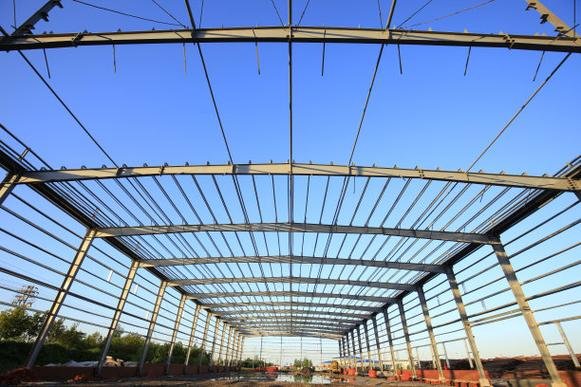
Material Procurement Standards of a Reliable Industrial Steel Building Exporter
The integrity of a steel industrial building company begins at the steel mill. We procure raw steel plates and coils exclusively from top-tier Chinese state-owned steel mills (such as Baosteel or HBIS). We reject recycled or secondary-grade steel. Every batch of Q355 and Q235 steel is accompanied by Mill Certificates detailing its exact chemical composition (Carbon, Manganese, Silicon) and mechanical yield strength.
Production Workflow Inside a Modern Industrial Steel Building Exporter Factory
Efficiency drives cost reduction. The workflow of an elite industrial workshop manufacturer is strictly linear:
CNC Cutting: Thermal distortion is minimized using plasma and laser cutters.
Assembly & Tack Welding: Web and flange plates are clamped into perfect alignment.
Gantry SAW Welding: Automated submerged arc welding creates flawless structural seams.
Hydraulic Flange Straightening: Corrects any heat-induced warping.
Friction-Grip Hole Drilling: CNC machines drill holes for high-strength bolts (Grade 10.9).
Shot Blasting & Coating: Steel is cleaned of mill scale and immediately painted to prevent flash rusting.
Surface Treatment Systems Used by a Quality Industrial Steel Building Exporter
Corrosion is the enemy of industrial structures. A premier industrial building supplier specifies the correct surface treatment based on the building’s operating environment.
Hot-dip Galvanized vs Painted Structure
| Feature | Epoxy Painted Steel (Multi-Layer) | Hot-Dip Galvanized (HDG) Steel |
| Protection Mechanism | Barrier protection (seals steel from air/moisture) | Cathodic protection (zinc sacrifices itself for steel) |
| Application Process | Sa2.5 shot blasting + Zinc primer + Epoxy mid-coat + PU finish | Submersion in 450°C molten zinc bath |
| Ideal Environment | Standard dry industrial zones, interior framing | High humidity, coastal areas, chemical plants, agriculture |
| Cost Profile | Highly economical | Higher initial cost, but zero maintenance over 50 years |
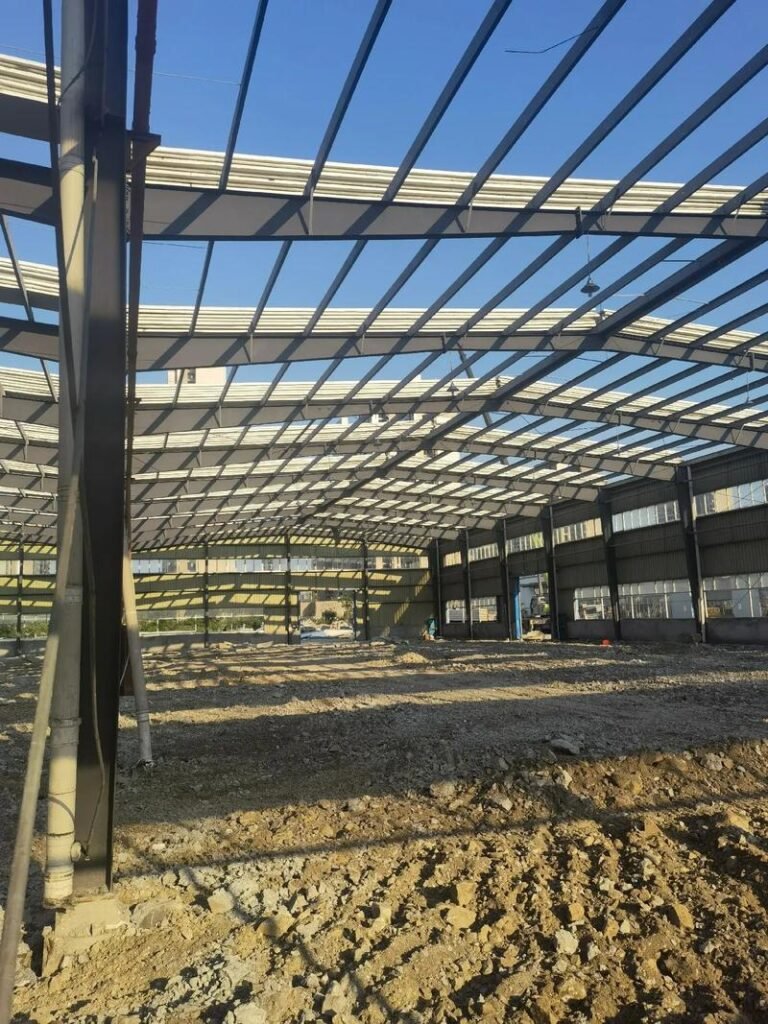
Packing & Container Loading by a Professional Industrial Steel Building Exporter
Improper loading destroys paint and warps cladding. A professional industrial steel building exporter considers container packing a critical engineering task.
We utilize 3D simulation to plan container loads. Heavy primary columns are loaded first using wooden dunnage to prevent steel-on-steel friction. Roof and wall sandwich panels are packed into custom-welded steel pallets to protect their fragile edges. All components are lashed to the container’s interior D-rings using heavy steel wire to withstand the dynamic forces of a 30-day ocean voyage.
For oversized roof trusses, we utilize 40ft Open Top (OT) containers or Break-Bulk shipping solutions.
Shipping & International Logistics Managed by Your Industrial Steel Building Exporter
Understanding Incoterms is vital for controlling total landed costs. We maintain an expert export division to navigate Chinese customs seamlessly.
FOB vs CIF vs DDP
| Incoterm | Who Pays Ocean Freight? | Who Controls the Shipping Route? | Best For… |
| FOB (Free On Board) | Buyer | Buyer | Experienced importers who want full control over logistics costs and transit times. |
| CIF (Cost, Insurance, Freight) | Seller (Exporter) | Seller (Exporter) | Buyers who want the exporter to handle the ocean booking, accepting the seller’s freight rate. |
| DDP (Delivered Duty Paid) | Seller (Exporter) | Seller (Exporter) | Rare for heavy steel. Places total responsibility, including destination import taxes, on the seller. |
We supply immaculate shipping documentation—Commercial Invoices, detailed Packing Lists, Bills of Lading, and Certificates of Origin (e.g., Form E, Form A)—ensuring your customs broker can clear the cargo at the destination port without incurring demurrage penalties.
Installation Support Provided by a Global Industrial Steel Building Exporter
Exporting a building is useless if the local contractor cannot assemble it. Every structure provided by our company is designed for 100% bolted assembly on-site. We eliminate field welding.
We provide comprehensive 3D erection drawings. Every column, beam, and purlin arrives clearly stamped with a part number that corresponds to the installation manual. For highly complex mega-projects, we can dispatch remote technical support or send an engineering supervisor to your job site to guide your local construction crew.
After-sales Engineering Services from a Trusted Industrial Steel Building Exporter
Industrial facilities evolve. A premium industrial steel building exporter designs with future expansion in mind. If an EPC contractor requires a building extension five years later, our engineers pull the original digital twin (Tekla model), remove the end-wall constraints, and fabricate identical structural bays that bolt directly onto the existing framework. We stand by our warranty service and provide lifetime structural engineering consultation.
Typical Applications Supplied by an Industrial Steel Building Exporter
As a leading prefabricated industrial building exporter, our structures serve diverse heavy industries:
Manufacturing Plants: Clear-span designs accommodating heavy machinery and assembly lines.
Logistics & Distribution Warehouses: Optimized grid spacings for automated racking systems and forklift traffic.
Mining & Mineral Processing: Heavy-duty, hot-dip galvanized structures designed to withstand corrosive dust and remote environments.
Aircraft Hangars: Massive multi-span structures requiring specialized wide-span roof trusses.
Cold Storage Facilities: Utilizing thick Polyurethane (PU) sandwich panels for extreme thermal efficiency.
Case Studies: Success Stories from an Industrial Steel Building Exporter
(Note: Real project portfolios are custom-tailored during client inquiries, but standard export parameters include:)
Latin America Mining Workshop: 1,200 tons of Q355 steel, HDG treated, shipped via Break-Bulk to Chile. Engineered to withstand high seismic acceleration.
African Logistics Park: 45,000 sqm footprint, shipped in over one hundred 40HQ containers to Kenya. 100% bolted connections allowed local crews to erect the frame in record time.
Middle Eastern Processing Plant: Engineered with 100mm PU wall panels and heat-reflective roof systems to drastically lower HVAC operational costs in extreme desert climates.
Comparison Tables: Evaluating Your Industrial Steel Building Exporter
Industrial Steel Building vs Reinforced Concrete Factory
| Feature | Prefabricated Industrial Steel Building | Traditional Reinforced Concrete |
| Construction Speed | 30% to 50% faster (Manufactured in parallel with foundations) | Slow, sequential pouring and curing required |
| Clear Span Capability | Can easily exceed 40 meters without central columns | Highly restricted; requires thick support pillars |
| Foundation Costs | Lower. Steel offers a superior strength-to-weight ratio | Higher due to massive dead load of concrete |
| Modification / Expansion | Simple to unbolt and expand | Destructive, expensive, and time-consuming |
| Seismic Performance | High ductility allows the frame to flex and absorb energy | Rigid and prone to cracking under severe stress |
Buyer Evaluation Checklist for an Industrial Steel Building Exporter
Before transferring a deposit, EPC contractors and investors must rigorously qualify their supplier:
Supplier Qualification Checklist
Verify the Chinese Business License for actual “Manufacturing” scope.
Request the ISO 9001 and CE EN1090 certificates.
Ask for a live video tour of the CNC and SAW welding production lines.
Require a preliminary structural layout and steel weight calculation, not just a price.
Confirm the exact paint system (Primer, Mid-coat, Top-coat) and Dry Film Thickness (DFT).
Demand to see a sample of a detailed Packing List and Container Loading Plan.
Ensure they have English-speaking structural engineers, not just sales representatives.
Frequently Asked Questions About Hiring an Industrial Steel Building Exporter
1. How long does it take to manufacture and export a steel factory? Standard production lead times range from 4 to 6 weeks depending on tonnage. Ocean transit adds 15 to 45 days depending on your destination port.
2. Can an exporter design the building to meet my local country’s building codes? Yes. You must provide your local environmental parameters (Wind Speed, Snow Load, Seismic Zone). Our engineers design the structure to withstand those exact forces.
3. What is the difference between Q235 and Q355 steel? Q355 is a high-strength, low-alloy steel used for primary load-bearing frames (columns/beams). Q235 is standard structural steel used for secondary components (purlins/girts).
4. How is the structure protected from rusting during ocean transport? After shot-blasting to Sa2.5, components receive industrial anti-corrosion primer. Crucially, they are loaded into containers using wooden dunnage to prevent steel-to-steel friction from scratching the paint.
5. Do you supply the roof, walls, and doors as well? Yes, we provide the complete building envelope, including sandwich panels, skylights, rolling shutter doors, ventilation systems, and all necessary flashing and fasteners.
6. Will I need to do any welding on my job site? No. A professionally engineered export building utilizes 100% bolted connections (Grade 10.9 high-strength bolts) for fast, safe, and precise on-site assembly.
7. Can you accommodate heavy overhead bridge cranes? Absolutely. Provide us with the crane’s lifting capacity, span, and lifting height, and we will integrate the heavy-duty crane runway beams into the primary structural design.
8. What documents will I receive for customs clearance? We provide a comprehensive export packet: Bill of Lading, Commercial Invoice, detailed Packing List, Certificate of Origin, and Mill Test Certificates.
9. How do you optimize shipping costs? Our logistics team uses 3D simulation to pack 40HQ containers efficiently, maximizing the weight limit (up to 26 tons) without wasting space, directly lowering your freight cost per ton.
10. Can I hire a third-party inspector to check the steel before shipping? We highly encourage it. We regularly work with SGS, TUV, and Bureau Veritas to facilitate pre-shipment inspections of dimensional tolerances, paint thickness, and weld quality.
11. Do you provide foundation drawings? We provide the anchor bolt layout plan and the exact reaction forces acting on the base plates. Your local civil engineer will use these forces to design the concrete foundation according to local soil conditions.
12. What happens if a component is damaged or missing? Our automated packing system ensures 100% accuracy. If damage occurs during transit (covered by marine insurance under CIF or your policy under FOB), our detailed part numbering allows us to instantly fabricate and air-freight a replacement.
Professional Conclusion on Selecting an Industrial Steel Building Exporter
Procuring an industrial facility from a steel factory exporter should drastically reduce your capital expenditure while accelerating your construction schedule. However, these benefits are only realized when you partner with a genuine, engineering-first manufacturer.
Avoid intermediaries and trading companies that obscure the supply chain. Demand transparent engineering calculations, verifiable quality control, and rigorous container packing standards. By selecting a highly qualified industrial steel building exporter, you secure not just the steel, but the total success of your global project.
Are you ready to evaluate your upcoming industrial project?
Contact our international engineering division today to request:
Free Industrial Building Design Proposal
Accurate Budget Estimate & Steel Consumption Analysis
Detailed Container Loading Plan & Freight Estimate
Factory Qualification Documents & ISO Certifications
Professional Quotation Within 24 Hours
Submit your architectural dimensions, crane requirements, and local weather loads today to partner with a world-class industrial structural manufacturer.