
Bulk Steel Structure Supplier | High-Volume Global Procurement
What Defines a Tier-One Bulk Steel Structure Supplier?
The global market is saturated with small-scale fabrication shops and export trading companies that claim to handle large orders but ultimately subcontract the work, leading to catastrophic quality fade and project delays.
A genuine bulk steel structure supplier operates on a fundamentally different scale. These tier-one manufacturers possess their own immense industrial complexes, automated CNC production lines capable of outputting tens of thousands of tons monthly, in-house structural engineering departments (utilizing Tekla and PKPM), and dedicated export logistics divisions. Furthermore, their operations are validated by stringent international certifications, including ISO 9001, CE (EN1090), CWB, and independent SGS inspections.
Table 1: Bulk Procurement vs Single Project Purchasing
| Procurement Metric | Single Project Purchasing | Bulk Strategic Procurement |
| Pricing Model | Spot-market pricing (Highly volatile) | Locked-in framework pricing (Stable) |
| Engineering | Redesigned from scratch every time | Standardized modular designs reused |
| Production Slot | Subject to seasonal factory availability | Guaranteed continuous allocation |
| Quality Control | Varies per order and subcontractor | Standardized SOPs across all batches |
Who Needs a Large Volume Steel Structure Supplier?
Strategic procurement is designed for entities whose operational success depends on repeatable, scalable infrastructure delivery. A large volume steel structure supplier is specifically structured to support the complex demands of:
EPC Contractors: Managing multi-phase, cross-border infrastructure builds requiring tightly synchronized material arrivals.
Industrial Park Developers: Building standardized factory units across Southeast Asia or Europe where engineering consistency dictates ROI.
Mining & Oil/Gas Companies: Requiring rapid-deployment, heavy-duty structures for remote camps in Australia or Africa.
Logistics Park Investors: Expanding distribution networks in North America demanding massive, clear-span portal frames.
Government Procurement Agencies: Executing national infrastructure or agricultural storage programs requiring guaranteed long-term supply.
Table 2: Bulk Supplier vs Small Factory
| Capability Indicator | Small-Scale Factory | True Bulk Supplier |
| Raw Material Sourcing | Buys from local spot markets | Direct strategic quotas with national steel mills |
| Monthly Capacity | 500 – 1,000 Tons | 10,000+ Tons |
| Financial Backing | Requires 50%+ advance to buy steel | Can support LC (Letters of Credit) & rolling terms |
| Export Infrastructure | Relies entirely on 3rd party forwarders | In-house multi-port logistics and customs team |
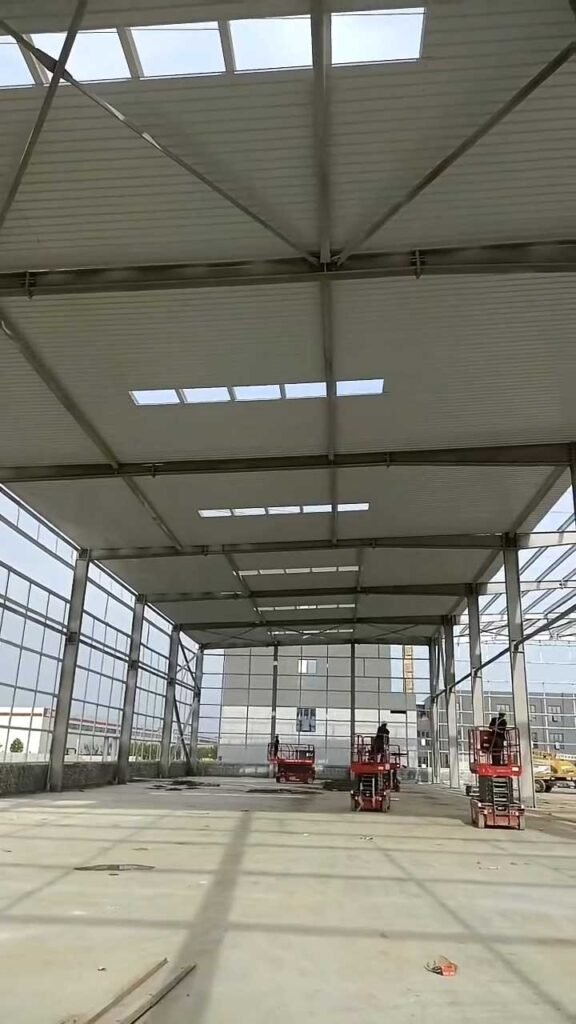
Benefits of Partnering with a Bulk Steel Building Supplier
Transitioning to a framework agreement with a bulk steel building supplier offers compounding commercial and operational advantages.
First, it heavily mitigates supply chain risk. By centralizing your procurement, you eliminate the friction of vetting new suppliers, coordinating multiple design standards, and consolidating scattered shipments. Second, it drives down the total cost of ownership (TCO). While raw steel prices fluctuate, a bulk supplier can leverage their purchasing power with state-owned steel mills to hedge against extreme volatility, passing those stabilized costs on to the buyer.
Table 3: Framework Agreement vs One-time Purchase
| Partnership Level | Commercial Terms | Engineering Revisions | Logistics |
| One-Time Purchase | Standard 30% / 70% TT | Paid modifications | Standard FOB/CIF |
| Framework Agreement | Revolving credit / Milestones | Free standardized updates | Priority multi-port routing |
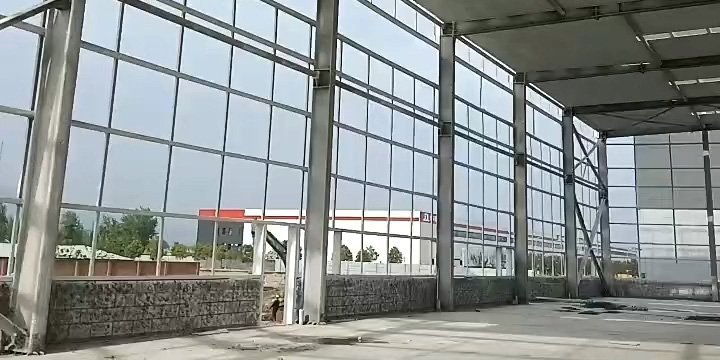
Production Capacity Planning for a Steel Structure Bulk Purchase
When executing a steel structure bulk purchase, assessing the supplier’s production scalability is paramount. You must verify that the factory can absorb your project volume without disrupting their existing obligations.
We control massive, multi-workshop production bases equipped with advanced submerged arc welding (SAW) lines, highly automated CNC plasma cutting centers, and continuous roll-forming lines for secondary structures.
Table 4: Centralized Procurement vs Individual Orders
| Factor | Centralized (1 Bulk Supplier) | Fragmented (Multiple Suppliers) |
| Component Compatibility | 100% Guaranteed fit on site | High risk of bolt-hole misalignment |
| Logistics Consolidation | Maximized container payloads | Wasted shipping space (LCL) |
| Accountability | Single point of contact | Finger-pointing during delays |
Table 5: Production Capacity Comparison
| Production Phase | Standard Workshop Capability | Our Heavy Industrial Capacity |
| Primary Framing (H-Beams) | Manual assembly, slow welding | Gantry-automated SAW, hydraulic straightening |
| Secondary (C/Z Purlins) | Single-profile manual rolling | Fully automated, pre-punched roll forming |
| Surface Treatment | Manual spray painting | Enclosed shot blasting (Sa2.5) + automated coating |
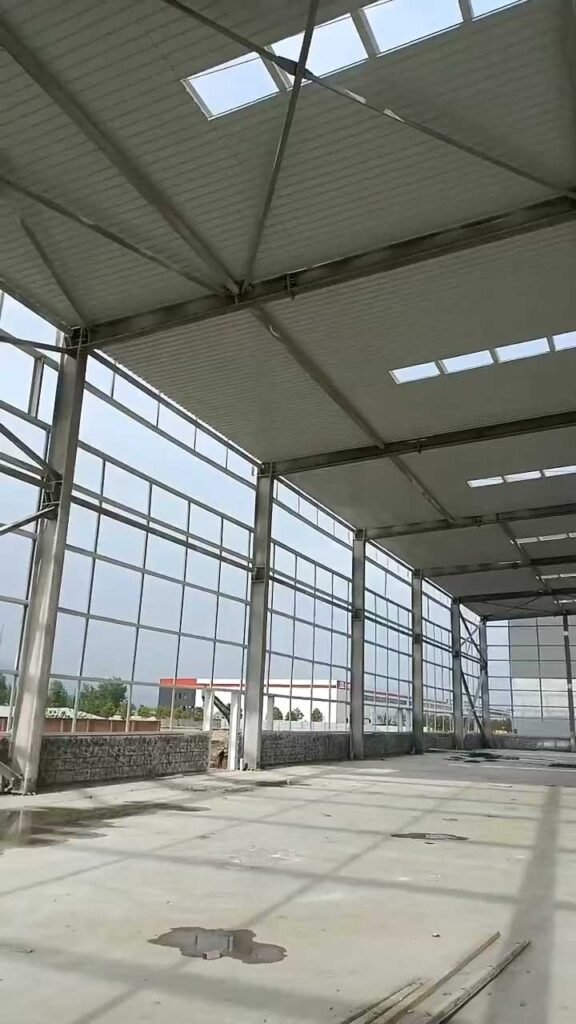
Engineering Standardization from an Industrial Steel Structure Supplier
For multi-site developments, redesigning every building wastes millions in engineering hours. An elite industrial steel structure supplier works with your project managers to develop a library of standardized building modules.
Material Optimization (Q235 vs. Q355): Our engineers optimize steel consumption by strategically allocating high-strength Q355 steel (Yield Strength ≥ 355 MPa) for primary portal frames (columns and rafters), allowing for slimmer profiles and lower shipping weights. Standard Q235 steel is utilized for secondary wall systems and purlins to balance cost-efficiency.
Advanced Detailing for Standardization: Utilizing 3D modeling software like Tekla Structures, we simulate heavy-duty large-span buildings, overhead crane brackets, and complex connection details. Once a design is perfected, it becomes a “master template” that can be rapidly adjusted for varying local environmental loads (wind, snow, seismic) without starting from scratch.
Quality Consistency for a Large Order Steel Structure
The greatest fear in high-volume procurement is “quality fade”—where the first batch is perfect, but subsequent batches suffer from poor welds or thin paint. When procuring a large order steel structure, absolute quality consistency must be algorithmically enforced.
We maintain this consistency through strict adherence to CE (EN1090) and CWB standards. Every batch of raw material is verified via Mill Test Certificates (MTC) and spectrometer testing. Production tolerance control is automated, and high-strength bolts (Grade 8.8 or 10.9) are subjected to torque tension testing. Crucially, non-destructive testing (NDT), such as Ultrasonic Testing (UT), is systematically applied to deep-penetration structural welds to prevent catastrophic failures.
Surface treatment standards are rigorously maintained across years of supply. Whether your project requires hot-dip galvanizing for coastal mining operations or heavy epoxy zinc-rich painting for standard logistics hubs, digital dry film thickness (DFT) gauges ensure exact compliance on every single beam.
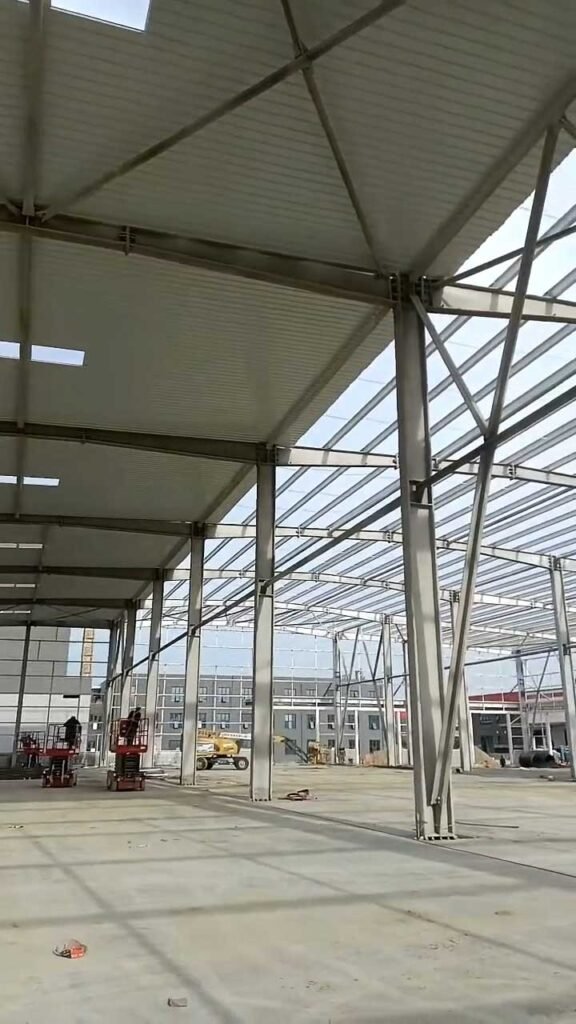
Professional FAQ on Bulk Warehouse Supplier Partnerships
1. What is a framework agreement in bulk procurement? A framework agreement is a long-term commercial contract that locks in fabrication margins, standardizes quality protocols, and guarantees production capacity, shielding you from arbitrary price increases.
2. How do you maintain quality consistency across multiple annual batches? We utilize highly automated CNC machinery to remove human error and enforce a strict ISO 9001 / CE-compliant QA system, requiring UT NDT testing and digital coating checks on every batch.
3. What is the minimum batch quantity for a framework agreement? While we supply individual heavy industrial projects, our framework agreements typically begin for clients forecasting 2,000+ tons of steel structure demand annually.
4. How is production scheduling managed for massive orders? We allocate dedicated time slots on our automated SAW lines specifically for your projects, ensuring your steel is processed exactly in line with your site erection schedule.
5. How do you handle engineering revisions across different regions? Our in-house Tekla engineers maintain your “master template” and efficiently adapt the structural loads (snow, wind, seismic) to meet the specific local codes of your new site, saving weeks of redesign time.
6. Can you coordinate multi-port global delivery? Yes. Our export logistics team frequently manages staggered shipments to multiple international ports (e.g., delivering phase one to Latin America and phase two to Africa simultaneously).
7. How do you optimize container planning for bulk orders? We utilize 3D simulation software to nest structural components on heavy steel pallets. This maximizes the payload of every 40′ HQ container and drastically speeds up your on-site unloading process.
8. Do you provide long-term warranties for bulk projects? Yes, we provide comprehensive structural warranties backed by our CE and CWB certifications, alongside mill test certificates for all raw materials.
9. What after-sales and on-site support is available? We offer 24/7 remote engineering support, detailed 3D erection drawings, and can dispatch structural supervisors to your global job sites for complex installations.
10. How do you mitigate raw material price volatility? Through centralized procurement and our strategic quotas with major Chinese steel mills, we can hedge raw material purchases when you lock in your annual procurement plan.
11. How do you ensure correct delivery sequencing? We align our manufacturing and container loading directly with your on-site erection sequence. Columns and primary framing always arrive in the first containers, followed by secondary structures and roofing.
12. What documents are provided for customs clearance? We provide a complete, flawless export packet: Commercial Invoices, detailed Packing Lists, Bills of Lading, Certificates of Origin (Form E, etc.), and all necessary MTCs and QA reports.
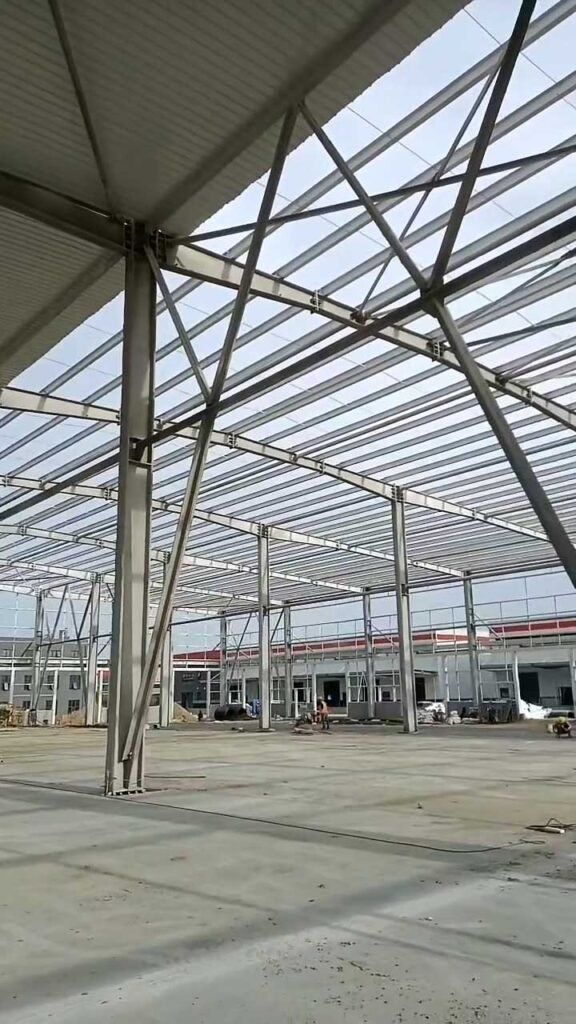
Secure Your Supply Chain With a Heavy Industrial Partner
Do not risk your multinational project timeline on unverified trading companies or under-equipped factories. Partner with a manufacturing powerhouse capable of absorbing your volume, standardizing your engineering, and delivering flawless steel structures to any port in the world.
Contact our International Bulk Procurement Team today to request:
A Comprehensive Framework Cooperation Plan & Annual Supply Proposal
Our Verified Production Capacity & Factory Qualification Documents
A Project Procurement Consultation & Engineering Standardization Review
An Optimized Container Loading Strategy for your next phase
A Detailed Quotation Within 24 Hours
Stabilize your supply chain and build with absolute confidence. Inquire today.