
Guide to Your Prefab Warehouse Price in Canada
The Complete B2B Guide to Calculating Your Prefabricated Warehouse Investment in Canada
Canada’s logistics, distribution, and manufacturing sectors are expanding rapidly. Whether you are building a cold storage facility in Ontario, an agricultural distribution center in Alberta, or a logistics hub near the Port of Vancouver, the demand for high-quality, scalable storage space has never been higher.
However, Canadian business owners face unique challenges: incredibly high local labor rates, short construction windows due to harsh winters, and strict building codes requiring robust engineering. Because of these hurdles, more Canadian companies are turning to direct-from-factory imported steel structures.
As a Chinese manufacturer with years of experience exporting structural steel across North America, we know that project managers and investors need clear, hard numbers. The most frequent question we receive is regarding the prefab warehouse price. In this guide, we will break down the true costs, shipping logistics, installation realities, and how our engineering adapts to the extreme Canadian climate.
Prefabricated Warehouse Cost
When evaluating the financial feasibility of a new commercial building, having a baseline cost per square meter (or square foot) is essential.
For a standard structural framework imported from China, the base prefab warehouse price generally ranges from $50 to $90 USD per square meter (approximately $68 to $122 CAD, depending on exchange rates).
This base price typically includes the primary steel framework (H-section columns and beams), secondary steel (C/Z purlins), roof and wall cladding, and high-strength structural bolts. However, this is a starting point. Your final number will shift based on the architectural dimensions—specifically the clear span width. A warehouse requiring a massive 50-meter open span without interior columns demands much thicker, heavier steel plates than a facility that can accommodate center support columns, which naturally increases the steel tonnage and the price.
It is also important to note what this factory price excludes. It does not cover local Canadian land acquisition, civil engineering, pouring the concrete foundation, or the hourly wages of your local assembly crew.
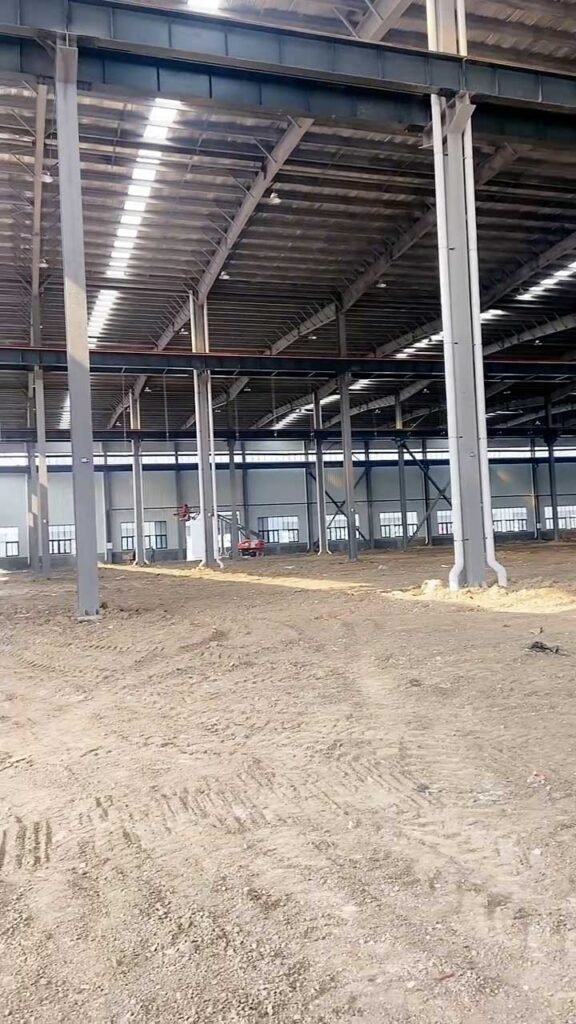
Warehouse Building Price
What exactly causes the price of a steel building to fluctuate? When quoting projects for the Canadian market, the engineering requirements dictate the final material volume.
The biggest factor affecting your prefab warehouse price in Canada is the local climate.
Engineering for Canadian Snow Loads Canada experiences some of the heaviest snowfalls in the commercial world. A roof in Vancouver requires a drastically different structural capacity than a roof in Quebec City or Edmonton. Our engineers utilize local data to calculate the exact Ground Snow Load (often exceeding 2.5 to 3.0 kPa in many Canadian regions). To prevent roof collapse under massive snow accumulation, we must decrease the spacing between roof purlins and increase the thickness of the primary steel rafters.
Insulation and Thermal Resistance Winter temperatures dropping below -30°C mean that standard single-skin metal sheets are rarely sufficient. To maintain a functional internal environment—or a strictly climate-controlled space for food logistics—we upgrade the cladding to Polyurethane (PU) or Rockwool sandwich panels. These insulated panels offer excellent R-values to keep heating costs low, but they do increase the initial material investment.
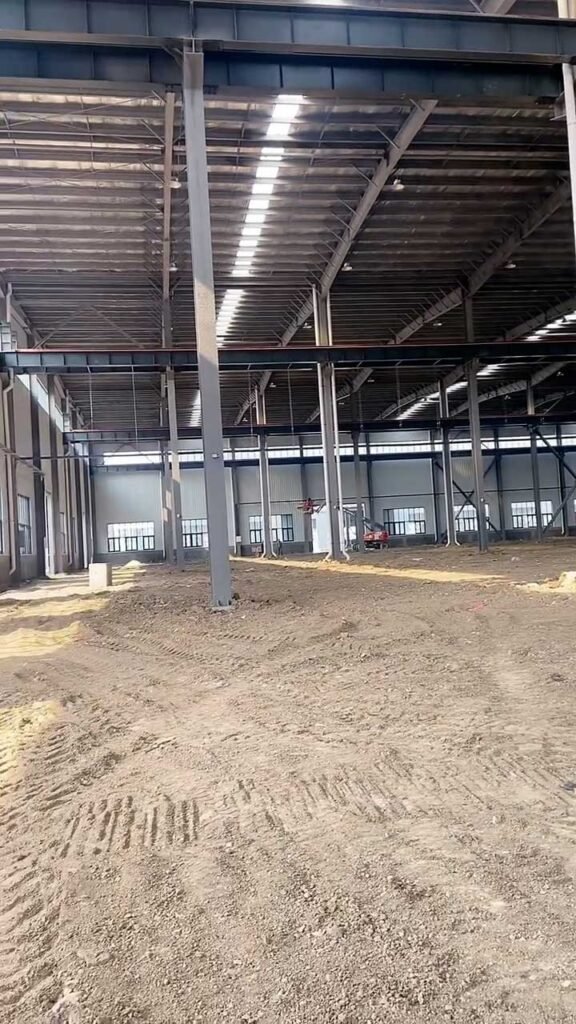
Steel Warehouse Cost
Many Canadian developers assume that importing steel across the Pacific will erase any savings. In reality, the economies of scale achieved by manufacturing in China easily offset the logistics expenses.
To calculate your true landed cost, you must factor in freight and import variables:
1. Ocean Freight to Canada Your steel building is manufactured, cut, painted, and then packed densely into standard 40ft High Cube or Open Top shipping containers. Ocean freight rates fluctuate, but shipping directly from our ports (like Qingdao or Shanghai) to major Canadian entry points such as the Port of Vancouver, Port of Prince Rupert, or via rail to inland terminals in Toronto and Montreal is a highly standardized and efficient route.
2. Import Duties and Tariffs When importing steel structures into Canada, your customs broker will apply the relevant CBSA (Canada Border Services Agency) duties and GST. We provide a flawless documentation package—including the Bill of Lading, Commercial Invoice, precise Packing List, and Mill Test Certificates—ensuring your shipment clears customs swiftly without holding fees.
Even after adding ocean freight, rail transport, and import taxes, the total landed prefab warehouse price remains significantly lower than sourcing locally fabricated steel in Canada.
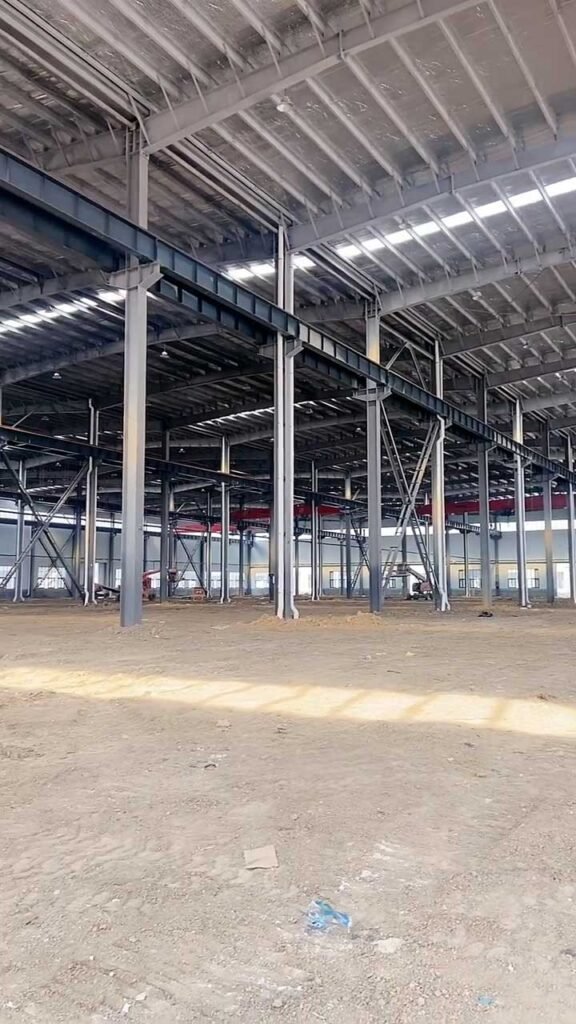
Warehouse Construction Cost
The most expensive variable in any Canadian commercial development is local labor. This is exactly where the prefabricated model proves its financial dominance over traditional construction methods.
Traditional Concrete vs. Prefabricated Steel in Canada
Let’s look at an objective comparison of building a 4,000-square-meter distribution center in Alberta using traditional methods versus our imported prefabricated system.
| Project Variable | Traditional Concrete / Masonry | Imported Prefab Steel Building |
| Construction Timeline | 8 to 14 months. Highly vulnerable to freezing temperatures stopping concrete pours. | 2 to 3 months. Fast, bolted assembly that can be erected even during winter months. |
| Foundation Requirements | Heavy and expensive. Requires massive, deep footings to support the immense weight of concrete. | Highly economical. Steel is significantly lighter, reducing excavation depth and concrete volume by up to 30%. |
| Labor Dependency | Requires specialized masons, welders, and carpenters on-site for extended periods. | Requires a basic steel erection crew and crane operator for a fraction of the time. |
| Material Waste | Up to 10-15% of materials are wasted or damaged on-site. | Zero waste. Every component is pre-cut and pre-drilled. You only pay for net steel used. |
Because a prefab building arrives on site exactly like an industrial-grade erector set, your local contractor does not need to perform complex, weather-dependent welding. They simply bolt the structure together using our detailed 3D installation drawings. By cutting the erection time in half, you drastically reduce your crane rental fees and hourly labor rates, keeping your total project budget intact.
Industrial Warehouse Price
Protecting your Capital Expenditure (CAPEX) goes beyond the initial build. Smart developers look at the long-term Return on Investment (ROI).
Accelerated Delivery Timeline Time to market is critical. While your local Canadian contractor is performing site grading and pouring the foundation, our factory is simultaneously manufacturing your steel framework. By the time your concrete has cured, your building has arrived at the port. This parallel processing means you can open your doors, begin storing inventory, and generate revenue months earlier than a traditional build would allow.
Unmatched Expansion Flexibility Logistics businesses rarely stay the same size. If a distributor in Saskatchewan needs to double their storage capacity in three years, expanding a concrete building requires destructive demolition. With our modular steel structures, expansion is built into the design. You simply unbolt the end-wall cladding, erect new structural frames, and seamlessly extend the roofline.
How to Reduce Your Overall Project Cost If you want to lower your prefab warehouse price, work closely with our engineering team during the design phase.
Optimize Bay Spacing: Keeping the distance between main columns at a standard 6 to 8 meters is usually the most economical choice. Stretching this distance requires excessively heavy roof beams.
Embrace Standard Roof Pitches: A standard 1:10 roof pitch easily sheds Canadian rain and snow without creating unnecessary vertical volume that you have to pay to heat during the winter.
Plan the Height Carefully: Only build as high as your racking systems require. Adding unnecessary eave height exponentially increases the wind load on the walls, requiring much heavier steel columns.
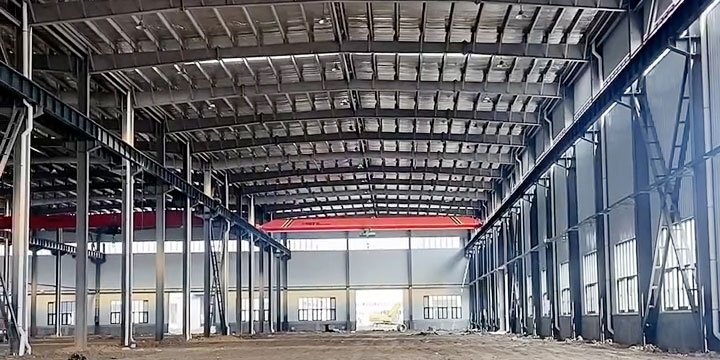
Frequently Asked Questions (FAQ)
Can your buildings withstand Canadian winters? Absolutely. We custom-engineer every structure based on the specific postal code of your job site. We calculate the exact wind, snow, and seismic loads required by the National Building Code of Canada (NBCC) to ensure total structural integrity.
Do you handle the installation in Canada? We are the manufacturer and exporter. We supply the complete building kit and comprehensive 3D assembly manuals. You will hire a local general contractor or steel erection crew in Canada to pour the foundation and bolt the building together.
What is the lead time for a project in Canada? Factory production typically takes 4 to 6 weeks. Ocean freight from China to Canada (and subsequent rail transport if you are inland) takes approximately 3 to 5 weeks. You should plan for a total lead time of 8 to 12 weeks from the moment manufacturing begins to the components arriving at your site.
How do you prevent the steel from rusting? We apply industrial-grade anti-corrosive treatments in our factory. Depending on your needs, we provide shot-blasting followed by zinc-rich epoxy primers and polyurethane topcoats, or hot-dip galvanizing for ultimate rust prevention.
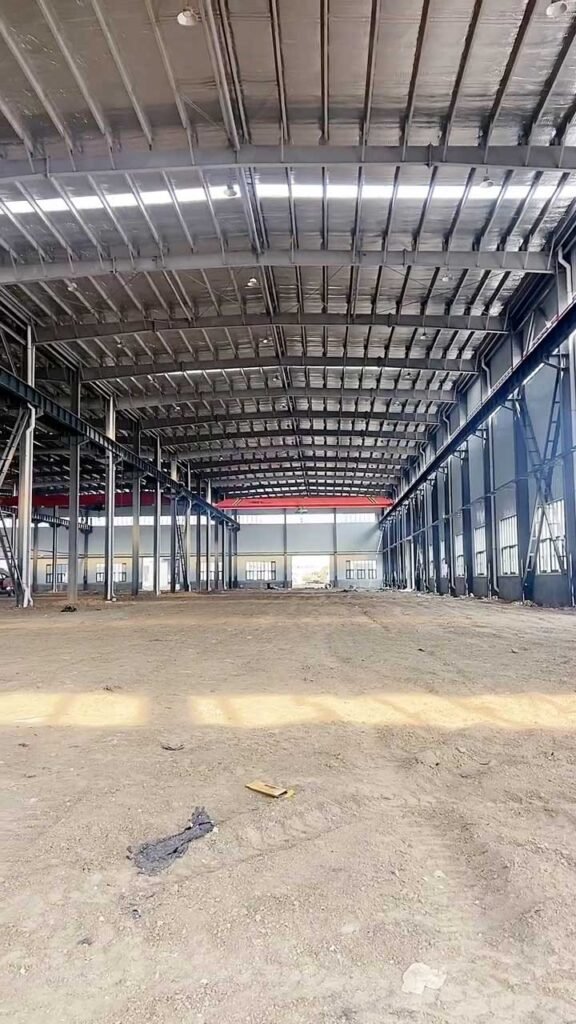
Secure Your Logistics Infrastructure Today
In Canada’s competitive industrial landscape, relying on slow, expensive local construction methods is a risk to your profitability. By importing a precision-engineered structural solution directly from a global manufacturer, you take control of your timeline, secure a weather-proof asset, and optimize your CAPEX.
Understanding the true prefab warehouse price is the first step toward a smarter build. Let our team of structural engineers analyze your requirements and provide you with a transparent, highly detailed proposal.
Request Your Free Warehouse Quote Today Send us the dimensions of your plot (width, length, and usable height), your local city for snow load calculations, and your operational requirements.
Contact Us for Pricing and Design Speak directly with our B2B export specialists to discover how we can engineer, manufacture, and ship the perfect industrial facility for your Canadian enterprise.