
Steel Building Wholesale Supplier
Global Procurement Guide for Wholesale Steel Building Systems
For international building material distributors, massive EPC (Engineering, Procurement, and Construction) contractors, and regional developers, securing a stable supply chain is the ultimate competitive advantage. Purchasing a single facility is a transaction; securing an ongoing supply of thousands of tons of engineered structural steel is a strategic partnership.
As global infrastructure demands rise across Latin America, Africa, the Middle East, and Western markets, the reliance on high-capacity Chinese manufacturing has become a necessity. However, the market is saturated with middlemen and trading companies posing as factories.
This comprehensive technical and commercial guide is authored by senior international supply chain experts and structural engineers. It is designed specifically for B2B buyers seeking to understand the engineering, production, and global logistics required to establish a highly profitable, long-term partnership with a true wholesale manufacturer.
What Defines a Genuine Steel Building Wholesale Supplier?
A genuine steel building wholesale supplier is fundamentally different from a retail manufacturer. Retail factories cater to end-users (e.g., a farmer needing one barn), requiring heavy sales support for small volumes. A wholesale manufacturer operates as the industrial backbone for B2B enterprises.
We possess our own heavy-duty CNC production lines, in-house structural engineering departments, and integrated international export logistics teams. Our operational model is built on volume, standardization, and long-term contract fulfillment. We do not sell one-off kits to local businesses; we manufacture multi-container shipments for regional distributors who command their local markets.
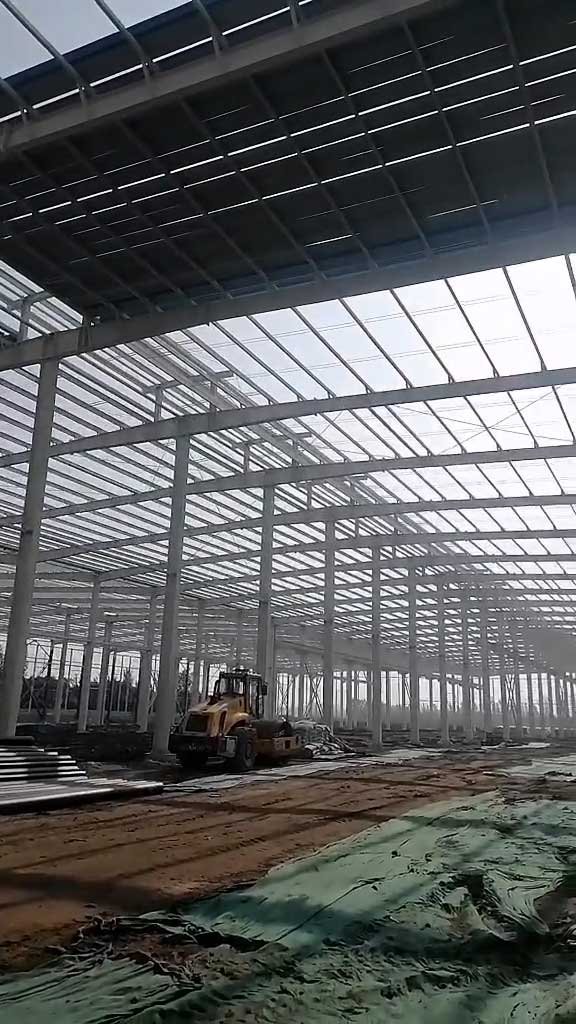
Table 1: Manufacturer vs. Trading Company
| Capability | True Wholesale Manufacturer | Export Trading Company |
| Pricing Structure | Direct factory bulk pricing | Marked up by 15-30% |
| Engineering Capacity | In-house structural engineers (Tekla/AutoCAD) | Outsourced, leading to massive delays |
| Quality Intervention | Immediate correction on the CNC line | Discovered at the port (too late) |
| Production Scaling | Can dedicate entire lines to a single distributor | Relies on third-party factory availability |
Who Needs a Wholesale Steel Building Partner?
The demand for wholesale steel building systems is driven by organizations that require predictable costs, standardized quality, and massive volume.
National Distributors & Regional Dealers: Companies that hold local inventory of standardized portal frames, purlins, and panels for rapid domestic resale.
EPC Contractors & Construction Groups: Firms executing massive multi-site projects (e.g., a network of 20 regional logistics hubs or mining camps).
Importers & Building Material Companies: Businesses that leverage lower overseas manufacturing costs to dominate local competitors in North America, Europe, or Australasia.
Government Procurement Teams: Entities requiring ISO-certified infrastructure for public works, agricultural storage, or disaster relief housing.
Table 2: Wholesale vs Retail Purchasing
| Metric | Wholesale B2B Procurement | Retail B2C Purchasing |
| Order Volume | Multiple 40HQ containers / Annual Contracts | Single structure, LCL (Less than Container Load) |
| Customization | Standardized lines or massive bespoke projects | Highly specific to one small plot of land |
| Lead Times | Programmed annual production schedules | Ad-hoc, subject to seasonal delays |
| Profit Margin Focus | Supply chain efficiency, freight optimization | Lowest absolute price for a single unit |
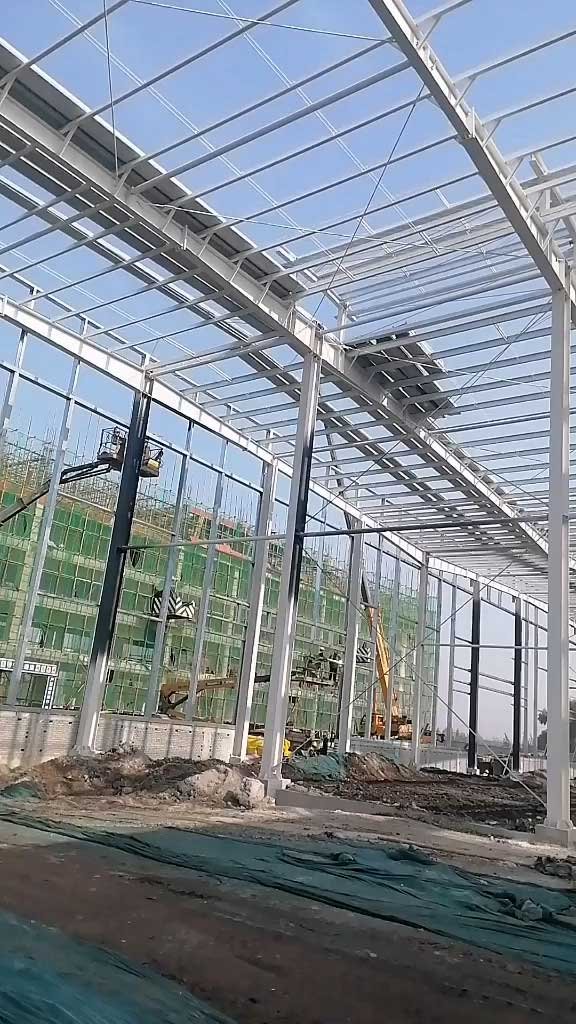
Choosing the Right Bulk Steel Building Supplier from China
The primary risk in international procurement is supply interruption. Selecting a bulk steel building supplier requires rigorous due diligence that goes far beyond analyzing a single quotation.
You must evaluate a supplier’s raw material procurement power, machine uptime, and financial stability. A reliable partner procures steel directly from state-owned steel mills (such as Baosteel or Ansteel), ensuring consistent chemical composition and priority allocation during global steel shortages.
Table 3: Factory Qualification Checklist for Importers
| Verification Area | Required Documentation / Proof |
| Quality Management | Valid ISO 9001:2015 Certificate |
| Welding Standards | CWB (Canada), AWS (USA), or EN1090 (Europe) |
| Material Traceability | Mill Test Certificates (MTC) matching heat numbers |
| Production Equipment | Video/Audit of automated submerged arc welding (SAW) & CNC plasma |
| Export Experience | Sanitized Bills of Lading showing volume to your region |
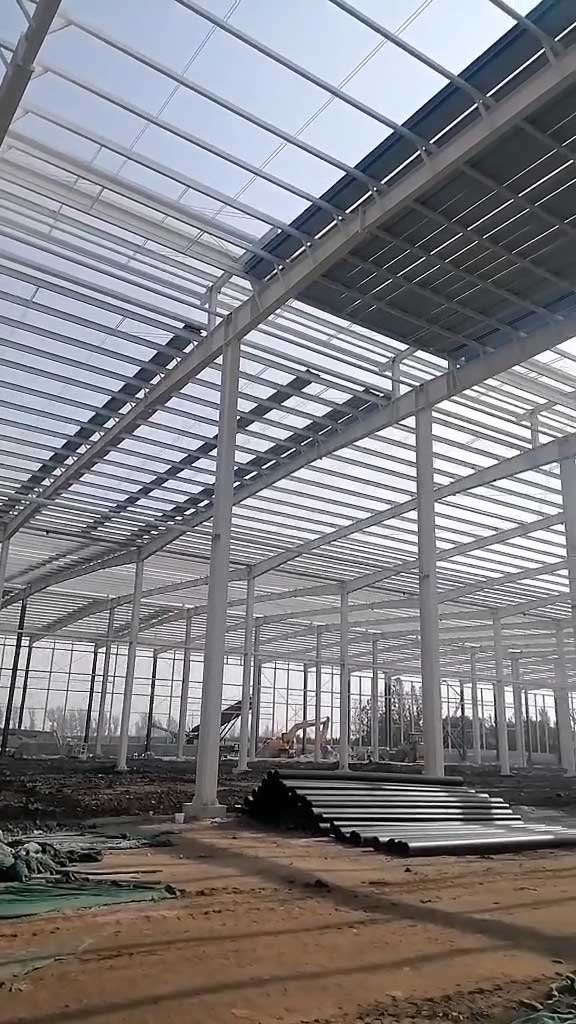
Establishing a Profitable Steel Building Distributor Network
For a steel building distributor, success hinges on inventory turnover and localized engineering compliance.
Regional Market Strategy
North America & Europe: Distributors require strict compliance with snow loads and stringent CE/AISC fabrication standards. The focus is on complex engineering and premium surface treatments.
Latin America & Africa: The market demands rapid deployment, cost-effectiveness, and simple bolted connections that do not require highly skilled local labor.
Australia & New Zealand: Distributors must navigate severe AS/NZS cyclonic wind codes and demand heavy hot-dip galvanization for coastal durability.
Maximizing Margins in Steel Warehouse Wholesale
The logistics sector is booming globally, driving immense demand for steel warehouse wholesale manufacturing. To maximize your profit margins as a developer or importer, you must understand structural weight optimization.
Engineering Value: Our engineering department utilizes advanced 3D modeling (Tekla Structures, PKPM) to optimize the steel-to-space ratio. By transitioning a warehouse design from uniform hot-rolled I-beams to variable cross-section built-up H-beams (wider at the eaves where bending moments are highest, narrower at the base), we can reduce total steel weight by 15% to 25%. Over a multi-warehouse wholesale contract, this translates to hundreds of thousands of dollars saved in raw materials and ocean freight.
Table 4: Bulk Purchase vs Single Order Cost Dynamics
| Cost Center | Single Project Order | Wholesale / Annual Contract |
| Raw Material | Spot market pricing | Locked-in bulk mill pricing |
| Engineering Time | Billed per project | Amortized across standardized models |
| CNC Setup Time | High (frequent machine recalibration) | Low (continuous batch runs) |
| Ocean Freight | Subject to spot market volatility | Planned, consolidated shipping lanes |
Engineering Support from a Prefabricated Steel Building Supplier
A true prefabricated steel building supplier provides a robust engineering partnership, not just raw metal.
Material Specifications:
Q235 vs. Q355: We utilize Q355 (Yield Strength ≥ 355 MPa) for primary load-bearing frames (columns, rafters) to minimize weight and maximize clear spans. Q235 (Yield Strength ≥ 235 MPa) is strategically used for secondary structures (purlins, girts) to keep costs highly competitive.
High-Strength Connections: All field connections are designed as 100% bolted (using Grade 10.9 high-strength friction-grip bolts), completely eliminating the need for expensive, error-prone site welding.
Enclosure Systems: We supply bulk customized roofing and walling solutions, ranging from basic 0.5mm corrugated color-coated steel sheets to high-density Polyurethane (PU) sandwich panels for cold-storage logistics clients.
Inventory Management in Steel Structure Wholesale
For regional dealers, steel structure wholesale requires intelligent inventory planning.
Rather than importing complete, bespoke buildings, many of our most successful international partners import components. They order forty containers of standardized Q355 columns and rafters, twenty containers of galvanized Z-purlins, and continuous coils of sheet metal. When a local client places an order, the distributor mixes and matches the inventory to construct the required dimensions instantly, reducing lead times from 12 weeks to 48 hours.
Table 5: Regional Inventory Strategy
| Inventory Component | Procurement Strategy | Storage Profile |
| Primary Frames (H-Beams) | Import in standard lengths/pitches | High weight, low volume (Easy outdoor storage) |
| Z/C Purlins | Import nested bundles | High density |
| High-Strength Bolts | Import in massive bulk pallets | Very low volume, high value |
| Sandwich Panels | Order on a per-project basis | High volume (consumes warehouse space quickly) |
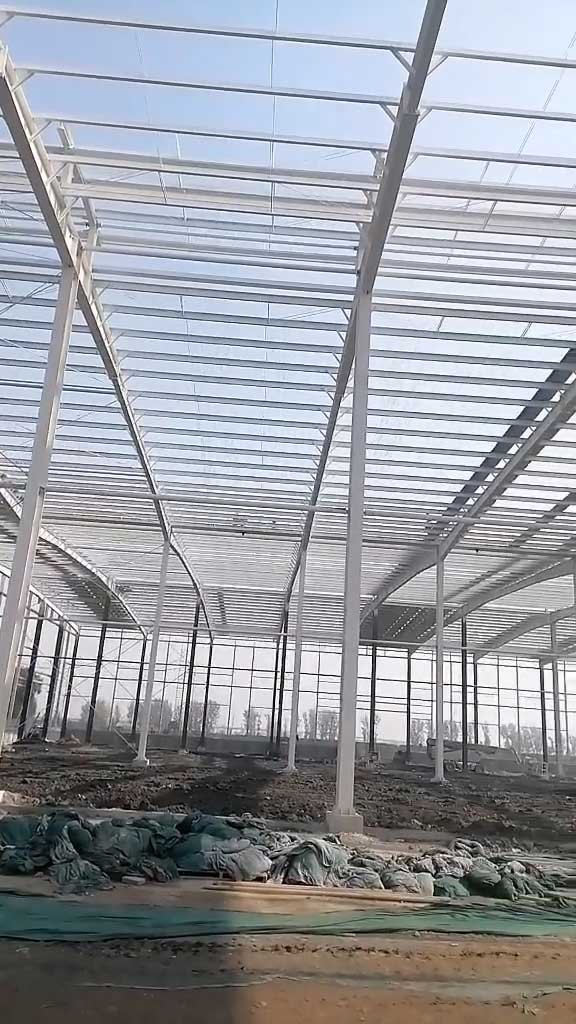
Quality Control Standards of an Industrial Steel Building Supplier
An industrial steel building supplier cannot afford a single manufacturing defect. When you are erecting a heavy-duty facility with a 50-ton overhead crane, precise tolerances are mandatory.
Our QA/QC Protocols Include:
Ultrasonic Testing (UT): To detect internal flaws in deep-penetration submerged arc welds.
Magnetic Particle Inspection (MPI): To verify the integrity of surface welds on critical connection plates.
Pre-Assembly Checks: Complex nodes are physically test-assembled in our factory before painting to guarantee bolt hole alignment.
Surface Treatment Verification: Digital coating thickness gauges are used to verify exact micron layers for epoxy paint systems or hot-dip galvanizing.
Building a Long-Term Strategy with Your Warehouse Building Supplier
A successful partnership with your warehouse building supplier shifts from reactive purchasing to proactive supply chain management.
We work with our top-tier distributors to forecast annual steel consumption, secure bulk raw material pricing during market dips, and stagger manufacturing schedules. This ensures that even during global shipping crises or peak construction seasons, our partners have a continuous, uninterrupted flow of high-quality structural steel arriving at their ports.
Professional Wholesale FAQ
1. What is your Minimum Order Quantity (MOQ) for wholesale pricing? Our minimum order to access our primary wholesale tier is typically five 40HQ containers (approx. 100-125 tons), which can be consolidated across multiple smaller projects.
2. Do you offer an international distributor program? Yes. We offer regional exclusivity agreements for distributors who meet annual volume targets, providing them with dedicated engineering support and priority production slots.
3. How do you handle intellectual property (IP) for our custom designs? We operate under strict Non-Disclosure Agreements (NDAs). Your proprietary designs are ring-fenced within our engineering department and are never shared or resold.
4. How long does bulk production take? For standard wholesale orders (e.g., 500 tons), our lead time is 35 to 45 days from the approval of shop drawings. We provide weekly production status reports and photos.
5. Can you manufacture to North American or European standards? Yes. We have extensive experience detailing and fabricating to AISC (USA), CWB (Canada), and Eurocode standards, including the provision of equivalent material testing certificates.
6. Do you assist with container loading optimization? Absolutely. We use 3D simulation software to plan every container, ensuring we hit maximum payload (up to 26 tons per 40HQ) without damaging fragile components like roof panels.
7. How do we ensure quality consistency across multiple orders? Every component is tracked via a barcode system linking back to the specific steel mill heat number, the exact CNC machine used, and the certified welder who performed the work.
8. Do you provide installation support for wholesale buyers? We provide comprehensive 3D erection drawings and detailed component packing lists. For massive commercial projects, we can deploy senior engineers to your country to supervise your local erection crews.
9. What are your standard payment terms for long-term partners? Standard terms begin at 30% T/T deposit and 70% before shipment. However, for established wholesale distributors with a proven track record, we can negotiate Letter of Credit (L/C) terms or rolling payment schedules.
10. How do you protect steel from rusting during ocean transit? All steel is shot-blasted to Sa2.5. Depending on the environment, we apply a robust epoxy zinc-rich primer and polyurethane topcoat, or hot-dip galvanize the components. We also use moisture-absorbing desiccants inside the shipping containers.
11. Can we conduct a third-party factory audit before signing an annual contract? We highly encourage it. We regularly host inspectors from SGS, Bureau Veritas, and TÜV on behalf of our international clients.
12. How do I request an annual supply proposal? Contact our export department with your projected annual tonnage, typical building types, and local building codes. We will assign a senior B2B consultant to structure a comprehensive supply plan.
Secure Your Supply Chain Today
Stop losing profit margins to middlemen and unpredictable supply chains. Partner directly with a manufacturer that possesses the engineering firepower, production scale, and export logistics to fuel your company’s growth.
Contact our International Wholesale Department today to request:
A Comprehensive Wholesale Price List & Tonnage Breakdown
A Customized Annual Supply Proposal
Our Verified Factory Qualification Documents (CE, ISO, SGS)
A Free Engineering Review & Container Loading Optimization Plan
Scale your distribution business with confidence. Reach out to our B2B team for a detailed quotation within 24 hours.