
Guide to Steel Warehouse Building Cost in Mexico
The Complete Guide to Calculating Your Steel Warehouse Building Cost in Mexico
Mexico is experiencing an unprecedented industrial boom. With the rapid acceleration of nearshoring, companies across Nuevo León, Jalisco, and the State of Mexico are rushing to expand their logistics, manufacturing, and distribution capabilities. If you are reading this, you are likely looking for a fast, reliable, and scalable way to build a new facility.
However, before breaking ground, every project manager and business owner faces the same critical question: how much is this going to cost?
As an experienced Chinese [steel warehouse supplier] with years of exporting to Latin America, we understand that you need clear, practical numbers to plan your capital expenditure (CAPEX). You need to know if importing a structural framework is truly more profitable than relying on local traditional construction.
In this comprehensive guide, we will break down the true steel warehouse building cost, explore the factors that influence pricing, and show you exactly how importing directly from a manufacturer protects your budget and your project timeline.
Steel Warehouse Price Per Square Meter
The most common question we receive from Mexican developers is regarding the price per square meter. While every project is unique, having a baseline is essential for your initial feasibility studies.
Typically, the superstructure material for a standard [steel structure warehouse] imported from China ranges from $45 to $85 USD per square meter.
It is crucial to understand what this price includes. This range usually covers the primary steel frame (columns and beams), secondary steel (purlins and girts), roof and wall cladding, and high-strength bolts. It does not include local land acquisition, foundation pouring, or the labor of your local [warehouse building contractor].
Why is there a $40 difference in that range? The price fluctuates based on your specific requirements:
Clear Span Width: A facility requiring a 50-meter open span without interior columns requires heavier, thicker steel beams than a facility that allows center columns.
Eave Height: A logistics center designed for high-density racking might need to be 12 to 15 meters high, which increases the wind load on the walls and requires stronger columns.
Seismic and Wind Loads: A building in a highly active seismic zone like Mexico City requires a different structural design than one in the relatively stable north. Similarly, coastal areas require engineering for hurricane-level winds.
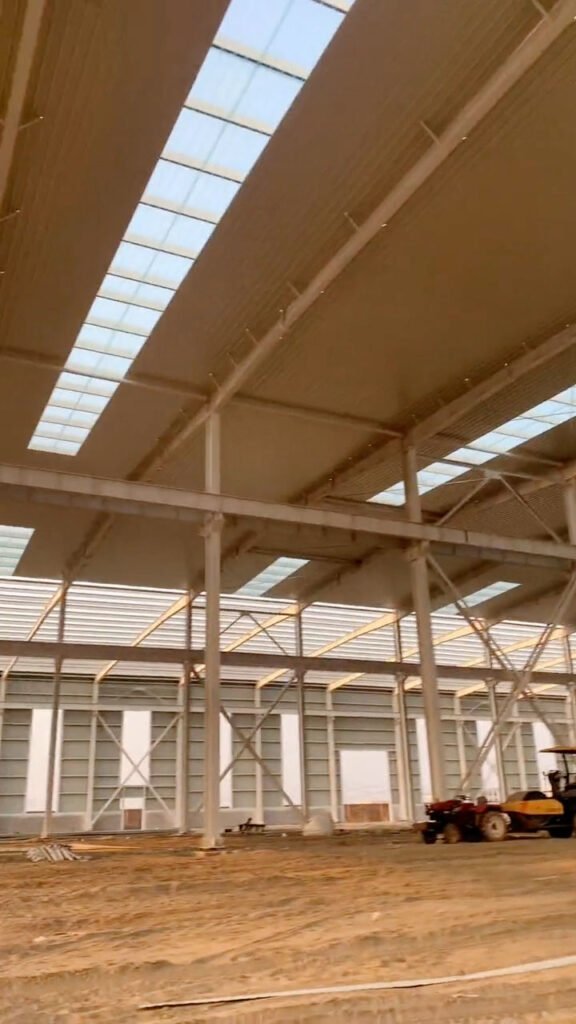
Industrial Steel Building Cost: Key Influencing Factors
To fully understand your total steel warehouse building cost, you have to look beyond just the raw material. The total investment is a combination of several phases, from design to final handover.
1. Material Costs
The global price of raw steel fluctuates. As a direct manufacturer, we purchase steel in massive bulk quantities, allowing us to lock in highly competitive rates. We pass these economies of scale down to you. The type of cladding you choose also impacts this cost. Simple single-skin corrugated metal sheets are highly affordable, while insulated polyurethane (PU) sandwich panels—necessary for cold storage or climate-controlled manufacturing—will increase the initial material cost.
2. Foundation Costs
This is where an [Industrial Building] made of steel shines. Traditional concrete structures are incredibly heavy, requiring massive, deep, and expensive concrete foundations. Because steel has a much higher strength-to-weight ratio, the building itself is lighter. This significantly reduces the size and depth of the required footings, saving you thousands of dollars in concrete and excavation labor in Mexico.
3. Transportation and Import Costs
Shipping steel across the Pacific might sound expensive, but it is actually highly efficient. The steel components are meticulously packed into standard 40ft High Cube or Open Top containers to maximize space. You will need to factor in the sea freight to ports like Manzanillo, Lázaro Cárdenas, or Ensenada, as well as Mexican import duties and inland freight to your job site. Even with these logistics factored in, the overall steel warehouse building cost remains significantly lower than sourcing locally.
4. Installation Costs
Your Chinese manufacturer provides the complete kit, but you will hire a local [warehouse building contractor] in Mexico for the assembly. Because a pre-engineered building arrives on-site completely cut, drilled, and painted, there is virtually no welding required. The structure is simply bolted together. This slashes local labor hours and crane rental times by more than half compared to traditional construction.
Real Case Comparison: Concrete vs. Steel in Monterrey
Let’s look at a realistic scenario based on typical market conditions. A logistics company in Monterrey needed to construct a 5,000-square-meter distribution facility. They compared a traditional concrete block build with importing a prefabricated steel warehouse.
The Traditional Concrete Approach: The local construction firm estimated a 9 to 11-month timeline. The heavy concrete required deep foundation work. Furthermore, concrete columns had to be placed every 10 meters, seriously restricting the maneuverability of the company’s forklifts and limiting their racking layout. The budget was highly susceptible to local cement price hikes and weather delays.
The Prefabricated Steel Approach: The company opted for a steel structure. The manufacturing in China took 5 weeks, and ocean freight to Altamira took another 4 weeks. While the structure was in transit, the local team poured the simplified foundations.
Once the containers arrived, the local assembly took only 6 weeks. The building featured a 40-meter clear span, allowing for optimized, unobstructed racking.
The Result: By choosing steel, the company reduced their overall steel warehouse building cost by nearly 25% and started operations almost five months earlier than the concrete alternative. Those five months of early operations generated revenue that easily covered the ocean freight and import taxes.
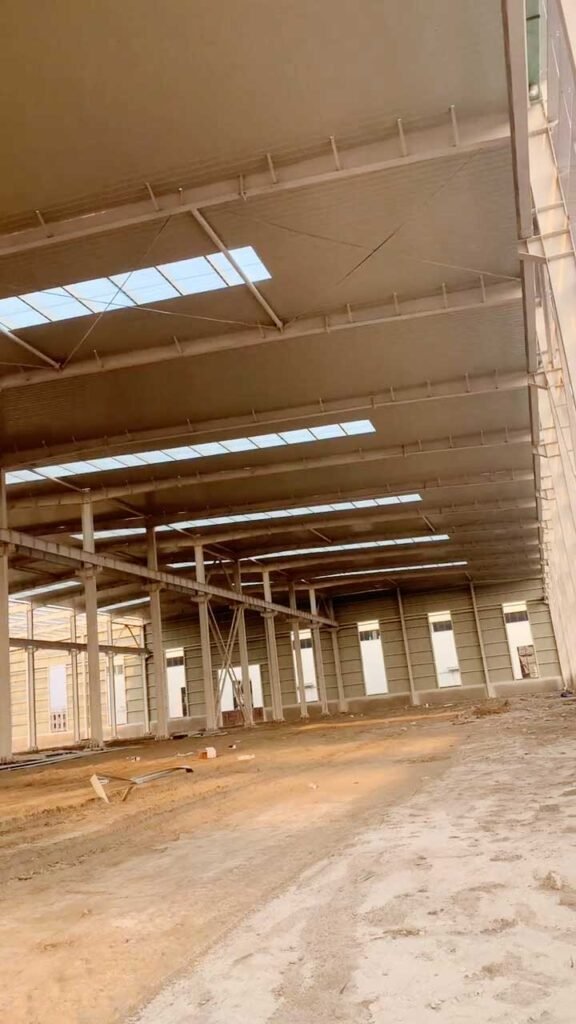
Prefabricated Warehouse Cost: The ROI Advantage
When calculating your return on investment, the steel warehouse building cost must be weighed against operational advantages. A prefabricated system offers unique benefits that protect your long-term capital.
Speed to Market In logistics, time is money. A [Prefabricated Warehouse] allows for parallel processing. Your site preparation and foundation work happen simultaneously with the factory manufacturing of the frame. This overlapping schedule is the primary reason why these buildings go up so fast.
Expansion Possibilities Businesses grow, and your facility needs to grow with you. Expanding a concrete building means noisy demolition, debris, and operational downtime. Expanding a modular steel building is incredibly simple. You remove the cladding from the end wall, bolt on new steel frames, and extend the roof. This modularity means your initial steel warehouse building cost is protected as an adaptable, long-term asset.
Lower Maintenance In humid environments or coastal Mexican cities, rust is a major concern. As a professional [prefabricated warehouse manufacturer], we apply industrial-grade anti-corrosive treatments in our factory. Depending on your location, this can range from high-build epoxy paints to hot-dip galvanizing, ensuring your building requires minimal maintenance over its decades of service.
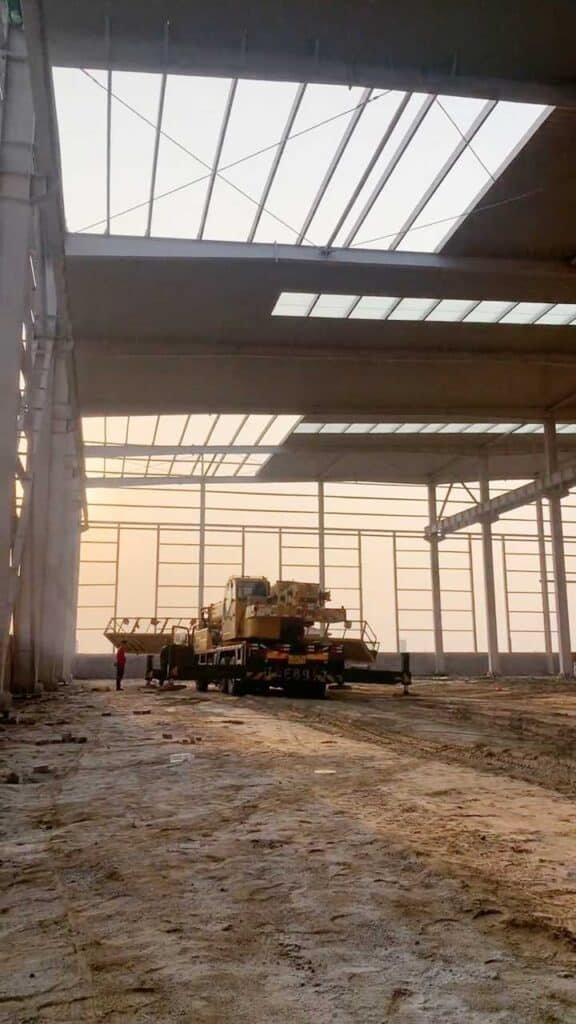
Warehouse Steel Structure Quotation: What You Need to Know
To give you an accurate and transparent price, a supplier needs specific engineering data. Vague requests result in vague pricing. When you reach out for a warehouse steel structure quotation, be prepared to share the following details:
Exact Dimensions: Length, width, and eave height. (Remember, clear span width drives the engineering).
Location: Where exactly in Mexico will this be built? We need this to calculate the precise wind loads and seismic requirements according to local Mexican building codes.
Crane Requirements: Will your [industrial warehouse building] need overhead bridge cranes? If so, we need to know the lifting capacity (e.g., 5-ton, 10-ton) so we can engineer the structural runway beams and reinforce the columns.
Cladding Preferences: Do you need standard steel sheets, or do you require insulated sandwich panels for temperature control?
Doors and Windows: How many rolling shutter doors for loading docks are needed? Do you need skylights to reduce daytime lighting costs?
Providing this information upfront allows our engineers to model the structure in 3D and provide a highly precise steel warehouse building cost without hidden surprises.
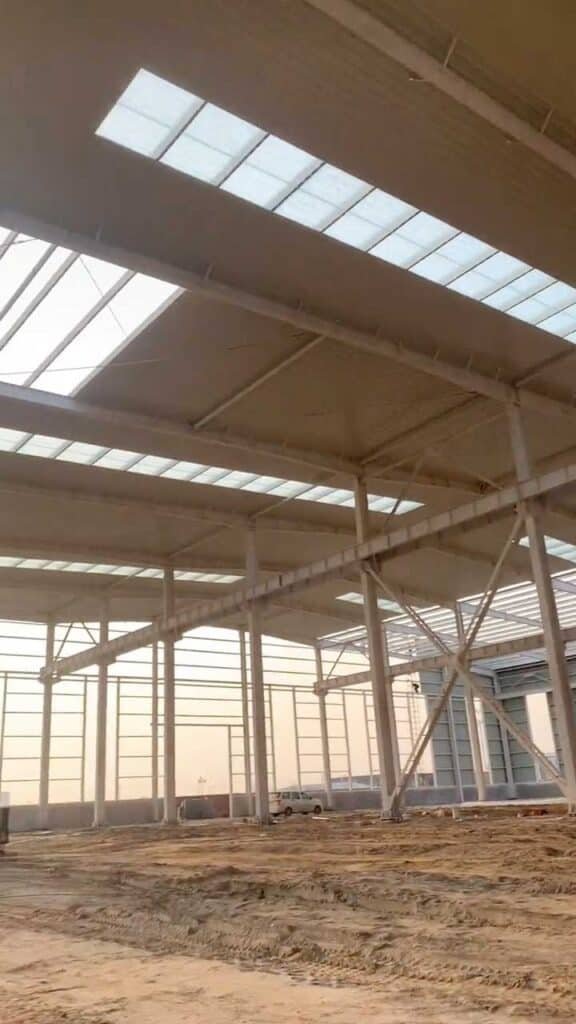
Low Cost Warehouse Construction: Smart Engineering
Achieving a low cost warehouse construction does not mean cutting corners or sacrificing quality. It means utilizing smart engineering and value-driven design choices. Here is how we help our Mexican clients optimize their budgets:
Standardize Bay Spacing: The distance between the main structural columns (the bay spacing) is usually most economical at 6 to 8 meters. Pushing this to 10 or 12 meters requires much heavier roof purlins, driving up costs unnecessarily.
Optimize the Roof Pitch: A standard roof pitch (usually around 1:10) provides excellent water drainage while minimizing the amount of unused vertical space you have to heat or cool.
Avoid Over-Engineering: Rely on our factory’s design team. We use advanced software to ensure the steel is precisely as thick as it needs to be for safety and compliance, without adding unnecessary tonnage that you have to pay for and ship.
By collaborating closely with a seasoned [Steel Structure Building] manufacturer, you can value-engineer your project from day one, ensuring your final steel warehouse building cost aligns perfectly with your business plan.
Frequently Asked Questions (FAQ)
How long does it take to manufacture and ship a steel warehouse to Mexico? Typically, manufacturing the steel framework takes about 4 to 6 weeks, depending on the size and complexity of the project. Ocean freight from our factory to major Mexican ports (like Manzanillo or Lázaro Cárdenas) usually takes another 3 to 5 weeks.
Is a steel warehouse safe during an earthquake? Yes, extremely safe. Steel is a ductile material, meaning it can flex and absorb seismic energy without breaking. We engineer all our structures to strictly comply with the seismic load requirements of your specific location in Mexico.
Do you provide the installation team in Mexico? We are the manufacturer and exporter. We provide the complete building kit, 3D installation drawings, and comprehensive assembly manuals. You will hire a local construction crew or general contractor in Mexico to handle the foundation and the physical bolting together of the structure.
Can I add offices inside my steel warehouse? Absolutely. We can design and include a steel mezzanine system within the warehouse framework to support second-floor offices, maximizing your usable ground footprint for logistics or manufacturing.
Conclusion
Expanding your industrial footprint in Mexico requires a strategic approach to capital investment. Traditional construction methods are often too slow, too rigid, and too unpredictable for today’s fast-moving logistics and manufacturing sectors.
By choosing to import a prefabricated solution, you take control of your project. Understanding the steel warehouse building cost reveals that the true value lies not just in the competitive price per square meter, but in the massive savings generated by faster construction, cheaper foundations, and earlier operational start dates.
If you are ready to move away from local construction delays and embrace the efficiency of global manufacturing, our engineering team is ready to support your next big project in Mexico.
Ready to Build Your Next Facility?
Stop guessing about your construction budget. Let our expert engineers provide you with a precise, no-obligation breakdown of your project.
Request Your Free Quotation Today and discover exactly how much time and money you can save on your next industrial facility in Mexico. Contact us with your project dimensions to get started!