
Steel Building Price Per SQM in Australia
The Complete B2B Guide to Calculating Your Steel Building Investment in Australia
Australia’s industrial sector is operating at a relentless pace. From the massive mining operations expanding across Western Australia to the rapid development of e-commerce logistics hubs in Melbourne, Sydney, and Brisbane, the demand for reliable, large-scale infrastructure is peaking.
However, Australian developers, project managers, and business owners are facing a severe local bottleneck. Domestic steel fabricators are booked out for months, local material costs are heavily inflated, and on-site construction labor in Australia is among the most expensive in the world.
To bypass these local hurdles and keep capital expenditures (CAPEX) under control, more Australian companies are sourcing structural steel directly from global manufacturing hubs. As a Chinese manufacturer with extensive experience exporting to Oceania, we understand that you need transparency before you invest.
The first and most critical question we receive is always regarding the steel building price per sqm. In this comprehensive guide, we will break down the true costs, shipping realities, local compliance with Australian Standards, and how importing pre-engineered steel directly impacts your bottom line.
To accurately forecast your budget, you have to break down the total project investment. Sourcing a building from an overseas factory fundamentally shifts how your money is spent, moving the bulk of the expense from unpredictable on-site labor to controlled, fixed-price manufacturing.
Here is what makes up your overall investment:
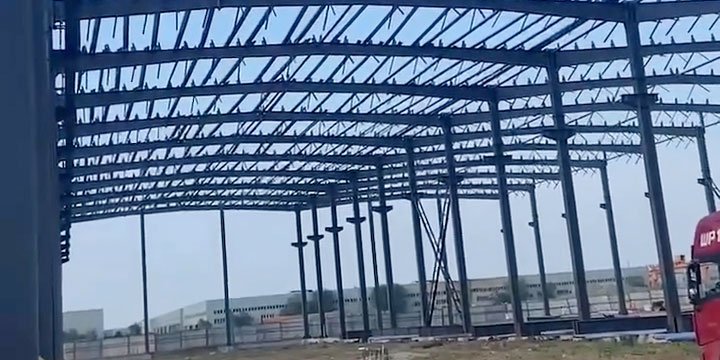
1. Material Cost (The Steel Kit) This is the core product you buy from our factory. It includes the primary structural frame (welded H-beams and columns), secondary framing (C/Z purlins, girts), roof and wall cladding (Colorbond-equivalent steel sheets or insulated sandwich panels), and all high-strength structural bolts. Because we manufacture at a massive global scale, our raw steel purchasing power is significantly stronger than a local Australian fabricator, lowering your baseline cost.
2. Freight and Logistics Cost This covers the packing of your structural steel into 40ft High Cube or Open Top shipping containers, the ocean freight from our ports in China to your local Australian port (such as Fremantle, Sydney, Melbourne, or Brisbane), and local import clearances.
3. Local Installation Cost This is where the prefabricated model saves Australian businesses the most money. Because the entire building arrives on your site pre-cut, pre-drilled, and pre-welded, there is absolutely no hot works or welding required on site. Your local Australian riggers simply bolt the frame together. You drastically reduce crane hire time and highly-paid local labor hours.
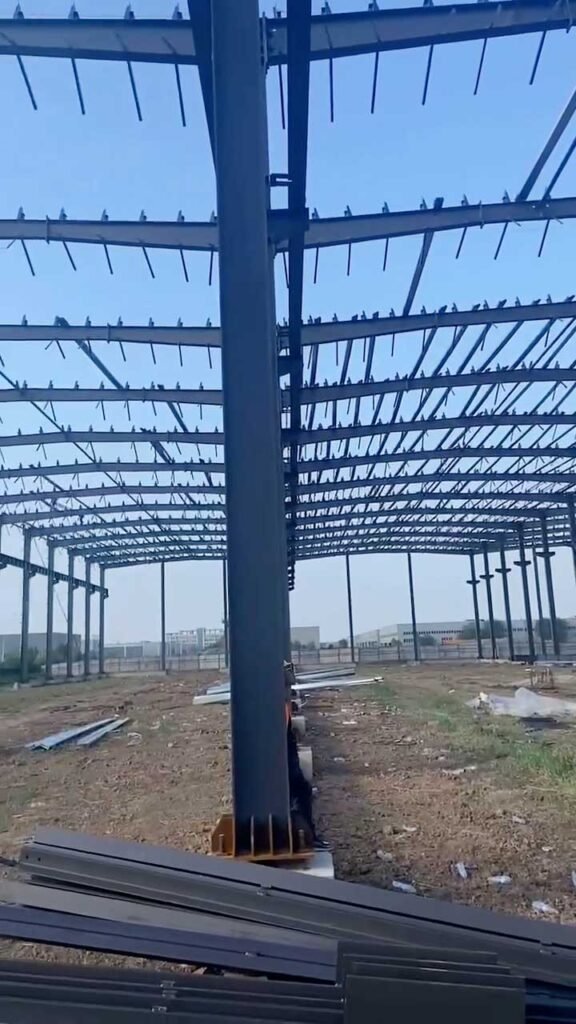
Let’s get into the actual numbers. When Australian buyers ask us for a baseline, they are looking for a reliable benchmark for their initial feasibility studies.
For a standard imported pre-engineered structure, the base steel building price per sqm typically ranges from $50 to $95 USD per square meter (approximately $75 to $145 AUD per square meter, depending on currency fluctuations).
It is vital to understand that this price reflects the manufactured steel kit (FOB or CIF pricing). It does not include your local land costs, the concrete slab, or the wages of the Australian erection crew.
Why is there a $45 variance in that steel building price per sqm? Because the price is entirely dependent on your engineering requirements. If you are building a simple agricultural shed in inland New South Wales with a 15-meter span, your cost will be on the lower end. If you are building a massive logistics center in coastal Queensland with a 40-meter clear span that must survive cyclones, the sheer volume of steel required will push you toward the higher end of the spectrum.
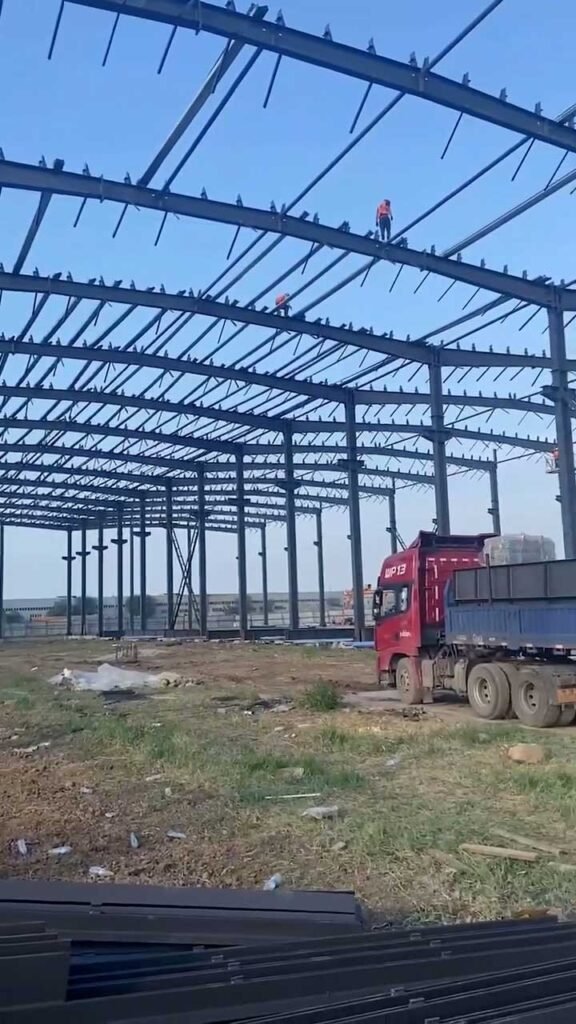
The engineering phase dictates the final tonnage of steel, which directly dictates your final invoice. When designing for the Australian market, we engineer structures to strictly comply with AS 4100 (Steel Structures) and AS/NZS 1170 (Structural Design Actions).
Here are the primary design factors that will increase or decrease your cost:
1. Australian Wind Regions (Cyclonic vs. Non-Cyclonic) Australia’s building codes are exceptionally strict regarding wind loads.
Region A & B (Normal): Cities like Sydney, Melbourne, and Adelaide fall into lower wind categories. The steel columns and bracings require standard thicknesses, keeping your steel building price per sqm highly economical.
Region C & D (Cyclonic): If you are building in Darwin, Port Hedland, or coastal Queensland, the structure must be engineered to withstand severe tropical cyclones. This requires heavier I-beams, closer purlin spacing, and reinforced connections. This extra steel tonnage increases the price.
2. Clear Span Width Warehouse operators want unobstructed floor space. A “clear span” means there are no interior columns holding up the roof. We can engineer clear spans up to 50 meters wide. However, crossing a 50-meter gap requires massive, highly reinforced steel rafters. If your operation can tolerate one row of central columns, you can significantly reduce the steel weight and lower the overall cost.
3. Anti-Corrosion Treatments For sites in the harsh Outback, a standard dual-layer industrial paint or epoxy primer is sufficient. However, if your building is near the ocean or housing corrosive materials (like fertilizer storage), we strongly recommend Hot-Dip Galvanizing. This metallurgical process coats the steel in zinc, providing decades of rust protection, though it adds a premium to the initial manufacturing cost.
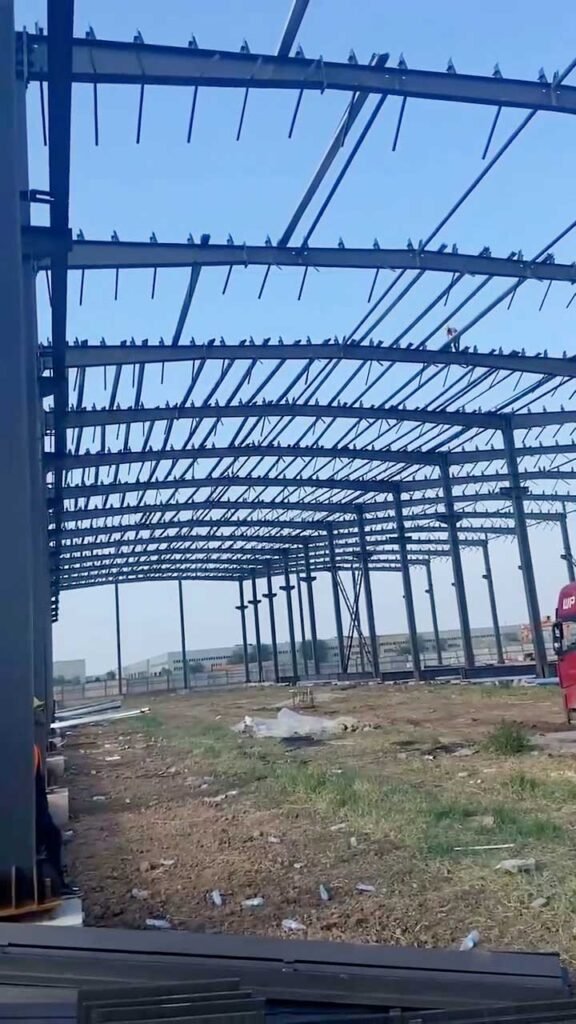
Comparison: Steel Building vs. Concrete Building in Australia
Many commercial developers initially weigh tilt-up concrete panels against pre-engineered steel. In the Australian construction climate, the financial and operational differences are stark.
| Project Element | Traditional Tilt-Up Concrete | Imported Pre-Engineered Steel |
| Construction Speed | 8 to 12 months. Prone to severe weather delays. | 2 to 3 months. Fast, bolted assembly. Unaffected by concrete curing times. |
| Foundation Costs | Highly expensive. Massive weight requires deep, heavily reinforced footings. | Cost-effective. Steel is lightweight, significantly reducing excavation and concrete volume. |
| Labor Dependency | Relies heavily on expensive local trades, formworkers, and concrete pumpers. | Arrives as a flat-pack kit. Erected quickly by a standard rigging crew. |
| Expansion Flexibility | Demolition is required to expand. Extremely disruptive to the business. | 100% Modular. Unbolt the end wall, add new frames, and extend the roof easily. |
| Overall CAPEX | High initial investment and unpredictable site costs. | Fixed manufacturing cost locks in a highly competitive steel building price per sqm. |
When calculating the return on investment (ROI) for heavy manufacturing or mining infrastructure, you must look at operational readiness.
Industrial facilities often require heavy modifications. If your factory needs to support 10-ton or 20-ton overhead gantry cranes, we engineer the crane runway beams and structurally reinforce the primary columns directly in the factory. Doing this level of heavy fabrication on-site in Australia would incur astronomical labor and welding fees.
By pushing the complex fabrication to our automated CNC factory in China, you lock in a fixed, low rate. Even after you pay for ocean freight and Australian import duties, the total steel building price per sqm remains drastically lower than commissioning a local Australian steel fabricator who is burdened by high local overheads.
Furthermore, thanks to the China-Australia Free Trade Agreement (ChAFTA), importing structural steel components from China can often benefit from favorable tariff treatments, provided your customs broker manages the documentation correctly. We supply all necessary compliance paperwork, including Mill Test Certificates and exact Packing Lists, to ensure smooth clearance.
The logistics of getting a building from our factory floor to your site in Australia is a highly streamlined process.
Once manufacturing is complete, your building is packed logically. We do not just throw steel into a container. We pack it so that the first pieces you need for erection (the columns and main rafters) are easily accessible, saving your crane operators time during unloading.
Shipping routes from China to Australia are among the busiest and most reliable in the world. Ocean transit times generally range from 14 to 25 days depending on the destination port.
When you factor in the accelerated timeline—meaning you can start operations and generate revenue months earlier than a traditional build—the economics heavily favor the imported model. The reduced on-site labor, the lighter foundation requirements, and the factory-direct purchasing power combine to deliver an unbeatable steel building price per sqm.
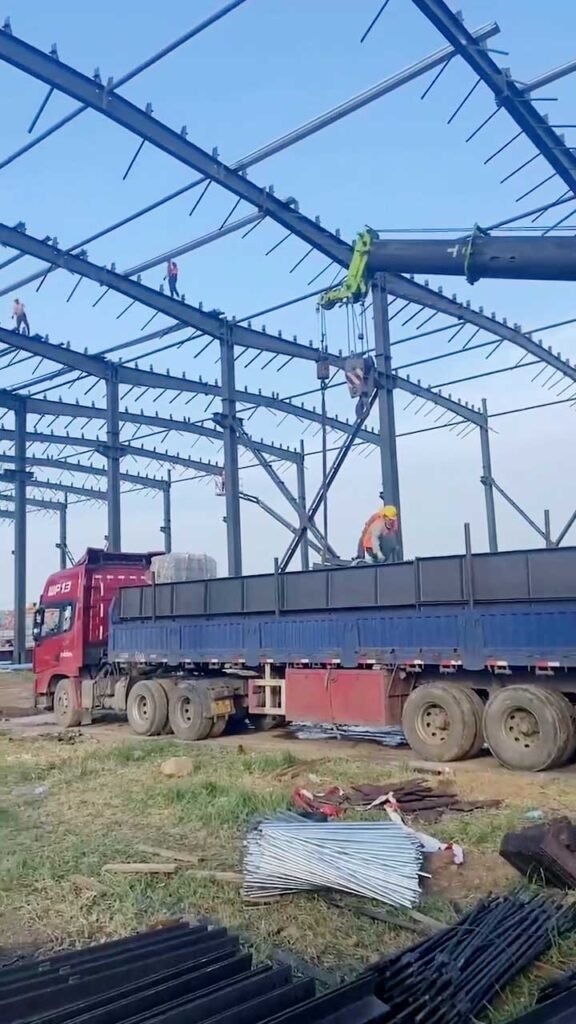
Frequently Asked Questions
Do your buildings comply with Australian Building Codes? Yes. We strictly adhere to Australian engineering standards. Your building will be designed to meet AS 4100 (Steel Structures) and AS/NZS 1170 (Wind, Snow, and Seismic loads) based on the exact address of your site.
Who builds it once it arrives in Australia? We are the manufacturer and supplier. We provide the complete building kit, comprehensive 3D assembly drawings, and a detailed packing list. You will hire a local Australian commercial builder or steel rigging crew to pour the slab and bolt the structure together.
Can I use Colorbond steel for the roof and walls? We offer high-quality corrugated steel sheets that match the durability and color profiles commonly used in Australia. If you prefer to source actual BlueScope Colorbond cladding locally for warranty purposes, we can simply supply the primary structural frame and purlins, allowing you to attach local cladding on-site.
Take Control of Your Construction Budget
In Australia’s high-cost construction environment, relying on slow traditional methods and expensive local fabrication limits your company’s growth. By importing a precision-engineered structural solution directly from a global manufacturer, you secure a world-class asset while protecting your budget.
Stop guessing about your capital expenditure and start planning with hard numbers. Let our team of structural engineers analyze your location, wind region, and operational requirements to provide you with a transparent, highly detailed proposal.
Get Your Project Quotation Today Send us the dimensions of your project (length, width, and eave height) and your site location to receive an exact structural analysis and pricing breakdown.