
Industrial Steel Building Cost: U.S. Price Per Sq. Ft. & Design Guide
Balancing CAPEX and Compliance: A Precision Guide to U.S. Industrial Steel Building Costs
The United States is experiencing an extraordinary industrial resurgence. Driven by the expansion of domestic manufacturing, advanced e-commerce distribution networks, and massive logistics hubs across regions like the Texas Triangle, the Midwest, and the Inland Empire, developers are racing to get new square footage online.
However, anyone managing a commercial construction project in the U.S. faces significant financial headwinds. Domestic steel fabrication shops frequently operate with backlogs extending six to nine months, local labor costs continue to climb, and navigating local building codes can become a budget-breaking process if not handled correctly during the design phase.
To mitigate these challenges, forward-thinking project managers and structural engineers are increasingly shifting away from traditional on-site fabrication to a direct-from-manufacturer import model. By sourcing precision-engineered structural steel directly from global automated factories, companies can lock in competitive pricing and shorten project timelines.
To help you perform an accurate feasibility study for your next project, this guide provides a transparent, technically detailed breakdown of the true industrial steel building cost in the U.S. market.
Industrial Building Cost
When calculating your total project budget, it is important to distinguish between the cost of the structural steel package and the total cost of the completed building. A complete project budget involves multiple layers: soft costs (engineering and permitting), structural shell costs, civil works (foundations), and interior fit-outs.
The total industrial steel building cost is heavily influenced by macroeconomic factors. The global price of hot-rolled coil (HRC)—the raw material used to fabricate I-beams and built-up plates—is the single largest variable in material expenses. Because our factory purchases steel in massive quantities directly from primary mills, we can shield our clients from the high retail markups common among domestic steel distributors.
Beyond raw material, engineering complexity plays a major role. A basic clear-span structure intended for bulk storage requires minimal engineering hours. Conversely, a facility designed for automated storage and retrieval systems (ASRS), or one requiring internal heavy-duty crane runways, requires complex dynamic load calculations, which will impact the initial engineering and material allocation.
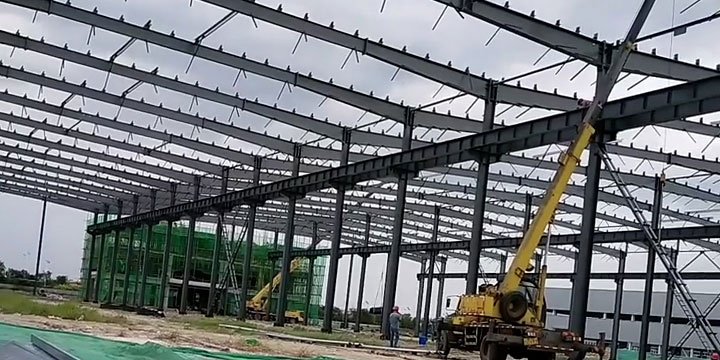
Steel Warehouse Cost
For an industrial facility in the U.S., owners typically look at the cost per square foot to establish a baseline budget.
For the structural steel package imported from our factory, the typical steel warehouse cost ranges from $15 to $35 USD per square foot.
This factory-direct material package includes:
Primary Framing: Heavy-duty welded H-section columns and rafters, end-wall frames, and base plates.
Secondary Framing: Cold-formed C or Z purlins for the roof and girts for the walls, along with flange bracing and eave struts.
Cladding Systems: Standard 24-gauge or 26-gauge high-tensile steel roof and wall panels (available with premium coatings equivalent to Kynar 500) or insulated sandwich panels.
Structural Fasteners: High-strength ASTM A325 or A490 structural bolts for primary connections and self-drilling screws with EPDM washers for weather-tight cladding.
This price per square foot varies based on the geometry of the building. For instance, a warehouse requiring a 150-foot clear span without any interior columns requires significantly larger, deeper built-up rafter sections to handle the bending moments. If your operational layout can accommodate a center row of columns, the structural steel weight drops dramatically, directly lowering the overall steel warehouse cost.
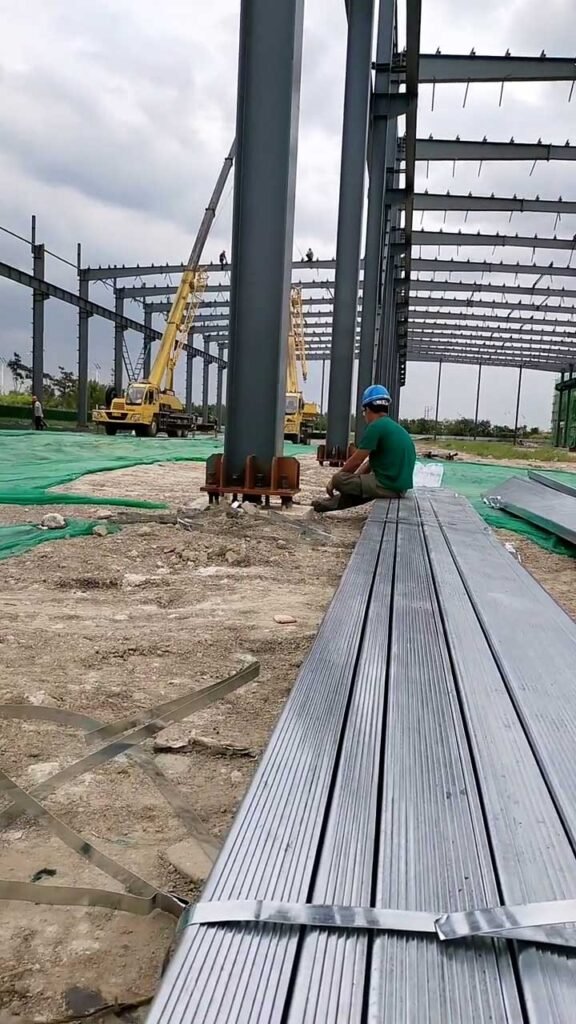
Steel Structure Price
Every structure exported to the U.S. must be engineered to comply strictly with the International Building Code (IBC) alongside the American Institute of Steel Construction (AISC) and Metal Building Manufacturers Association (MBMA) design criteria. Our engineering team utilizes advanced 3D structural modeling software to input the exact ZIP code of your job site, automatically applying the local environmental load requirements.
These localized engineering loads are a primary driver of the final steel structure price:
1. Wind Loads
If you are building in coastal regions like Florida, the Gulf Coast of Texas, or the Carolinas, the building must be engineered to withstand wind speeds ranging from 140 to 160 mph. This requires heavier portal frames, robust wind bracing systems (cable or rod bracing), and thicker cladding fasteners to resist high suction forces.
2. Snow and Ice Loads
Projects in the Northeast, Upper Midwest, or mountainous regions of the West face heavy ground snow loads. To prevent structural failure under snow accumulation, the roof purlin spacing must be tightened from the standard 5 feet down to 3 or 4 feet, and the primary rafters must be reinforced.
3. Seismic Risk
In high-seismic zones like California or the Pacific Northwest, the structure must be designed with high ductility. This involves specialized moment connections and robust bracing layouts that allow the frame to absorb and dissipate seismic energy safely.
Estimated Tonnage and Cost Impact by U.S. Region
| Region / Typical Location | Primary Environmental Challenge | Relative Steel Tonnage Impact | Estimated Kit Price Range (USD/Sq. Ft.) |
| Central Texas / Plains | Low snow, standard wind (115 mph) | Baseline (1.0x) | $15 – $22 |
| South Florida / Coast | Extreme hurricane wind (150+ mph) | Increased wall/roof framing (+20%) | $22 – $28 |
| Minnesota / New England | Heavy ground snow load (50+ psf) | Heavy roof structure (+25%) | $24 – $32 |
| Coastal California | Severe seismic activity (Category D/E) | Heavy columns and moment joints (+30%) | $26 – $35 |
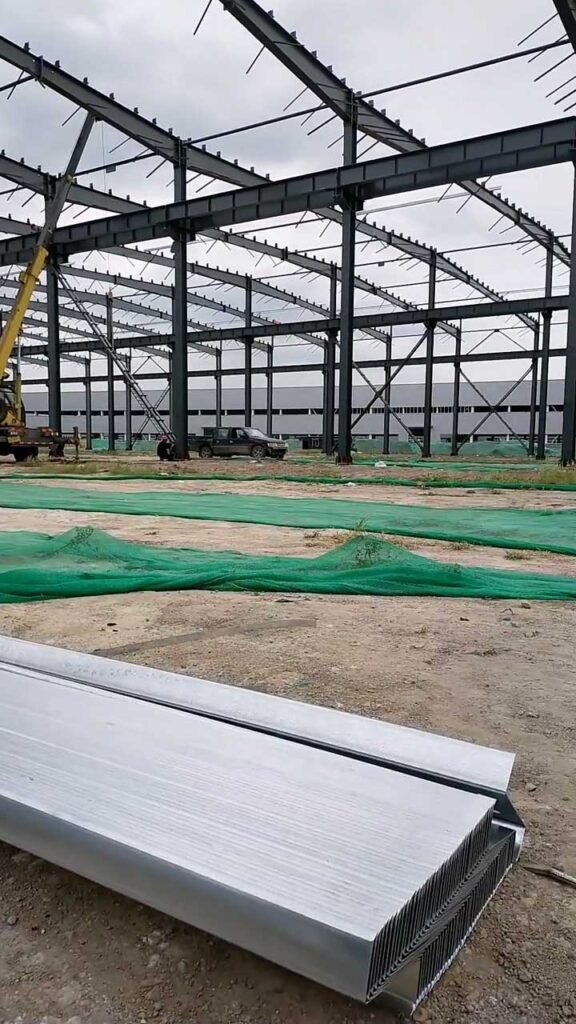
Prefabricated Industrial Building
The primary reason why a prefabricated industrial building represents a major cost-saving opportunity for U.S. developers is the elimination of field fabrication.
In a traditional stick-built structure, raw steel beams are shipped to the job site, where ironworkers must measure, cut, cope, and weld the steel in the open air. This process is slow, highly dependent on favorable weather, and utilizes highly compensated on-site labor.
With a factory-prefabricated system, the entire building is manufactured under strict ISO 9001 quality control conditions. Every member is cut to length, pre-punched with bolt holes, welded using automated submerged arc welding machines, and labeled with an alphanumeric code matching the erection drawings. When the shipping containers arrive at your job site, the assembly is a mechanical process: the parts are lifted into place and secured with high-strength structural bolts.
Tilt-Up Concrete vs. Prefabricated Industrial Steel
| Performance Metric | Tilt-Up Concrete Panels | Prefabricated Steel Building |
| On-Site Construction Speed | Moderate (requires extensive formwork, pouring, and curing time). | Fast (bolted assembly begins as soon as foundations cure). |
| Foundation Requirements | Heavy, deep, and expensive footings to support the immense dead load of concrete walls. | Lighter footprint (high strength-to-weight ratio minimizes concrete volume). |
| Long-Term Flexibility | Extremely difficult to modify or expand; requires major demolition. | Highly scalable (modular design allows easy expansion by removing end walls). |
| Insulation Efficiency | Requires complex interior furring and insulation layers to meet energy codes. | Accommodates high-R-value fiberglass blankets or factory-insulated sandwich panels. |
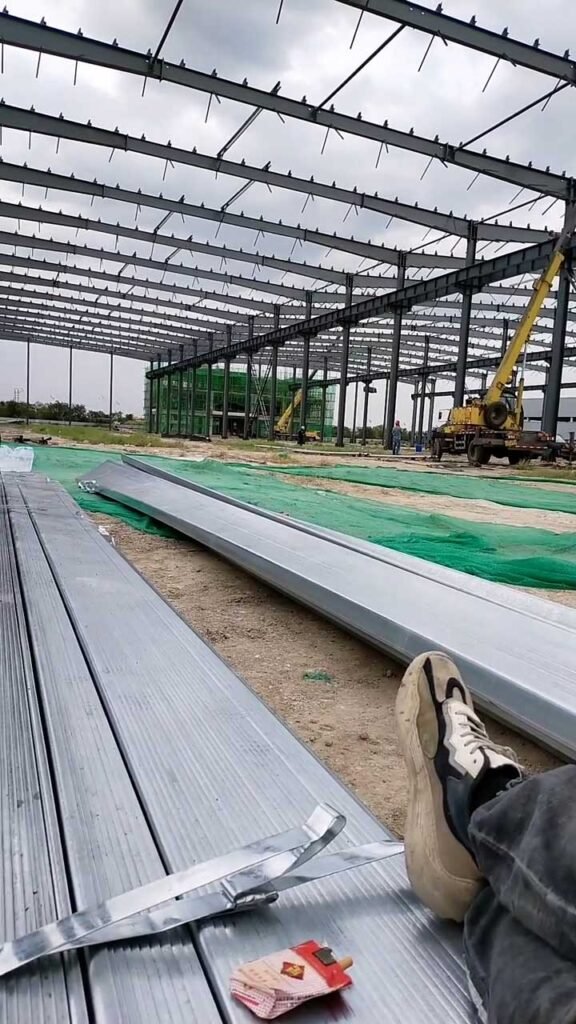
Warehouse Building Cost
To understand the long-term return on investment (ROI), developers must evaluate the total warehouse building cost, which includes local field installation and ongoing operational efficiency.
Installation and Field Labor While sourcing your steel package from an international manufacturer significantly reduces your upfront material expense, you will work with a local U.S. general contractor or steel erector to manage the site. Because our prefabricated components are designed for fast assembly, field erection hours are typically reduced by 40% to 50% compared to traditional field-welded builds. This reduction in labor hours directly lowers your total warehouse building cost and minimizes expensive crane rentals on site.
Energy Code Compliance (ASHRAE 90.1) Operating a large industrial facility in the U.S. requires compliance with strict energy efficiency standards. To minimize long-term heating and cooling costs, our buildings are designed to integrate seamlessly with modern insulation systems:
Over-Purlin Fiberglass Blankets: A cost-effective method utilizing a double-layer system with thermal spacer blocks to achieve high R-values.
Insulated Metal Panels (IMPs): These factory-engineered sandwich panels feature a rigid polyurethane foam core between two steel sheets. They provide excellent thermal performance, a modern architectural finish, and speed up installation by serving as both the structural skin and the insulation layer in a single step.
Logistics and Ocean Freight A common question from U.S. buyers is how shipping from China impacts the overall budget. We optimize our structural designs to pack densely into standard 40ft High Cube containers. This careful logistics planning protects the steel from damage during transit and maximizes the weight per container, lowering your freight cost per ton.
With direct shipping lanes to major U.S. ports—including Houston, Los Angeles/Long Beach, Savannah, and Newark—ocean transport is a highly routine and reliable process.
Frequently Asked Questions (FAQ)
Does your factory-engineered steel meet local U.S. building codes? Yes. All our structures are designed and detailed in strict accordance with the International Building Code (IBC), AISC specifications for structural steel buildings, and MBMA standards. We provide fully stamped engineering drawings and calculations ready for submission to your local building department.
What is the standard lead time for an imported industrial building? The engineering detailing and factory fabrication phases typically take 6 to 8 weeks, depending on the scale and complexity of the project. Ocean freight transit to a U.S. port generally ranges from 3 to 5 weeks. This results in a total lead time of approximately 9 to 13 weeks from design finalization to site delivery.
How do you ensure the precision of bolt holes for on-site alignment? Our factory utilizes advanced automated CNC cutting, drilling, and punching machinery linked directly to our 3D structural modeling software. Every part is manufactured to tolerances within fractions of an inch, and we perform rigorous factory pre-assembly checks on critical joints before packing and shipping.
Can your buildings support heavy overhead manufacturing cranes? Yes. We frequently engineer industrial buildings with integrated crane runway beams, stepped columns, and customized portal frames designed to support bridge cranes ranging from 5-ton to over 50-ton lifting capacities.
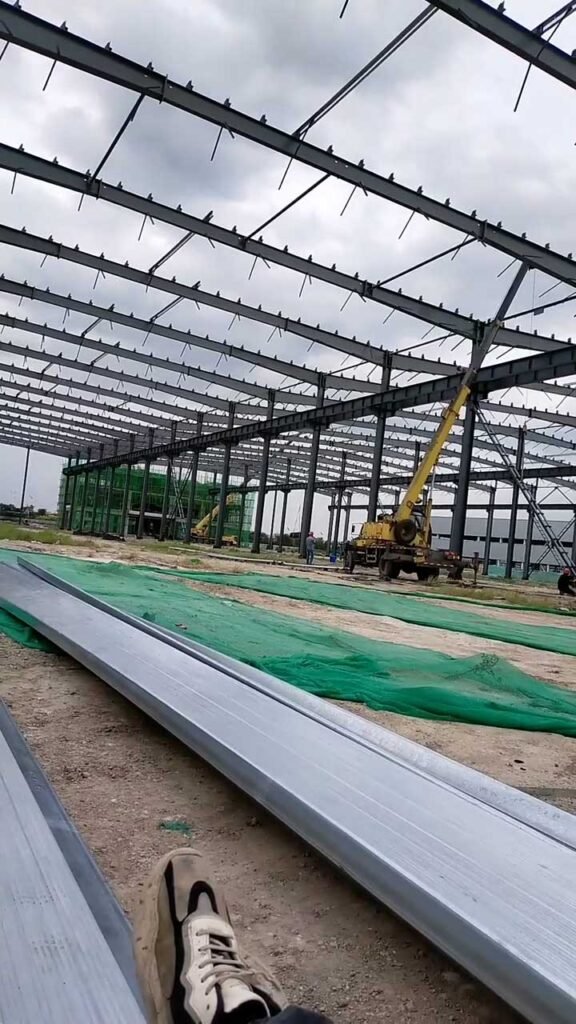
Value-Driven Engineering for Modern Industry
In a competitive market where fast project execution and tight budget control determine success, relying on traditional, labor-intensive construction methods can introduce unnecessary risk to your project timeline. Sourcing a precision-engineered prefabricated steel structure provides an efficient, scalable, and code-compliant solution that minimizes field labor and optimizes your capital expenditure.
An accurate cost estimate requires specific project parameters rather than generic assumptions. Our engineering team is ready to analyze your site location, architectural footprints, and environmental loading requirements to deliver a highly accurate financial and structural proposal.
Get Your Cost Estimate Today
Stop working with broad estimates. Let our specialized industrial design team provide you with a comprehensive, fixed-price material proposal tailored exactly to your operational goals and local U.S. building codes.
Contact us today with your target length, width, eave height, and delivery ZIP code, and we will deliver a detailed engineering review and cost breakdown for your upcoming project.