
Clear Span Warehouse Price: Cost Factors & North American Engineering
Designing for Yield: The Realities of Sourcing a Column-Free Industrial Structure
For commercial real estate developers, third-party logistics (3PL) providers, and industrial operations across North America, floor space optimization is the ultimate metric for profitability. Whether you are expanding a distribution node near the Dallas-Fort Worth inland port, setting up a manufacturing facility in Ohio, or building an agricultural hub in the Canadian Prairies, every square foot of unobstructed interior space directly translates to additional inventory capacity and smoother material handling.
However, when you remove interior columns to maximize your layout, you fundamentally change the structural engineering of the building. As a steel structure engineer with decades of experience designing high-performance pre-engineered metal buildings (PEMBs), and from a modern B2B search visibility perspective, I see buyers consistently make the same mistake: focusing purely on a generic price per square foot without understanding how structural span choices dictate steel tonnage, logistics, and total construction budgets.
This guide provides a comprehensive, technically rigorous breakdown of how structural choices impact your true clear span warehouse price in the North American market.
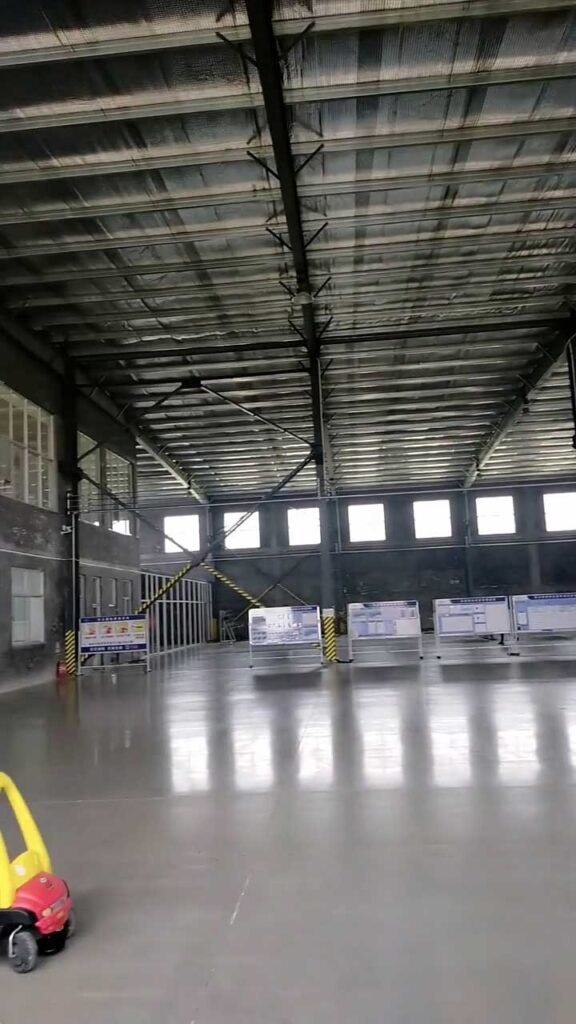
Clear Span Warehouse
A Clear Span Warehouse is engineered to transfer all structural loads (dead, live, wind, snow, and seismic) exclusively through the exterior perimeter columns and rigid main frames. This leaves the entire interior floor footprint completely open and flexible.
From an operational standpoint, this architectural choice offers massive advantages over multi-span buildings that utilize interior pipe columns:
Unobstructed Racking Layouts: Your high-density pallet racking configurations are completely independent of structural column locations.
Optimized Forklift Flow: Eliminating interior columns significantly reduces the risk of structural collisions and allows for tighter, high-efficiency wire-guided or automated guided vehicle (AGV) aisles.
Long-Term Adaptability: If your business model shifts from fulfillment to light manufacturing, a column-free space can easily be reconfigured without structural modifications.
However, from an engineering perspective, a column-free design requires a massive amount of structural strength. Without interior supports to break up the distance, the primary rigid frames must handle intense bending moments, particularly at the eave connections where the rafters join the columns. To manage these forces, engineers must specify tapered, built-up I-sections with heavy steel plates, thick webs, and wide flanges. This specialized manufacturing directly influences the initial structural steel package price.
Large Span Warehouse
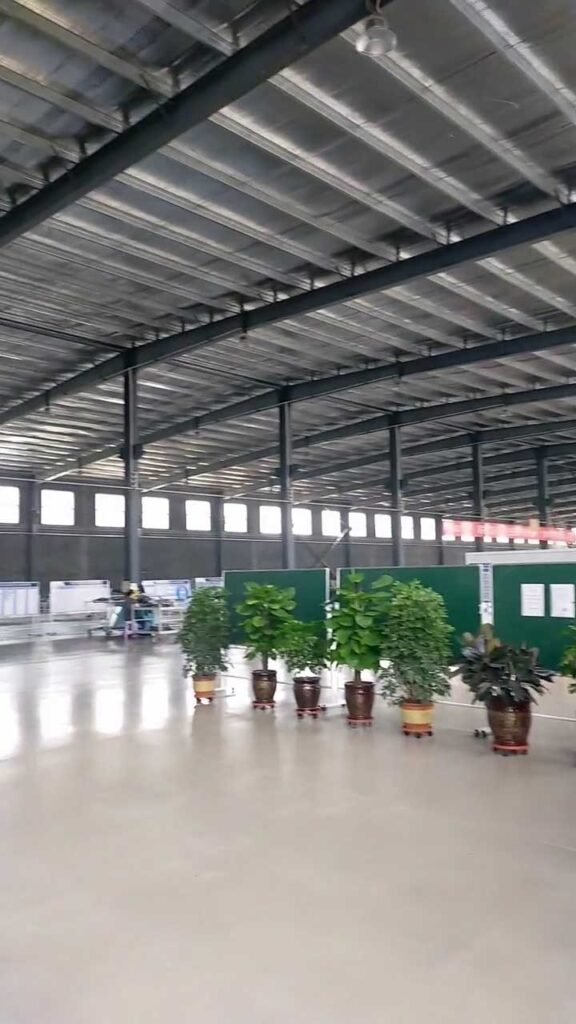
As you increase the width of a Large Span Warehouse, the structural demands do not increase linearly—they escalate exponentially. This is due to the fundamental physics of bending moments, where structural forces scale proportionally with the square of the span length.
For example, widening an open span from 60 feet to 120 feet does not simply double the stress on the roof rafters; it multiplies the bending moments by a factor of four. To counter these forces without mid-span supports, our factory uses computer-aided engineering (CAE) software to design custom web and flange combinations.
We utilize high-strength, low-alloy structural steel (typically ASTM A572 Grade 50 or its global equivalent, Q355B), which provides a minimum yield strength of 50,000 psi.
The Mechanics of Structural Width Shift
When designing wide, column-free framing lines, our automated factories alter the physical characteristics of the steel frames:
Deepened Web Plates: The middle section of the steel rafter becomes significantly deeper at the haunch (the junction where the slope meets the wall) to provide the necessary section modulus.
Heavy-Gauge Flanges: The top and bottom plates of the I-beam are thickened to handle the intense compression and tension forces across the wide span.
Flange Bracing and Stiffeners: Additional structural steel is allocated to secondary stabilization components, ensuring the massive frames do not buckle laterally under full design loads.
Because of this physical reality, a 150-foot wide column-free structural package will always require a higher overall tonnage of steel per square foot than a 60-foot or 80-foot wide option, which impacts your final project quotation.
To establish an accurate baseline for your feasibility studies, it is crucial to analyze how dimensional configurations alter the total Warehouse Cost.
For the engineered structural steel package imported from our factory, the typical clear span warehouse price generally ranges from $18 to $40 USD per square foot.
This factory-direct material package encompasses the primary rigid frames, cold-formed secondary framing (Z-purlins and C-girts), structural bracing rods, standard 24-gauge or 26-gauge high-tensile steel cladding sheets, and all structural ASTM A325 connection bolts.
The structural dimensions and local environmental safety factors dictate where a project lands within that cost range:
Structural Width vs. Sourcing Cost Per Square Foot
| Span Width (Column Free) | Typical Application | Relative Steel Tonnage Impact | Estimated Kit Price Range (USD / Sq. Ft.) |
| 60 to 80 Feet | Small light industrial, local workshops, regional retail storage. | Baseline (Optimized efficiency) | $18 – $24 |
| 100 to 120 Feet | Mid-sized distribution centers, fulfillment spaces, aircraft hangars. | Moderate increase (+15% to 20% steel weight) | $23 – $30 |
| 140 to 180+ Feet | Massive heavy industrial facilities, commercial 3PL hubs, major multi-modal nodes. | High engineering load (+35% to 50% steel weight) | $29 – $40+ |
Environmental Loads: Local Building Code Realities
Sourcing steel globally does not mean compromising on local code enforcement. Every building kit we manufacture is calculated based on the specific International Building Code (IBC) or National Building Code of Canada (NBCC) parameters linked to your delivery ZIP/Postal code.
Snow and Ice Loads: In northern states or Canadian provinces, a wide clear span must support heavy ground snow loads (often 40 to 60+ lbs per sq ft). To handle this safely, we decrease the distance between roof purlins and specify heavier roof rafters.
Wind Exposures: For hurricane-prone coastlines or high-wind open plains (such as the Midwest), the building must withstand wind loads up to 140+ mph. This requires robust portal frames or heavy-duty cable/rod bracing lines.
Steel Warehouse Building
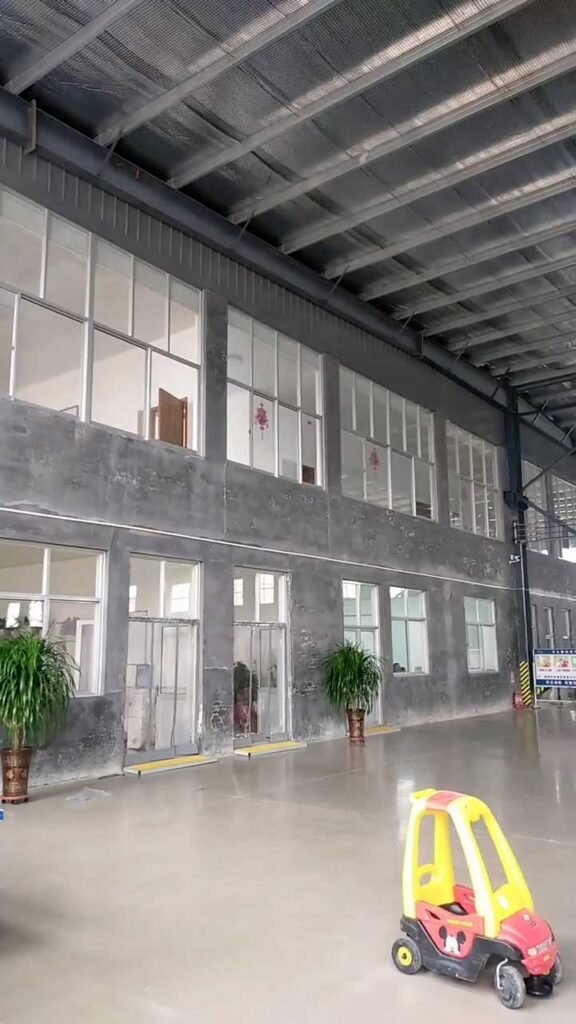
The total investment required to get a Steel Warehouse Building fully operational extends past the initial factory order. The physical installation process represents a substantial portion of your capital expenditure, and this is where a factory-prefabricated kit delivers massive savings.
In traditional stick-built construction, structural steel profiles are delivered to the site in raw lengths. Local ironworkers must perform extensive field cutting, beveling, coping, and structural welding directly in the open air. In North America, where specialized union or field-certified welding labor can easily cost $80 to $150+ per hour, this approach introduces massive financial volatility and extended timelines.
Our prefabricated engineering model eliminates field fabrication entirely:
CNC Accuracy: Every piece of primary and secondary framing is cut, punched, welded, and shot-blasted in our automated manufacturing plant using direct digital files from our engineering team.
Bolted Connections: No field welding is required. The primary framework is erected entirely using high-strength structural bolts (ASTM A325 or equivalent).
Reduced On-Site Timeline: Because the building arrives labeled like an industrial-scale assembly kit, your local North American general contractor or steel erector can assemble the structure in a fraction of the time. This slashes field labor hours, minimizes expensive crane rental durations, and reduces your exposure to weather-related construction delays.
Column Free Warehouse
Sourcing an imported Column Free Warehouse requires balancing factory-direct material savings against the logistical realities of transpacific shipping.
Optimizing Logistics and Ocean Freight
Many commercial developers worry that the cost of shipping heavy structural steel from an international factory will cancel out the production savings. In practice, the structural steel elements are highly suited for dense maritime containerization.
Container Optimization: Our logistics teams use specialized software to model the packing configuration of every 40ft High Cube or Open Top container. Columns, rafters, and secondary framing are bundled tightly to maximize weight capacity and eliminate wasted volumetric space, significantly lowering your freight rate per ton.
Component Length Management: For incredibly wide spans (e.g., a 160-foot clear span), a single roof rafter cannot physically fit into a standard shipping container. Our engineering team solves this by designing strategic, high-strength bolted splices. These joints allow the rafter to be split into manageable sections for transit and then reassembled with absolute structural integrity on your construction site.
Direct Port Delivery: With streamlined maritime shipping lanes connecting major industrial ports to North American gateways (including Vancouver, Los Angeles, Houston, Savannah, and New York/New Jersey), containerized transit is highly routine, secure, and predictable.
Traditional Tilt-Up Concrete vs. Pre-Engineered Clear Span Steel
Performance and Cost Metric Tilt-Up Concrete Systems Pre-Engineered Clear Span Steel Foundation Civil Costs Exceptionally high. Concrete panels are incredibly heavy, requiring massive footings. Significantly lower. High strength-to-weight ratio minimizes required foundation concrete. Erection Speed Moderate. Requires extensive curing times and specialized heavy panel rigging crews. Accelerated. Frame erection and cladding installation occur simultaneously with factory precision. Clear Span Cost-Efficiency Poor. Achieving wide column-free distances with concrete beams is cost-prohibitive. Excellent. Designed specifically to bridge large open spans with lightweight, high-yield steel profiles. Thermal Performance Options Rigid foam inserts or interior framing additions required to meet modern ASHRAE energy standards. Seamlessly integrates over-purlin fiberglass blankets or high-performance insulated metal panels (IMPs).
Frequently Asked Questions
How wide can a clear span warehouse be designed without interior columns? We can safely engineer standard pre-engineered clear spans up to 150 to 200 feet wide using high-yield structural steel. For distances beyond 200 feet, we typically transition to structural steel space frames or open-web truss designs to manage the immense dead weight of the roof structure.
How do you guarantee that an imported steel building complies with local US or Canadian codes? We use structural analysis programs loaded with current North American code packages. We design every project to meet the exact requirements of the International Building Code (IBC) or the National Building Code of Canada (NBCC), taking into account localized wind, snow, live, and seismic design criteria. We provide comprehensive calculation packages and stamped engineering drawings ready for your local permit submittal.
What is the expected lead time from order confirmation to job site delivery? The engineering detailing and factory fabrication phases typically require 6 to 8 weeks, depending on the scale and complexity of the structure. Ocean transit and port clearance to most North American destinations take approximately 3 to 5 weeks. Total delivery timelines generally range between 9 and 13 weeks.
Can the building support specialized roof-mounted equipment or solar arrays? Yes. When we generate your structural engineering design, we account for “collateral loads.” You simply provide the weight and location of your HVAC units, sprinkler systems, lighting grids, or solar panel arrays, and our engineers reinforce the roof rafters and purlins to support those dead loads safely.
Value-Driven Engineering for Maximized Operational ROI
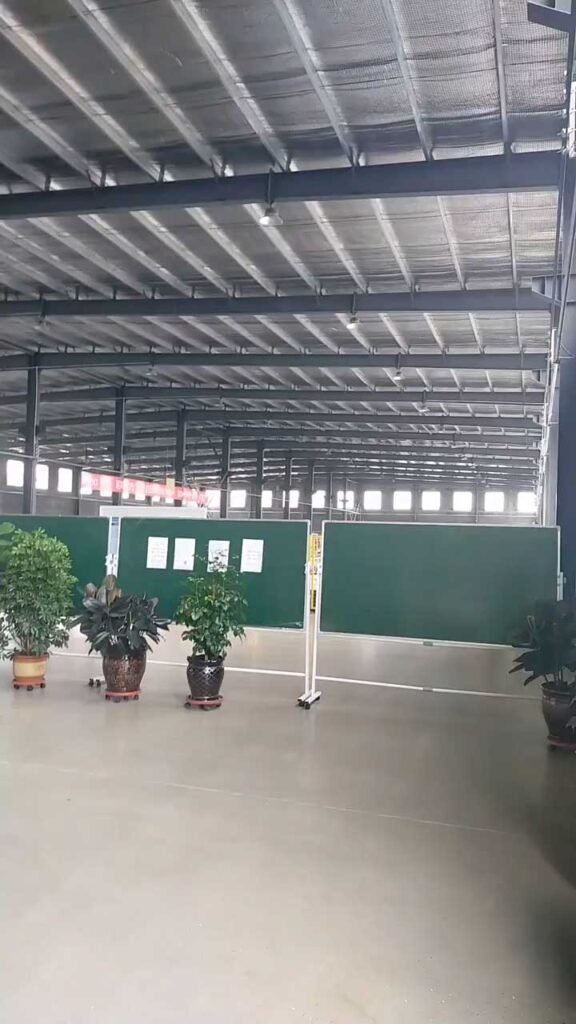
In the modern industrial market, your facility’s structural design directly dictates your long-term operational costs and supply chain efficiency. Opting for a column-free design eliminates physical layout constraints, protects your facility’s long-term market value, and optimizes material handling flow.
By collaborating directly with an international manufacturer that blends advanced engineering with global material sourcing, you can effectively manage your initial capital expenditures while securing a building package that satisfies every local regulatory requirement.
To determine an accurate clear span warehouse price, avoid generic per-square-foot calculators that fail to account for site-specific engineering demands. Our engineering department is ready to evaluate your architectural plans, dimensional targets, and environmental load factors to generate a highly detailed structural proposal.
Request a Clear Span Warehouse Quote
Stop calculating with broad assumptions. Let our industrial engineering specialists provide you with a fixed-price material proposal engineered specifically for your site conditions and operational layout.
Contact us today with your intended length, width, eave height, and delivery destination to receive a detailed engineering review and cost assessment for your upcoming project.