
Dominican Republic Guide to Anti-Corrosion Steel Warehouses
Battling the Caribbean Climate: The Dominican Builder’s Guide to Anti-Corrosion Steel Warehouses
If you have spent any time developing commercial real estate or industrial facilities in the Dominican Republic, you know that our island is paradise for tourists, but an absolute nightmare for structural steel. From the massive logistics parks near the Port of Caucedo to the agro-industrial hubs in La Vega and the resort-support facilities in Punta Cana, building in the DR means fighting a daily, relentless war against the environment.
Over the last ten years of managing construction sites across this island, I have seen it all. I have seen standard local steel frameworks completely eaten alive by rust in less than three years. I have seen cheap purlins buckle under hurricane wind loads because structural corrosion hollowed out the steel from the inside. The combination of our 80%+ year-round humidity, intense tropical UV radiation, and the aggressive salitre (the corrosive salt vapor carried by the ocean breeze) will destroy unprotected investments at a terrifying speed.
Early in my career, I sourced all my structural steel locally in Santo Domingo. But the local manual welding, inconsistent paint prep, and lack of heavy galvanizing baths meant I was handing my clients buildings that required constant, expensive maintenance.
That is why I completely changed my procurement strategy. Today, I exclusively import every anti corrosion steel warehouse I build directly from a specialized, top-tier Chinese manufacturing facility. They don’t just sell steel; they engineer climate-specific fortresses. With international CE and SGS welding certifications, their factory produces a level of rust-proofing and structural integrity that simply cannot be matched by local Caribbean fabrication shops.
In this comprehensive guide, I am going to show you exactly how we use world-class galvanizing, advanced painting systems, and precision engineering to build industrial facilities in the Dominican Republic that actually last.
Engineering a High-Performance Corrosion Resistant Warehouse
When you build near the coast—which, in the Dominican Republic, is practically everywhere—corrosion is not a possibility; it is a chemical certainty. Saltwater spray introduces chloride ions to the surface of the steel. These chlorides aggressively break down standard paint layers and act as an electrolyte, rapidly accelerating the oxidation process (rust).
To construct a true Corrosion Resistant Warehouse, you cannot just paint over dirty steel and hope for the best. The protection must be engineered into the building from the microscopic level up.
When I order a structure from our Chinese manufacturing partner, the protection begins with the steel preparation. In local DR shops, workers often use hand grinders to remove mill scale before painting. This leaves microscopic pockets of rust and moisture trapped under the paint. The moment the Caribbean sun heats the steel, that moisture expands, the paint bubbles, and the salitre gets in.
Our imported structures undergo fully automated, enclosed shot-blasting to an international SA 2.5 (Near-White Metal) standard. This fires tiny steel abrasives at the beams, stripping them completely raw and creating a perfectly profiled surface. When the anti-corrosion coating is applied, it bonds at a molecular level. There are no trapped contaminants. This singular factory process is the difference between a warehouse that needs repainting in two years and one that remains pristine for two decades.
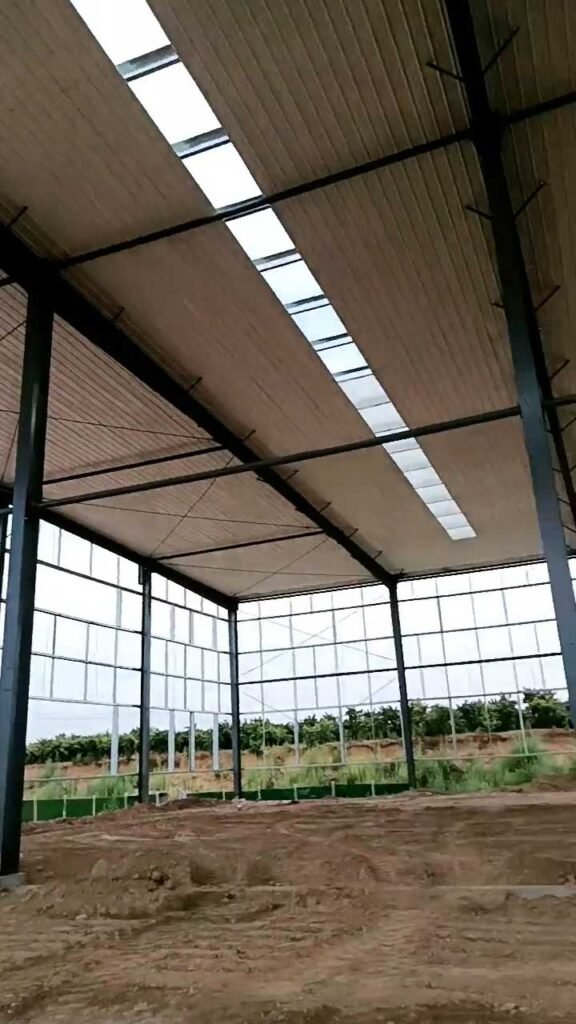
The Power of a Heavy-Duty Galvanized Steel Warehouse
For structures built directly on the coastline—such as maritime storage in Puerto Plata or Haina—even the best paint can eventually be scratched by forklifts or flying debris during a tropical storm. For these high-risk zones, we completely bypass liquid coatings and specify a fully Galvanized Steel Warehouse.
Hot-dip galvanizing is the ultimate tropical shield. The entire structural column or rafter is submerged into a massive bath of molten zinc at around 450°C (842°F). The zinc does not just sit on the surface; it forms a metallurgical alloy with the steel.
Barrier Protection: The heavy zinc coating physically isolates the raw steel from the Dominican humidity and salty air. We typically specify a zinc coating thickness of 275g/m² to 600g/m² (G90 to G210 equivalent), depending on how close the site is to the ocean.
Cathodic (Sacrificial) Protection: This is the magic of galvanization for industrial use. If a forklift crashes into a column and gouges the metal, exposing the raw steel underneath, the surrounding zinc will actually “sacrifice” itself, corroding preferentially to protect the exposed steel base.
Local DR galvanizing baths are often not large enough to submerge a massive 12-meter clear-span roof rafter in a single dip. This forces local fabricators to double-dip the steel, creating weak seams where corrosion inevitably starts. Our Chinese manufacturing facility operates massive, automated galvanizing baths that coat the largest structural members in a single, seamless plunge, guaranteeing uniform, flawless protection.
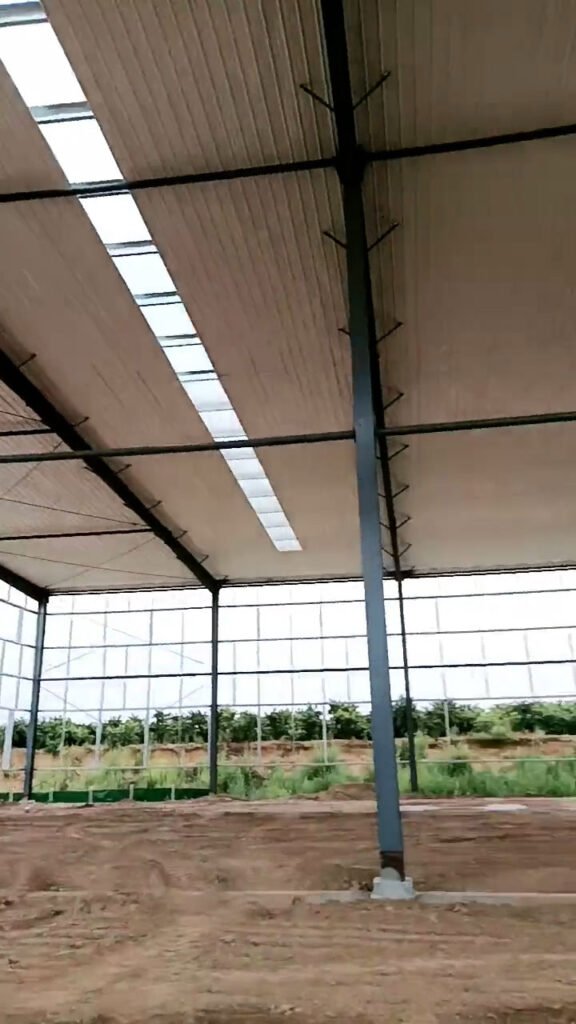
Designing an Unbeatable Coastal Steel Building
Rust is not the only enemy in the Caribbean; hurricane season dictates our entire building code. A proper Coastal Steel Building must survive Category 5 winds while simultaneously shedding torrential, wind-driven rain.
The beauty of importing a prefabricated steel structure is that the engineering accounts for both wind shear and water ingress simultaneously.
CE & SGS Certified Welding: Under extreme hurricane winds, the moment connections (where the columns meet the roof rafters) flex heavily. If a weld is porous or weak, it will crack. Once a weld cracks, moisture enters the core of the steel, rusting the joint from the inside out. Because our Chinese factory is SGS and CE certified, every critical full-penetration weld is executed by automated Submerged Arc Welding (SAW) machines and subjected to Ultrasonic Testing (NDT). The welds are structurally flawless and completely watertight.
Sealed Envelopes: We pair the heavy steel frame with high-density polyurethane (PU) or rockwool insulated sandwich panels. The flashing and trim packages are precision-cut by CNC machines. When my local DR crews assemble these on-site, the panels interlock perfectly, leaving zero gaps for driving rain or salt vapor to penetrate the building envelope.
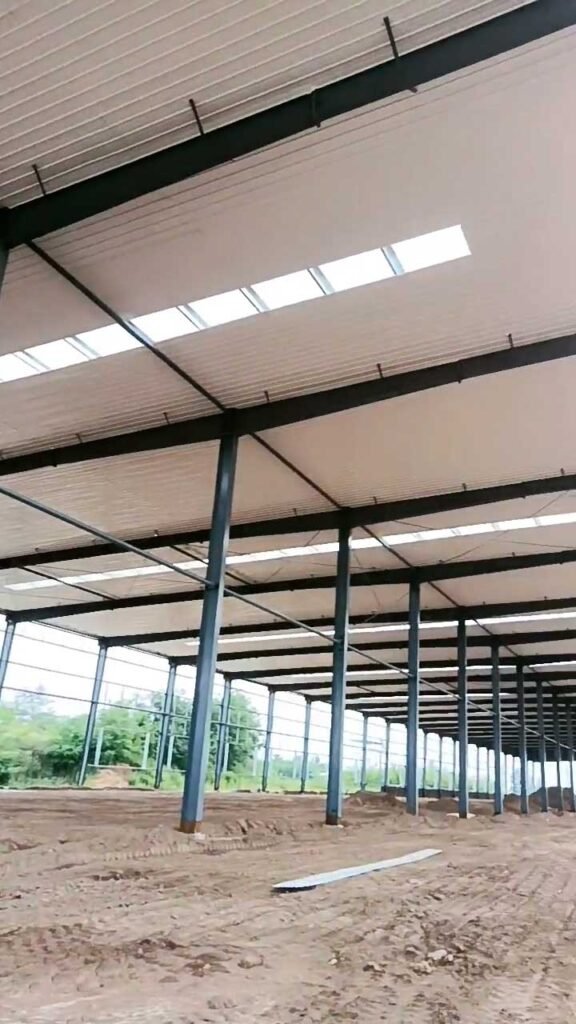
Our Advanced Multi-Layer Rust Protection System
For inland projects in places like Santiago or San Francisco de Macorís, where direct ocean spray is less of an issue but humidity remains at 85%, hot-dip galvanizing might exceed the required budget. In these cases, we deploy a highly technical, multi-layer Rust Protection System applied via automated spray booths in the factory.
This is not the standard red oxide primer you buy at a local Dominican hardware store. This is a marine-grade chemical defense system:
Base Coat (The Anchor): After the SA 2.5 shot-blasting, the steel receives a coat of Zinc-Rich Epoxy Primer. The high zinc content provides that crucial sacrificial protection, while the epoxy creates an impenetrable waterproof bond to the raw steel.
Intermediate Coat (The Shield): We apply a layer of Micaceous Iron Oxide (MIO) Epoxy. MIO contains microscopic, flake-like particles that overlap like shingles on a roof. This creates an incredibly dense barrier that prevents moisture and chloride ions from migrating through the paint layers.
Top Coat (The Armor): The Caribbean sun emits brutal UV radiation that chalks and destroys standard paint in months. We finish the steel with an Aliphatic Polyurethane Topcoat. This layer is highly UV-resistant, flexible, and holds its color and gloss for years, preventing the underlying epoxy from breaking down under the sun.
When these beams arrive at customs in Rio Haina, they look pristine, and more importantly, they are armored to survive the Dominican climate for a generation.
Ultra-Durable Tropical Warehouse Structure Solutions
As a developer, your primary concern after the initial capital expenditure is long-term operational costs. An Ultra-Durable Tropical Warehouse Structure drastically slashes your facility management budget.
When you use inferior local steel that begins to rust, the maintenance is a nightmare. You have to shut down operations, cover your inventory, hire crews to manually wire-brush the rusted beams up in the ceiling, and reapply toxic paints inside an enclosed space. It costs thousands of dollars and halts your revenue generation.
By importing a certified anti-corrosion steel warehouse, you are buying peace of mind. The bolted-assembly design means there is zero field welding required on your DR job site—meaning no local welders are burning off the factory paint and exposing raw steel to the air. Your building goes up clean, fast, and fully protected.
The Reality Check: Local DR Steel vs. Imported Anti-Corrosion Steel
To make the financial and structural reality absolutely clear, here is what my decade of experience comparing local Caribbean fabrication against our imported Chinese CE/SGS certified structures has proven:
| Feature | Sourced from Local Dominican Fabricator | Imported from our Chinese CE/SGS Facility |
| Surface Preparation | Manual wire brushing or hand grinding. Leaves moisture and rust pockets. | Automated SA 2.5 Shot-blasting. Near-white metal finish for flawless coating adhesion. |
| Corrosion Protection | Standard commercial red-oxide paint. Flakes under DR UV rays in 2-3 years. | Marine-Grade Systems. Hot-dip galvanized or 3-layer Zinc/Epoxy/Polyurethane systems. |
| Welding Quality Control | Manual field welding. Highly susceptible to human error and internal rust. | CE & SGS Certified. Automated SAW welding with ultrasonic testing. 100% sealed joints. |
| Assembly Speed | Slow. Frequent weather delays due to on-site cutting and welding. | Rapid. 100% bolted kit. Assembles with cranes and impact wrenches in half the time. |
| Export/Import Compliance | N/A. | Flawless DGA Clearance. We provide complete MTCs, commercial invoices, and packing lists. |
| Long-Term Maintenance | High. Requires aggressive repainting every 3 to 5 years. | Minimal to Zero. Built to withstand decades of Caribbean salt, sun, and humidity. |
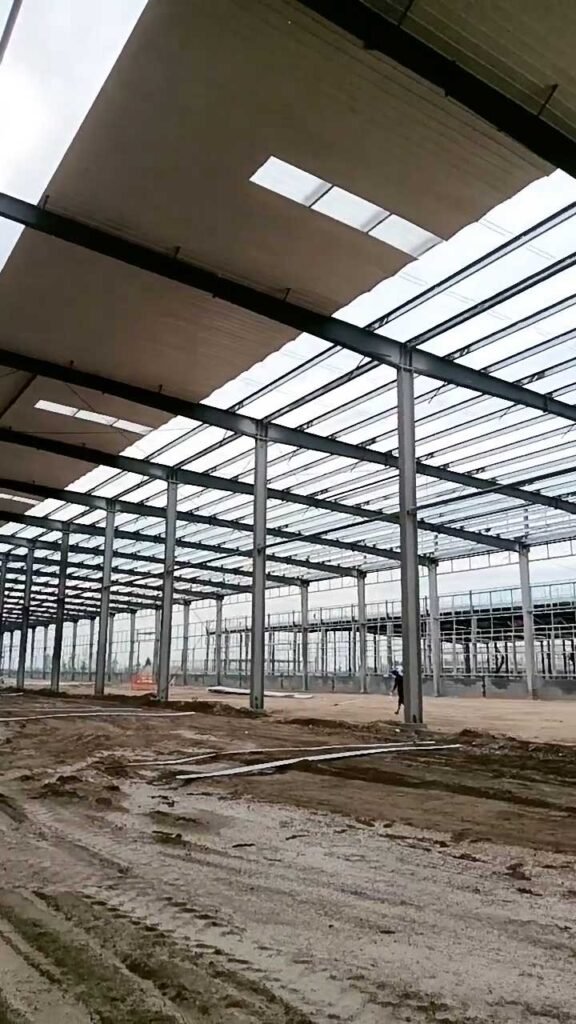
Secure Your Investment with World-Class Engineering
The Dominican Republic is a booming hub for logistics, free-trade zones (Zonas Francas), and manufacturing. But you cannot capitalize on this economic growth if your infrastructure is slowly disintegrating into rust.
By bypassing local fabrication limitations and partnering directly with an export-proven Chinese manufacturer, you are guaranteeing the lifespan of your investment. You receive international CE and SGS quality, precision engineering designed for hurricane wind loads, and galvanizing and paint systems built specifically to defeat the Caribbean salitre.
Furthermore, our export documentation is flawless. We know exactly what the Dirección General de Aduanas (DGA) requires to clear your containers quickly through Dominican ports, avoiding expensive demurrage fees.
Stop wasting money on steel that won’t survive the island. Let us engineer a facility that stands strong against the salt, the sun, and the storms.
[Request Anti-Corrosion Warehouse Solutions] Contact us today with your project location in the Dominican Republic and your required dimensions. Our engineering team will review your local wind loads and proximity to the ocean, and provide a comprehensive, factory-direct proposal for a structure built to last a lifetime.