
ASTM Standard Steel Building: A North American Builder’s Guide to Importing
Why North American Developers Are Importing ASTM Standard Steel Buildings
If you have spent the last decade in commercial and industrial construction, navigating job sites from the US Midwest up through the heavy industrial corridors of Ontario and Alberta, you know the industry is facing a crisis. Sourcing heavy structural steel locally in North America has become a massive liability. Domestic fabrication shops are crippled by labor shortages, lead times are stretching into the next fiscal year, and volatile pricing is destroying project margins before the concrete is even poured.
For years, I fought this battle. I dealt with delayed local deliveries and the red tape of pulling permits across both US (IBC) and Canadian (NBCC) jurisdictions. But a few years ago, I shifted my procurement strategy entirely. I stopped relying on backlogged local mills and started importing fully pre-engineered steel structures directly from a top-tier manufacturing facility in China.
There is a stubborn myth in North America that imported steel means inferior quality. That is simply false—if you partner with the right manufacturer. The facility we use doesn’t just build generic sheds; they engineer and export a true ASTM standard steel building. Their material traceability, engineering precision, and rigorous export documentation effortlessly satisfy both US municipal inspectors and strict Canadian building authorities.
In this guide, I will walk you through exactly how importing an engineered-for-export steel structure works, why ASTM and CWB (Canadian Welding Bureau) compliance is non-negotiable, and how this procurement strategy will save your next warehouse or factory project.
Fully Traceable ASTM Certified Steel Structure
When an inspector walks onto your site in Texas or British Columbia, they don’t care how much money you saved; they care about the structural pedigree of the steel. You cannot pass a commercial building inspection without absolute proof of material strength.
The foundation of our imported buildings is a Fully Traceable ASTM Certified Steel Structure. Every piece of primary and secondary framing is manufactured to meet or exceed American Society for Testing and Materials (ASTM) specifications.
Our Chinese manufacturing partner aligns their high-yield steel directly with North American requirements:
Primary Framing (Columns & Rafters): We utilize high-strength Q355B/Q355D steel, which is the direct metallurgical equivalent to ASTM A992 or ASTM A572 Grade 50 (Minimum Yield Stress: 50,000 psi / 345 MPa). This provides the massive structural ductility required for high wind and seismic zones.
Secondary Framing (Purlins & Girts): Manufactured using cold-formed steel that aligns with ASTM A653 standards, heavily galvanized to prevent corrosion inside the building envelope.
Hollow Structural Sections (HSS): For structural tubing and bracing, the steel conforms to the mechanical properties of ASTM A500 Grade B/C.
Structural Fasteners: All primary moment connections are bolted on-site using high-strength ASTM F3125 (A325 or A490) heavy hex structural bolts.
The most critical part of this process is the paperwork. Every single shipping container arrives with original Mill Test Certificates (MTCs). These documents trace the heat number of the steel back to the exact batch melted at the mill, detailing the chemical composition and tensile strength. Your Engineer of Record (EOR) simply reviews the MTCs and stamps the approval.
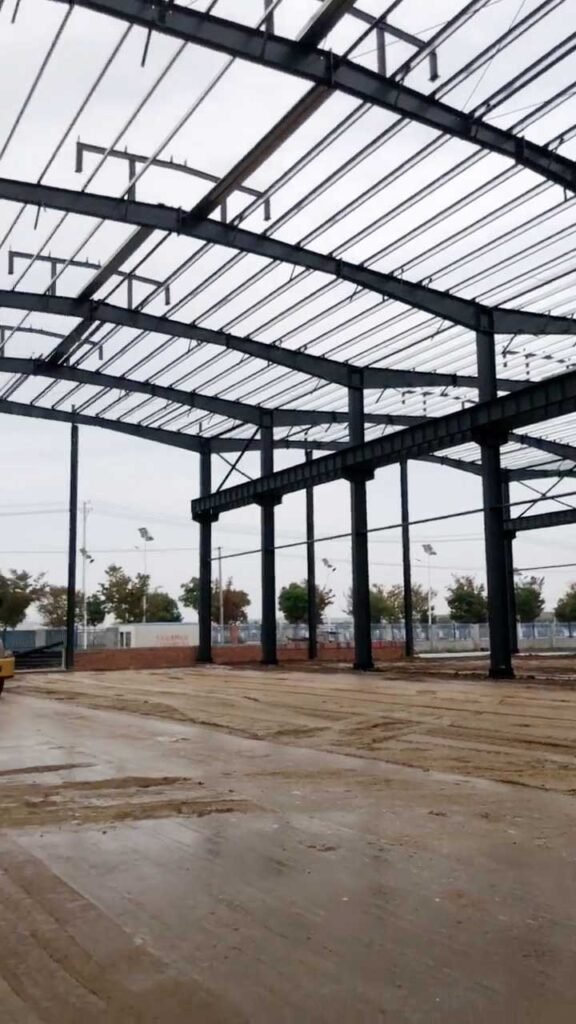
High-Performance American Standard Steel Building
Engineering a building for the North American climate is vastly different than engineering for other parts of the world. A building in Miami faces 170 mph hurricane uplifts, while a facility in Calgary must support crushing, multi-ton snow loads for six months of the year.
When you order an High-Performance American Standard Steel Building from our manufacturing partner, the process starts in the engineering room, not the factory floor.
The engineers utilize world-class 3D detailing software like Tekla Structures to build a digital twin of your facility. They apply the exact environmental load parameters dictated by the ASCE 7 (Minimum Design Loads for Buildings) in the US, and the NBCC (National Building Code of Canada).
Snow Loads: For Canadian and northern US projects, purlin spacing is tightened, and roof pitches are optimized to manage ground snow loads (Ss) and prevent hazardous ice damming.
Seismic Design: In active zones like California or British Columbia, the rigid portal frames are engineered with highly ductile moment connections to absorb seismic base shear without catastrophic failure.
Clear Spans: We routinely design unobstructed clear spans of up to 150+ feet (45+ meters) by utilizing custom built-up tapered girders, putting the steel mass exactly where the bending moments are highest (at the haunches) and reducing dead weight at the mid-span.
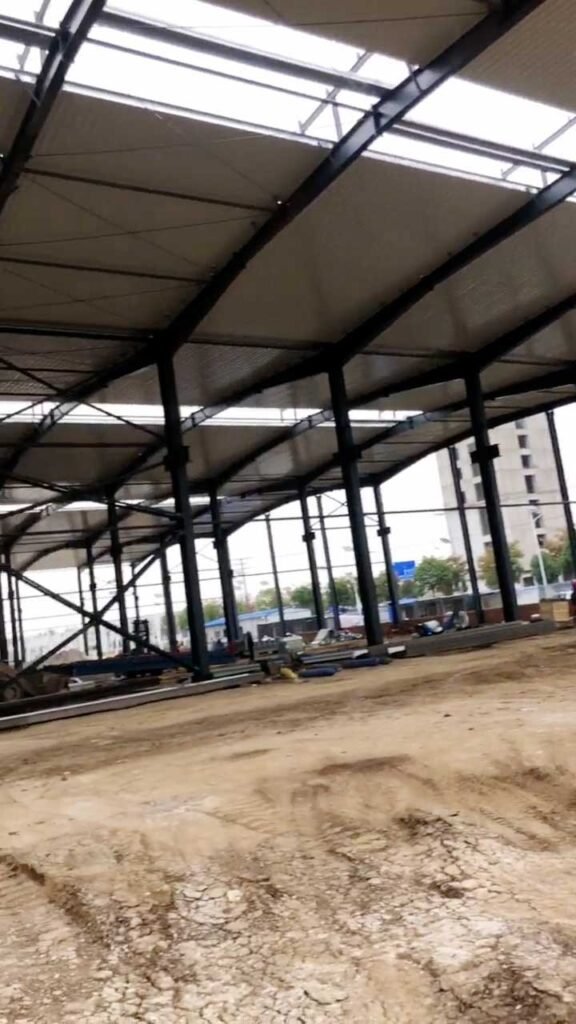
Navigating Strict Steel Building Compliance
This is the make-or-break section for any developer looking to import, especially if your job site is north of the US border.
In the United States, structural welding must conform to AWS D1.1 standards. But in Canada, the barrier to entry is notoriously stricter. Canadian building officials will outright reject imported steel if the welding was not performed by a certified facility.
This is where our Chinese manufacturing partner leaves the competition in the dust. They hold the highly coveted CWB (Canadian Welding Bureau) Certification to CSA W47.1.
What does this mean for your Steel Building Compliance? It means that every single submerged arc welder (SAW) and manual welding technician on their factory floor has been independently audited and certified by Canadian authorities. When your structural columns and rafters arrive at the Port of Vancouver or Toronto, they come with official CWB welding certificates alongside AWS D1.1 compliance documents.
There is no guesswork. Your local Canadian building inspector sees the CWB stamp, reviews the MTCs, and clears the structure for erection immediately. We provide the complete export documentation package required for seamless customs clearance and rapid local permitting.
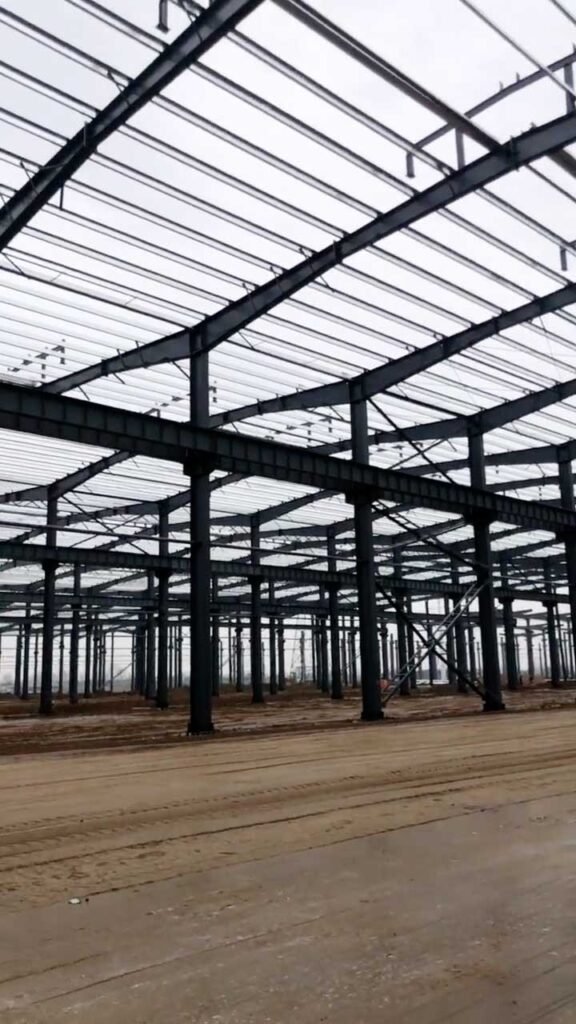
Heavy-Duty Industrial Steel Standards
If you are building an aviation hangar, a heavy manufacturing plant, or a logistics distribution center, your building is essentially a massive piece of machinery. It must support dynamic operational loads.
Our factories are built to handle Heavy-Duty Industrial Steel Standards.
Overhead Crane Integration: We engineer stepped columns and heavy-duty crane runway beams capable of supporting 5-ton to 50-ton bridge cranes. The braking forces and dynamic thrusts are calculated into the primary framework.
Structural Mezzanines: We design integrated multi-level flooring systems capable of supporting 100+ PSF live loads for heavy inventory racking or office spaces.
To clearly illustrate why seasoned developers are moving away from local procurement in favor of our imported solutions, review this reality-check comparison:
Project Procurement: Local North American vs. Imported ASTM/CWB Certified Steel
| Project Metric | Sourced from Local US/Canadian Fabricator | Imported from our Chinese Manufacturing Facility |
| Material & Fabrication Cost | Very High. Burdened by massive domestic labor costs and local steel market inflation. | 30% to 40% Lower. Benefiting from automated mass production and factory-direct pricing. |
| Code Compliance | Standard local compliance. | Total North American Compliance. ASTM material equivalents, AWS D1.1, and CWB CSA W47.1 certified. |
| Delivery Lead Times | 6 to 12+ months. Local shops are heavily backlogged. | 12 to 16 Weeks. Factory fabrication runs parallel to your on-site foundation work. |
| Erection Process | Often requires expensive field welding and on-site modifications. | 100% Bolted Assembly. CNC precision means zero field welding. Slashes on-site labor hours. |
| Documentation | Standard domestic paperwork. | Complete Export Package. MTCs, CWB certs, NDT reports, and detailed 3D erection drawings provided. |
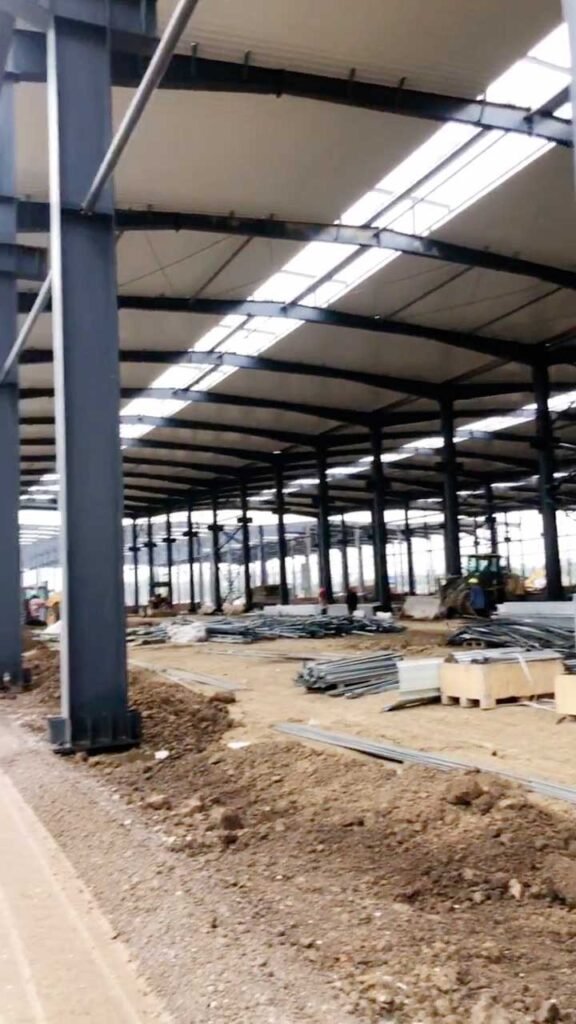
Long-Lasting Quality Steel Construction
Cost savings mean nothing if the building rusts out in ten years. A true Long-Lasting Quality Steel Construction project requires rigorous factory-level Quality Assurance (QA) and Quality Control (QC) before the steel ever goes into a shipping container.
Our partner’s factory does not cut corners on longevity:
Non-Destructive Testing (NDT): All critical full-penetration butt welds on moment connections undergo Ultrasonic Testing (UT) and Magnetic Particle Testing (MT) to ensure there are zero internal micro-fissures or defects.
Advanced Surface Treatment: Raw steel is highly vulnerable to corrosion, especially in coastal or snowy environments where road salts are present. Every structural component is passed through an automated shot-blasting machine, stripping it to a near-white metal finish (SSPC-SP 10 / SA 2.5).
Industrial Coatings: Immediately after blasting, the steel is coated with high-build zinc-rich epoxy primers and polyurethane topcoats in a climate-controlled booth, ensuring decades of rust prevention.
Furthermore, we supply high-performance insulated metal panels (polyurethane or mineral wool core) to wrap the structure. This ensures your building easily passes stringent North American energy codes (like ASHRAE 90.1 or the NECB in Canada), slashing your long-term HVAC operating costs.
Build Smarter, Build Faster
The North American construction landscape has evolved. You no longer have to be held hostage by the high prices, slow timelines, and limited capacities of local steel fabricators.
By sourcing your next industrial facility from a world-class, export-focused manufacturer, you are securing an ASTM standard steel building that meets the absolute highest thresholds of North American safety and quality. With our CWB welding certifications, meticulous ASTM material traceability, and flawless CNC fabrication, your local erection crews will assemble the building faster and safer than ever before.
Stop watching your profit margins erode while waiting for local steel. Our engineering team is ready to review your architectural plans, apply your local wind and snow load requirements, and deliver a comprehensive structural package directly to your job site.
[Request ASTM-Compliant Building Pricing] Contact us today with your project dimensions, location, and structural requirements. We will provide a transparent, factory-direct quote and structural consultation within 48 hours, proving exactly how our exported steel structures will dominate your local market.