
Turnkey Steel Warehouse Construction in the Middle East
Built for the Gulf: The Complete Guide to Turnkey Steel Warehouse Construction
The industrial landscape across the Middle East is evolving at an unprecedented rate. From the sprawling free zones of Jafza in Dubai and KIZAD in Abu Dhabi to the massive logistics parks driving Saudi Arabia’s Vision 2030, developers are under intense pressure to deliver high-capacity storage facilities fast.
However, building commercial infrastructure in the GCC presents a harsh reality. With summer temperatures soaring past 45°C (113°F), aggressive coastal humidity, severe sandstorms, and strict summer work regulations, traditional construction methods are often plagued by delays and budget overruns.
Over the past two decades of managing industrial projects across the region, we have seen first-hand that relying on wet trades—like pouring extensive concrete and laying blockwork—is no longer the most viable strategy for fast-moving logistics companies. The most efficient, reliable, and financially predictable approach is investing in a turnkey steel warehouse.
In this guide, we will break down the end-to-end process—from structural engineering to final handover—and explain why a pre-engineered, factory-direct approach is the smartest way to build in the Middle East.
Managing a Complete Warehouse Turnkey Project
In commercial construction, “turnkey” means absolute accountability. As a developer, dealing with a fragmented supply chain—hiring a separate architect, an independent steel fabricator, a distinct shipping agent, and a local erection crew—introduces massive risk. If a component does not fit on site, the blame game begins, and your project stalls.
A true turnkey steel warehouse model consolidates this process under a single point of responsibility.
1. Architectural Design and Local Compliance The project begins with architectural and operational planning. Whether you are storing pharmaceutical goods requiring strict climate control or heavy oil and gas machinery, the layout must be optimized for your operations. More importantly, the design must comply with local regulatory bodies, such as the Dubai Municipality (DM), the Saudi Building Code (SBC), or local Civil Defense authorities for fire safety standards.
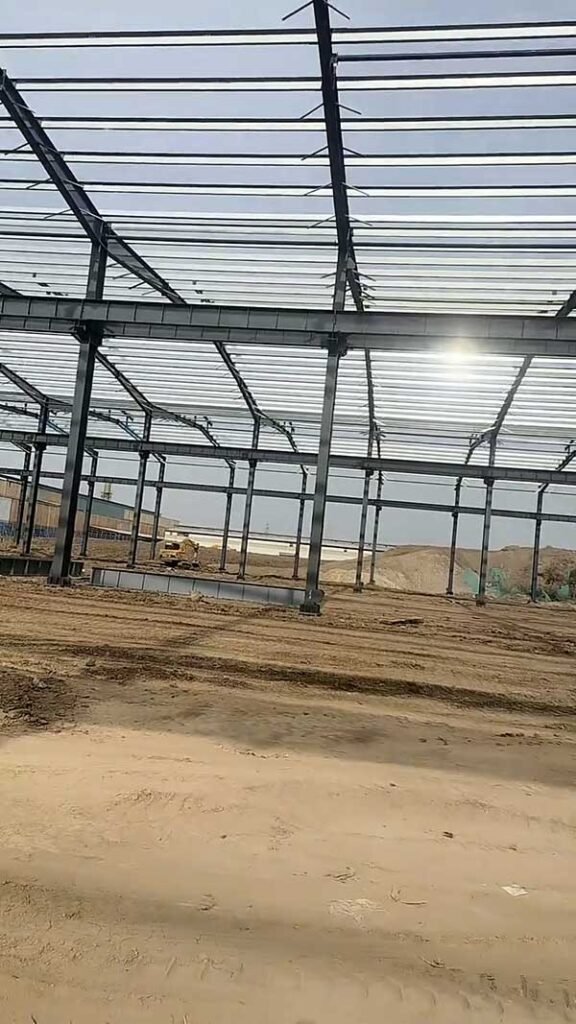
2. Specialized Structural Engineering Engineering a building for the Middle East is entirely different from engineering one for Europe or North America.
Thermal Dynamics: We must calculate the extreme thermal expansion and contraction the steel frame will endure between the blazing midday sun and the cooler desert nights.
Wind and Sand Loads: The structure must be engineered to withstand severe shamal winds and abrasive sandstorms. This requires specialized detailing around eaves, ridge caps, and loading dock doors to ensure the building envelope remains airtight and dust-proof.
Partnering with a Global Steel Warehouse Supplier
Once the engineering drawings are approved, the project moves into the manufacturing phase. Because local steel fabrication in the GCC can be highly expensive and subject to long lead times, partnering with a specialized, global Steel Warehouse Supplier offers a massive competitive advantage.
Automated Manufacturing Instead of cutting and welding steel on a dusty job site, the entire structural frame is manufactured in an ISO-certified, automated facility. Using CNC (Computer Numerical Control) machinery, every column, beam, and purlin is cut, drilled, and welded with millimeter precision.
Anti-Corrosion Treatments If your site is in a coastal area like Jeddah, Doha, or Dubai, the aggressive saline humidity will rapidly corrode unprotected steel. During the manufacturing phase, we apply heavy-duty industrial coatings. The steel is shot-blasted to bare metal and coated with zinc-rich epoxy primers and polyurethane topcoats, ensuring the structural integrity of your turnkey steel warehouse lasts for decades without requiring constant local maintenance.
Shipping and Port Logistics A major part of the turnkey service is navigating the complex logistics of international freight. The prefabricated steel components are optimized and packed into standard 40-foot shipping containers. We handle the export documentation, ocean freight, and coordinate with your local customs brokers at regional ports (such as Jebel Ali, Jeddah Islamic Port, or Hamad Port) to ensure swift clearance and inland transport directly to your site.
Accelerating Local Warehouse Construction
The installation phase is where the turnkey model truly outshines traditional building methods in the Middle East.
During the GCC summer months (typically June through September), local labor laws enforce strict mid-day work bans to protect workers from heat stress. If you are building with concrete, these restricted hours devastate your timeline. Concrete requires continuous pours and specific temperature windows to cure correctly—a logistical nightmare in 40°C heat.
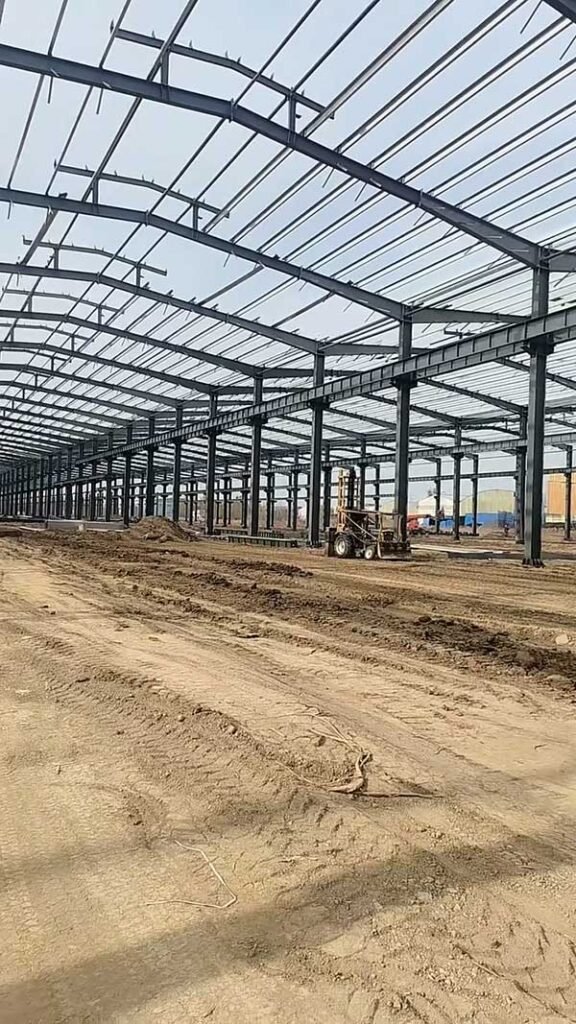
Warehouse Construction using pre-engineered steel bypasses this problem entirely. Because the building arrives as a precision-manufactured kit, there is zero hot work (welding) required on site. The local erection crew simply uses cranes to lift the primary frames into place and secures them with high-strength structural bolts.
This bolted assembly method allows the superstructure to go up in a matter of weeks, not months. Once the roof and wall cladding are installed, the interior is shaded, drastically improving the working conditions for the tradesmen completing the concrete floor slab and electrical fit-outs.
Traditional GCC Construction vs. Turnkey Steel Systems
| Construction Factor | Traditional Concrete & Blockwork | Turnkey Pre-Engineered Steel |
| Site Labor Requirement | High. Requires teams of masons, carpenters, and steel fixers for months. | Low. Assembled quickly by a specialized rigging crew using cranes. |
| Weather Dependency | High. Concrete curing is severely compromised by extreme desert heat. | None. Bolted mechanical assembly is unaffected by high temperatures. |
| Clear Span Capability | Limited. Requires intrusive interior columns that disrupt forklift movement. | Massive. Capable of 50+ meter clear spans for unobstructed logistics layouts. |
| Project Accountability | Fragmented across multiple local sub-contractors. High risk of disputes. | Single-Source. One contractor handles design, fabrication, and delivery. |
Designing a Bespoke Industrial Warehouse Solution
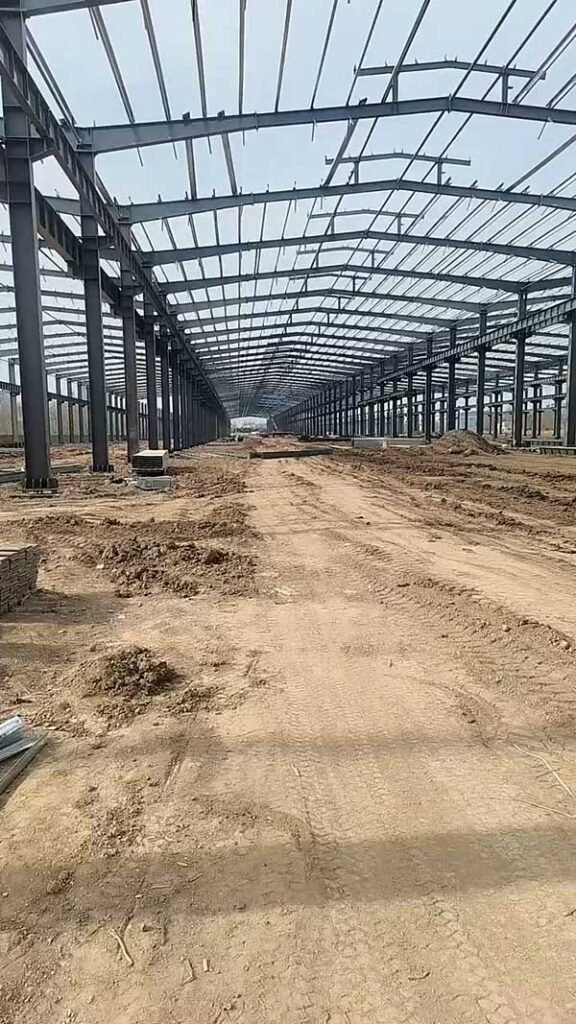
A modern logistics hub is rarely a simple empty shed. To maximize the return on your real estate investment, the structure must be tailored to your specific industrial processes. As part of a comprehensive turnkey steel warehouse delivery, we engineer specific operational features directly into the structural frame from day one.
Integrated Crane Systems For manufacturing or heavy equipment storage, we can design the primary steel columns to include integrated crane corbels and runway beams, safely supporting overhead bridge cranes with capacities of 10, 20, or even 50 tons.
Advanced Thermal Cladding To keep cooling costs manageable in the Middle East, standard single-skin metal sheets are insufficient. An optimal Industrial Warehouse Solution incorporates insulated sandwich panels (typically utilizing Polyisocyanurate – PIR or Polyurethane – PUR cores). These panels provide an exceptional thermal barrier, locking the cold air inside and dramatically reducing the load on your HVAC systems. This is an absolute necessity for FMCG (Fast-Moving Consumer Goods) distribution or cold storage facilities.
Mezzanine Office Integration Land in prime industrial zones is expensive. To maximize your footprint, we can engineer heavy-duty structural steel mezzanines within the warehouse envelope to house your administrative offices, staff break rooms, or secondary light-storage areas.
For any commercial developer or business owner, the ultimate goal is generating revenue as quickly as possible while protecting capital expenditure.
A traditional building project in the Middle East often suffers from “scope creep”—where material delays, local labor shortages, and weather interruptions push the budget higher month after month.
Opting for an imported Prefabricated Warehouse fundamentally changes your financial exposure:
Fixed Material Costs: Because the entire steel package is engineered and manufactured upfront in a global facility, you lock in your primary material costs, shielding your budget from local market fluctuations.
Parallel Processing: While your local civil contractor is grading the desert sand and pouring the foundation footings, your turnkey steel warehouse is simultaneously being manufactured overseas. By the time the foundations are cured, the steel arrives at the port, cutting your overall project timeline by up to 40%.
Future-Proof Scalability: If your logistics operations outgrow the facility in five years, expanding a concrete building requires destructive, dusty demolition. With a modular steel structure, you can simply unbolt the end-wall, erect new steel bays, and seamlessly extend the facility without halting your current operations.
Secure Your Logistics Infrastructure Today
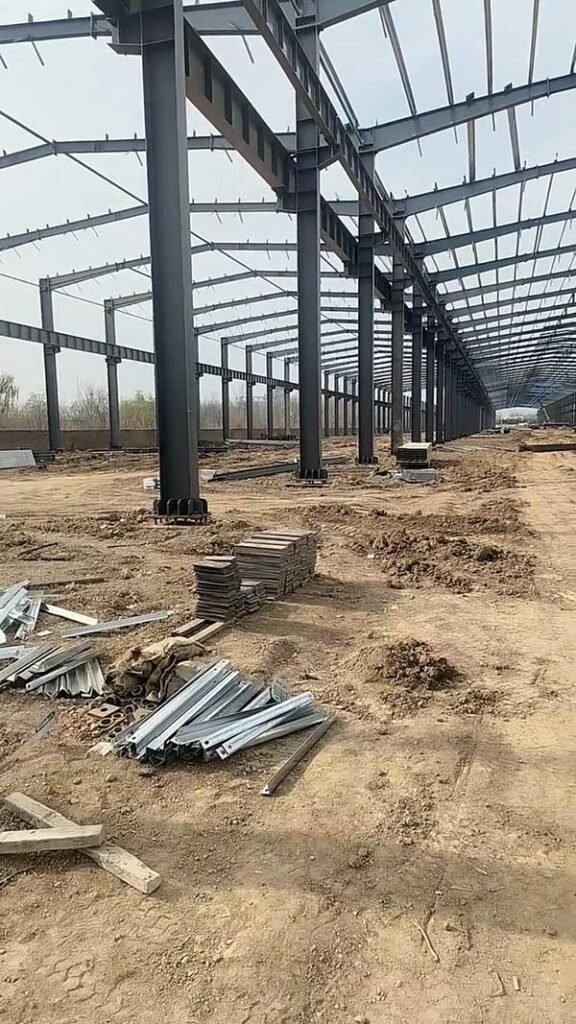
After 20 years of navigating the complexities of industrial construction in the Middle East, the verdict is clear. If you want a facility that meets strict local codes, survives the harsh coastal and desert climates, and opens for business months ahead of schedule, you need a pre-engineered structural solution.
By partnering with a single, experienced contractor to handle the design, global manufacturing, shipping logistics, and structural components, you eliminate the guesswork from your expansion plans.
Our engineering team is ready to review your plot dimensions, operational requirements, and local municipal codes to develop a highly optimized structural strategy.
Get a Turnkey Warehouse Proposal Stop losing time to traditional construction delays. Contact our project management team today with your facility requirements, and let us engineer a faster, stronger, and more profitable solution for your business in the Middle East.