
Steel Structure Manufacturer China Factory
The Definitive Guide to Partnering with an OEM Steel Structure Manufacturer
For international steel building brands, EPC (Engineering, Procurement, and Construction) contractors, and high-volume distributors, manufacturing capacity is often the ultimate bottleneck. Scaling your business requires reliable production, but building your own heavy-duty steel fabrication plant demands massive capital expenditure, immense overhead, and complex labor management.
The strategic alternative is OEM (Original Equipment Manufacturing) cooperation. By partnering with a genuine, heavily certified fabrication facility in China, global companies can manufacture custom-engineered buildings under their own brand, using their own proprietary designs, without the operational risks of factory ownership.
This comprehensive guide, authored by seasoned international supply chain experts and structural engineers, breaks down exactly how to evaluate, secure, and manage a long-term contract manufacturing partnership.
What Exactly Is an OEM steel structure manufacturer?
An OEM steel structure manufacturer is a heavy industrial factory that fabricates steel buildings and components strictly according to the customized drawings, specifications, and branding requirements provided by a B2B buyer.
Unlike standard retail factories that sell off-the-shelf shed kits to end-users, a true OEM partner operates as a “ghost factory” for your brand. We provide the raw material procurement (Q235, Q355), the CNC (Computer Numerical Control) processing, the certified welding, the surface treatment (hot-dip galvanizing or epoxy painting), and the export logistics. You retain complete control over the intellectual property (IP), the client relationship, and the final profit margins.
Table 1: OEM vs. Standard Products
| Feature | OEM Manufacturing | Standard Retail Manufacturing |
| Intellectual Property | Owned by the Buyer (Protected by NDA) | Owned by the Factory |
| Brand Identity | Buyer’s Brand (Private Label) | Factory’s Brand |
| Design Specifications | Custom engineered to Buyer’s local codes | Generic, one-size-fits-all designs |
| Target Audience | Distributors, EPC Contractors, Brands | End-users, individual business owners |
| Packaging | Custom shipping marks, neutral packing | Factory-branded documentation/packaging |
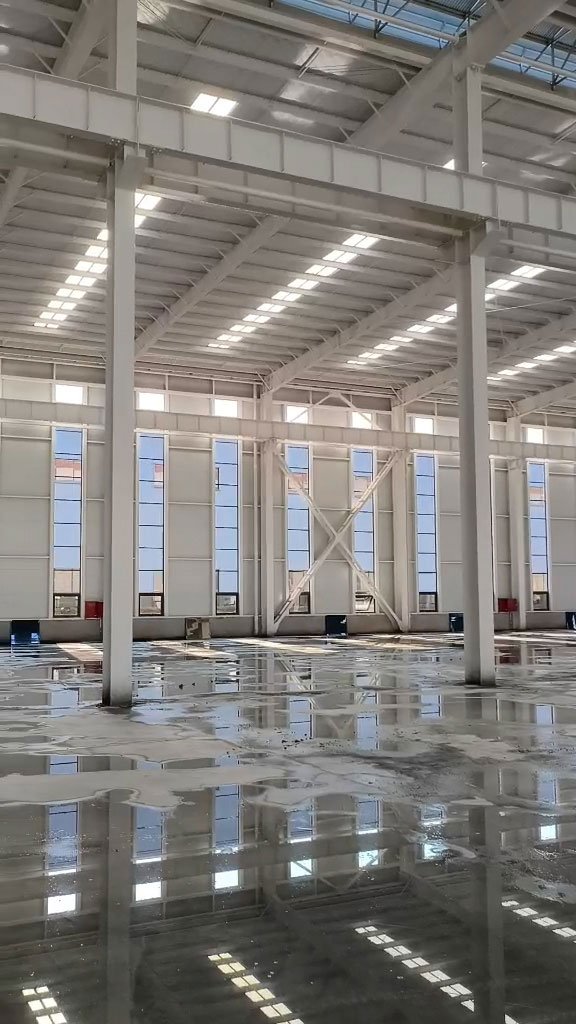
OEM steel building manufacturer vs. ODM vs. Standard Manufacturing
Understanding the nuances of contract manufacturing is critical when establishing your supply chain. Buyers often confuse OEM with ODM (Original Design Manufacturing).
If you are an engineering firm with your own Tekla or AutoCAD detailers, you need an OEM partner to simply execute your existing fabrication drawings flawlessly. If you are a distributor who understands local market demands (e.g., agricultural sheds in Australia) but lacks an in-house engineering team, you need ODM services—where the factory designs the structure based on your concept and produces it under your name.
Table 2: OEM vs. ODM
| Metric | OEM (Original Equipment Manufacturer) | ODM (Original Design Manufacturer) |
| Who Provides the Design? | The Buyer (Detailed Shop Drawings) | The Factory (Based on Buyer’s Concept) |
| Engineering Liability | Buyer’s Engineers | Factory’s Engineers |
| Customization Level | 100% bespoke to specific project | Modifications of factory’s existing IP |
| Best Suited For | Large EPC Contractors, Engineering Firms | Regional Wholesalers, Material Traders |
Who Needs OEM Cooperation?
Steel Building Brands (North America/Europe): Seeking to lower production costs while maintaining strict CE or AISC quality standards.
Mining & Industrial Suppliers (Africa/LatAm): Needing heavy, complex structures fabricated rapidly for urgent extraction projects.
Government Procurement Partners (Middle East): Requiring massive volume and strict ISO 9001 compliance for public infrastructure.
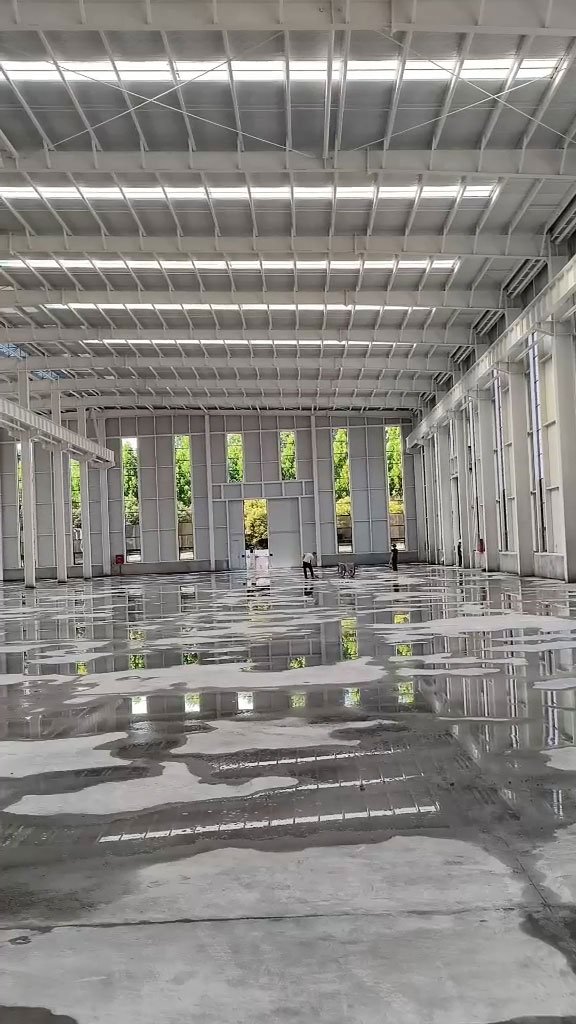
Why Partner with a steel structure manufacturer China?
The engineering phase dictates the final tonnage of steel, which directly dictates your final invoice. When designing for the Australian market, we engineer structures to strictly comply with AS 4100 (Steel Structures) and AS/NZS 1170 (Structural Design Actions).
Here are the primary design factors that will increase or decrease your cost:
1. Australian Wind Regions (Cyclonic vs. Non-Cyclonic) Australia’s building codes are exceptionally strict regarding wind loads.
Region A & B (Normal): Cities like Sydney, Melbourne, and Adelaide fall into lower wind categories. The steel columns and bracings require standard thicknesses, keeping your steel building price per sqm highly economical.
Region C & D (Cyclonic): If you are building in Darwin, Port Hedland, or coastal Queensland, the structure must be engineered to withstand severe tropical cyclones. This requires heavier I-beams, closer purlin spacing, and reinforced connections. This extra steel tonnage increases the price.
2. Clear Span Width Warehouse operators want unobstructed floor space. A “clear span” means there are no interior columns holding up the roof. We can engineer clear spans up to 50 meters wide. However, crossing a 50-meter gap requires massive, highly reinforced steel rafters. If your operation can tolerate one row of central columns, you can significantly reduce the steel weight and lower the overall cost.
3. Anti-Corrosion Treatments For sites in the harsh Outback, a standard dual-layer industrial paint or epoxy primer is sufficient. However, if your building is near the ocean or housing corrosive materials (like fertilizer storage), we strongly recommend Hot-Dip Galvanizing. This metallurgical process coats the steel in zinc, providing decades of rust protection, though it adds a premium to the initial manufacturing cost.
The shift toward globalized supply chains is not solely about price; it is about capacity and supply chain maturity. A top-tier steel structure manufacturer China offers an ecosystem of surrounding resources—from integrated steel mills to dedicated deep-water export ports—that cannot be matched domestically in many regions.
However, regional markets have distinct compliance requirements. A world-class Chinese partner adapts to these seamlessly:
Europe: Requires CE Marking and EN1090 certification to guarantee welding traceability and material grades.
North America: Demands ASTM material equivalents, rigorous CWB (Canadian Welding Bureau) or AWS standards, and precise imperial-to-metric conversions.
Australia/New Zealand: Strict AS/NZS codes for high wind loads (cyclonic regions) and specific hot-dip galvanizing micron thicknesses.
Latin America & Africa: Often requires robust, easy-to-install portal frames with comprehensive container loading optimizations to offset high ocean freight costs.
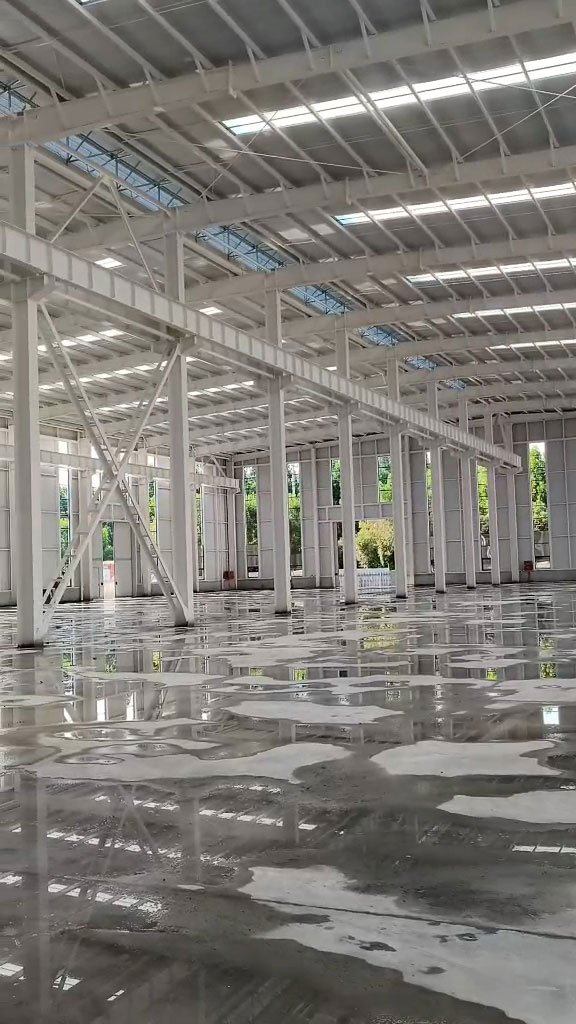
Engineering Workflow with a custom steel structure manufacturer
The foundation of a successful OEM partnership is engineering synergy. When working with a custom steel structure manufacturer, the transition from your engineering department to our shop floor must be frictionless.
1. Drawing Review and Optimization When you submit your structural designs, our detailing team conducts a thorough review using software like Tekla Structures. We look for localized optimization opportunities—such as replacing a highly complex, labor-intensive welded connection with a standardized bolted connection that achieves the same structural integrity but reduces your manufacturing cost and time.
2. Confidentiality and IP Protection Your proprietary designs are your competitive advantage. Before a single DWG or PDF file is exchanged, we execute strict Non-Disclosure Agreements (NDAs). Your drawings are siloed within our IT infrastructure, and production files are stripped of your end-client’s information before reaching the CNC machines.
Custom Design vs. Standard Design in OEM
| Aspect | Custom Engineered Design | Standardized Design Adaptation |
| Structural Focus | Highly specific loads (e.g., 50-ton cranes) | General warehousing and logistics |
| Material Usage | Variable cross-section H-beams to save weight | Uniform hot-rolled sections |
| Connection Types | Bespoke heavy-duty rigid moment connections | Standardized bolted apex and eaves |
Quality Assurance in steel structure contract manufacturing
In steel structure contract manufacturing, quality cannot be inspected into a product at the end; it must be built into the process.
Manufacturing Workflow and Tolerances
CNC Plasma Cutting: Ensures steel plates are cut with millimeter precision, eliminating thermal distortion.
Submerged Arc Welding (SAW): Automated welding for main primary frames guarantees deep penetration and zero porosity, subject to Ultrasonic Testing (UT).
Hole Drilling: 3D CNC drilling ensures bolt holes align perfectly on-site. Misaligned holes are the #1 cause of erection delays—our tolerance controls prevent this.
Surface Treatment Standards Whether your project requires hot-dip galvanizing (for highly corrosive marine or mining environments) or a multi-layer epoxy/polyurethane paint system, we utilize automated shot-blasting to achieve an Sa2.5 surface preparation standard. This ensures optimal coating adhesion and decades of rust prevention.
Building a Long-Term steel building production partnership
The most successful international buyers view us not as a vendor, but as an extension of their own company.
Risk Matrix & Preventing Common OEM Mistakes
Mistake: Buying solely on the lowest price per ton.
Prevention: Compare exact steel weights. A cheaper factory may be providing thinner, non-compliant steel sections that will fail local code inspections.
Mistake: Vague quality standards.
Prevention: Define paint micron thickness and welding flaw acceptance criteria in the initial contract.
Mistake: Poor container loading planning.
Prevention: Ensure your steel building production partner uses 3D loading software to maximize container space and prevent cargo collapse.
By establishing clear communication channels between your technical director and our chief engineer, we create a feedback loop. Revisions become faster, production becomes smoother, and your local erection crews experience fewer on-site issues.
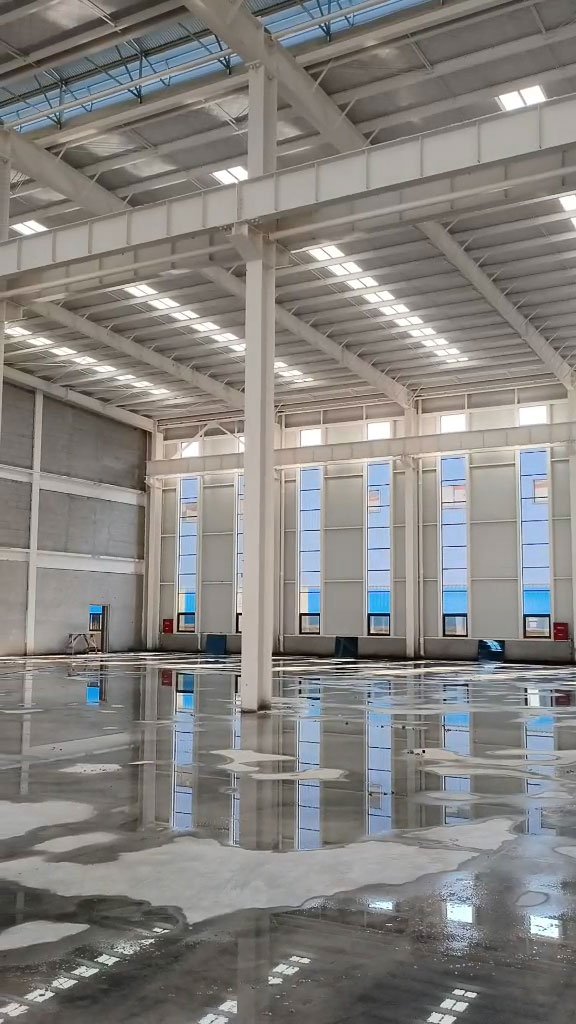
Professional FAQ: OEM prefabricated steel building Cooperation
1. What is the Minimum Order Quantity (MOQ) for OEM manufacturing? While we generally recommend a minimum of one 40HQ container (approx. 20-25 tons) to optimize your freight costs, we are flexible for initial prototype or pilot projects to establish trust.
2. How do you protect my proprietary structural drawings? We sign legally binding international NDAs. Our engineering network is closed-loop, meaning CAD/Tekla files cannot be exported by unauthorized personnel, and your designs are never used for other clients.
3. Can you manufacture to North American or European building codes? Yes. You provide the engineering design based on your local codes (AISC, Eurocode). We manufacture exactly to your drawings, utilizing certified welders (CWB/EN1090) and providing equivalent material testing certificates.
4. What is the standard lead time for a custom OEM project? Typically, production takes 30 to 45 days after the final approval of shop drawings and receipt of the deposit. Large-scale projects (1000+ tons) are delivered in staggered batches.
5. Can I use my own brand and logo on the packaging and manuals? Absolutely. That is the core of our Private Label service. All shipping marks, part stamps, and installation blueprints will feature your company’s branding.
6. Do you allow third-party quality inspections? We welcome them. We regularly work with SGS, Bureau Veritas (BV), and TÜV. Your inspectors are granted full access to our facility during production and container loading.
7. How do you handle design revisions during the engineering phase? We assign a dedicated English-speaking project manager and detailer to your account. We use collaborative software to track revisions, ensuring no outdated drawings reach the CNC machines.
8. What happens if a part is damaged during shipping or missing? Our container loading process is documented with photos and a strict barcode scanning system. In the rare event of an issue, we fast-track the replacement part and ship it via air freight at our expense (subject to contract terms).
9. Can you procure specific accessories like custom doors or insulated panels? Yes. We have a vetted supply chain for sandwich panels (PU/EPS/Rockwool), rolling shutter doors, skylights, and ventilators, allowing us to ship a complete, turnkey building kit under your brand.
10. What are your standard payment terms for OEM partners? Standard terms are a 30% T/T deposit to commence procurement and production, with the 70% balance paid after production is complete and you have reviewed the final inspection reports/photos, prior to container dispatch.
11. Do you offer remote engineering support during installation? Yes. While we do not send crews overseas for standard OEM orders, our engineers are available via video call to assist your local contractors with any complex assembly questions.
12. How do we start the OEM evaluation process? Simply send us a sample drawing (even redacted) of a past project. We will provide a comprehensive engineering review, a mock production schedule, and a transparent quotation to demonstrate our capabilities.
Step Up Your Supply Chain Today
Do not let manufacturing constraints limit your brand’s growth. Partnering with a genuine, certified OEM manufacturer allows you to bid on larger projects, increase your profit margins, and focus on what you do best: sales, engineering, and construction.
Contact our International OEM Department today to request:
A Confidential Drawing Review & Quotation (Within 24 Hours)
Our Complete Factory Audit Documentation (CE, ISO, SGS)
A Video Tour of Our Production Lines
Sample Quality Control & Mill Test Certificates
Secure your manufacturing future. Reach out to our team today to begin a highly profitable OEM partnership.