
Colombia Warehouse Building Solution
The Colombian industrial real estate market is undergoing a massive transformation. Right now, premium logistics vacancy rates in major hubs like Bogotá, Medellín, and Cali are hovering near historic lows—in some submarkets, dropping to just 1.1%. Driven by the surge in e-commerce, nearshoring trends along the Caribbean coast in Barranquilla and Cartagena, and expanding infrastructure, companies are scrambling for high-quality logistics space.
But if you have spent any time developing commercial real estate or managing industrial operations here in Colombia, you already know the harsh truth: building here is incredibly complex. Between navigating the rigorous NSR-10 seismic codes, battling torrential rainy seasons (La Niña) that wash out traditional job sites, and dealing with the logistical nightmare of transporting heavy materials through the Andes mountains, a standard construction approach often leads to crippling delays and budget overruns.
After a decade of managing and delivering industrial projects across the diverse topography of Colombia, the lesson is clear. Relying on traditional masonry, heavy concrete, and slow local fabrication is no longer viable for competitive businesses. To scale efficiently, you need a complete, end-to-end warehouse building solution.
In this guide, I will break down exactly how modern developers in Colombia are optimizing costs, ensuring seismic safety, and cutting delivery times by shifting to prefabricated structural steel systems.
Comprehensive Warehouse Project Design
Before a single shovel hits the dirt, the success or failure of your facility is determined in the engineering room. In Colombia, you cannot simply buy an off-the-shelf shed from overseas and expect it to pass local municipal inspections.
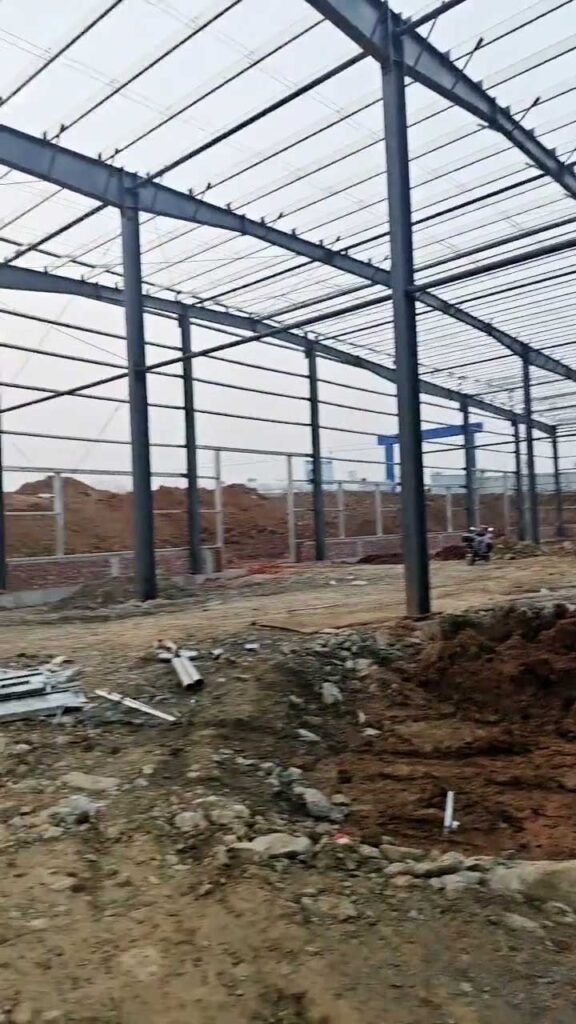
A professional Comprehensive Warehouse Project Design must rigorously adhere to the Norma Colombiana de Diseño y Construcción Sismo Resistente (NSR-10). Colombia sits on a highly active tectonic network, and the country is divided into distinct seismic hazard zones.
High Seismic Risk: Cities like Cali, Bucaramanga, and Pereira require aggressive structural ductility. The engineering must feature heavy-duty moment connections and specialized base plates to absorb ground acceleration without catastrophic failure.
Moderate Risk & Soft Soils: In the Sabana de Bogotá, while the seismic risk is classified as moderate, the soil is notoriously soft and compressible clay. A heavy traditional concrete building requires incredibly deep, expensive piling. A lightweight steel design drastically reduces the base shear and dead weight, allowing for much more economical civil foundation work.
Furthermore, the design must account for local operational logistics. Because land in industrial parks (Zonas Francas) is expensive, we focus on high-density space utilization. We engineer customized clear spans, optimize eave heights for high-bay racking systems, and integrate heavy loads for roof-mounted solar arrays or HVAC units directly into the initial 3D Tekla models.
End-to-End Warehouse Construction Solution
In traditional Colombian construction, general contractors often sub-contract every phase of the build to different local teams. You have one crew pouring the concrete, a local shop fabricating the steel roof trusses, and another team laying the brickwork. When the rainy season hits or local material shortages occur, the entire timeline collapses, and the finger-pointing begins.
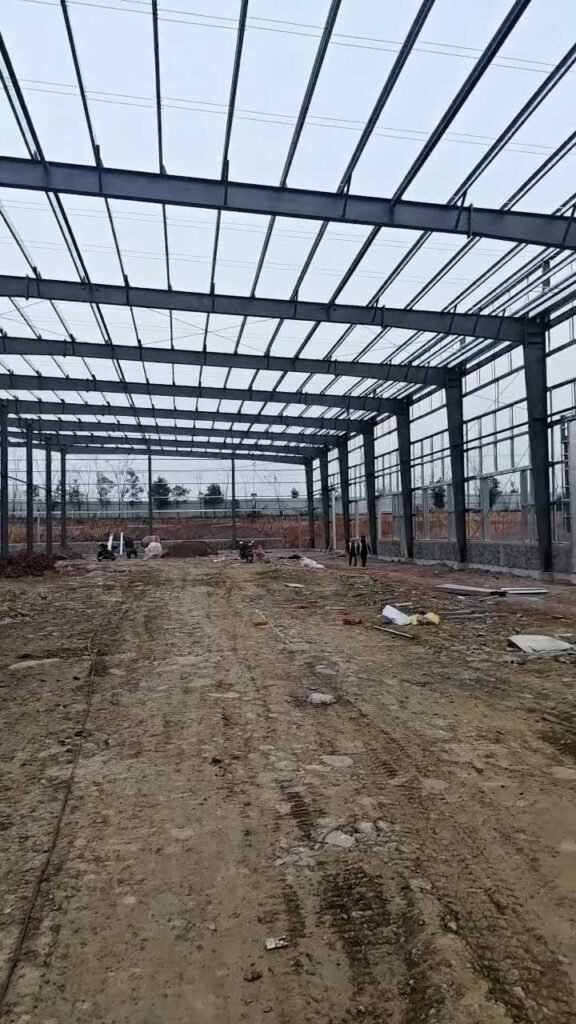
Opting for an integrated Warehouse Construction Solution eliminates this fragmented liability. By utilizing a turnkey pre-engineered model, the entire structural frame is manufactured in a highly controlled, automated factory environment while your local civil team prepares the site and pours the foundations.
This parallel processing is a game-changer for the Colombian climate. Heavy rains consistently halt wet-trade construction (concrete curing and masonry). However, a pre-engineered steel structure is entirely mechanically bolted. Once the shipping containers arrive at your site in Medellín or Yumbo, your erection crew simply uses cranes and impact wrenches to assemble the frame. There is zero on-site welding, and the structural skeleton can be erected safely and rapidly, regardless of the weather. Once the roof panels are on, your interior floor slabs and electrical fit-outs can proceed completely shielded from the elements.
Engineering a Resilient Steel Warehouse System
The physical demands placed on a building in Colombia vary drastically depending on your geographical location. A facility in the high altitudes of Tunja faces vastly different environmental stressors than a chemical storage plant in the port of Cartagena.
A high-performance Steel Warehouse System is engineered to adapt to these specific micro-climates:
Coastal Environments (Barranquilla, Cartagena, Buenaventura): The combination of high temperatures and aggressive saline humidity will rapidly corrode unprotected local steel. For coastal projects, we specify rigorous surface treatments. The raw steel undergoes automated shot-blasting (to an SSPC-SP10 finish) followed by heavy-duty zinc-rich epoxy primers and marine-grade polyurethane topcoats. In extreme cases, hot-dip galvanization is utilized to guarantee a multi-decade lifespan without constant maintenance.
Mountainous Wind Loads: In the Andean valleys, unpredictable wind tunnels can create massive uplift forces on broad roofs. Our engineering teams calculate the specific ASCE 7 and NSR-10 wind load parameters to dictate the exact spacing of the Z-purlins and the tensile strength of the structural fasteners, ensuring the building envelope remains secure during severe storms.
Unobstructed Operations: To maximize your forklift and AGV (Automated Guided Vehicle) efficiency, the system is designed using tapered, built-up H-beams. This allows us to achieve massive clear spans (often 40 to 60 meters wide) without a single interior support column, granting your operations manager ultimate freedom to configure the floor plan.
Cost Optimization with a Prefabricated Warehouse
For financial directors and operations managers, the most compelling argument for abandoning traditional construction is capital protection. The Colombian Peso (COP) experiences frequent volatility against the US Dollar. A construction project that takes 12 to 18 months to build locally leaves your budget highly exposed to material inflation and rising local labor costs.
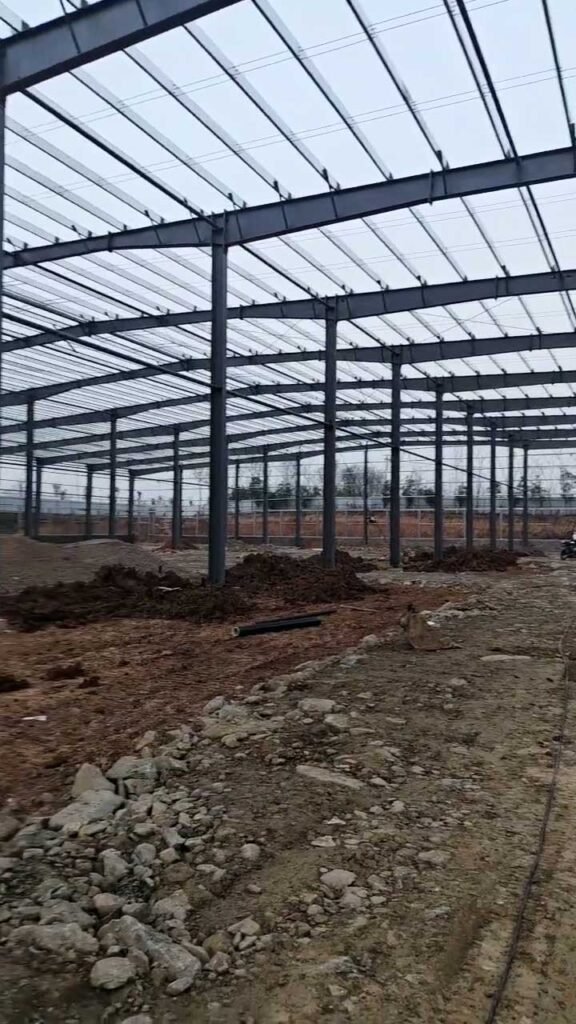
By importing a precision-engineered Prefabricated Warehouse, you lock in your primary structural material costs upfront. The factory produces exactly the amount of steel required, meaning you do not pay for the 10% to 15% material waste commonly seen on local job sites.
Furthermore, logistics are fully optimized. Transporting 12-meter steel beams up the winding La Línea pass from the Port of Buenaventura is logistically complex. We utilize advanced 3D container-loading software to pack the structural components into standard 40-foot High Cube containers. For massive roof rafters that exceed container limits, we engineer high-strength bolted splice joints. The rafters are shipped in sections and seamlessly bolted together on your site, bypassing the need for wildly expensive oversized flatbed transport.
Reality Check: Traditional Colombian Construction vs. Prefabricated Steel
| Project Metric | Traditional Concrete & Local Brickwork | Pre-Engineered Prefabricated Warehouse |
| NSR-10 Seismic Compliance | Rigid and heavy. Requires massive, expensive foundation footings and shear walls. | Highly Ductile. Lightweight steel flexes with seismic forces, reducing foundation costs. |
| Construction Timeline | 8 to 14 months. Highly vulnerable to rain delays and local labor strikes. | 3 to 5 months. Factory fabrication runs parallel to site prep. Rapid bolted assembly. |
| Interior Layout Flexibility | Poor. Requires frequent interior columns to support heavy concrete roof structures. | Excellent. Massive clear spans up to 60 meters without interior support columns. |
| Budget Predictability | High risk of cost overruns due to material inflation and extended labor hours. | Fixed Factory Price. Minimal on-site labor hours protect your baseline capital expenditure. |
| Future Expansion | Very difficult. Requires destructive demolition and messy site integration. | Modular & Scalable. End-walls can be unbolted to easily extend the building bay by bay. |
Scalable Industrial Storage Solution
An industrial facility should not be a static asset; it must be a dynamic tool that adapts to your business growth. As local supply chains mature and inventory demands fluctuate, your building must be ready to pivot.
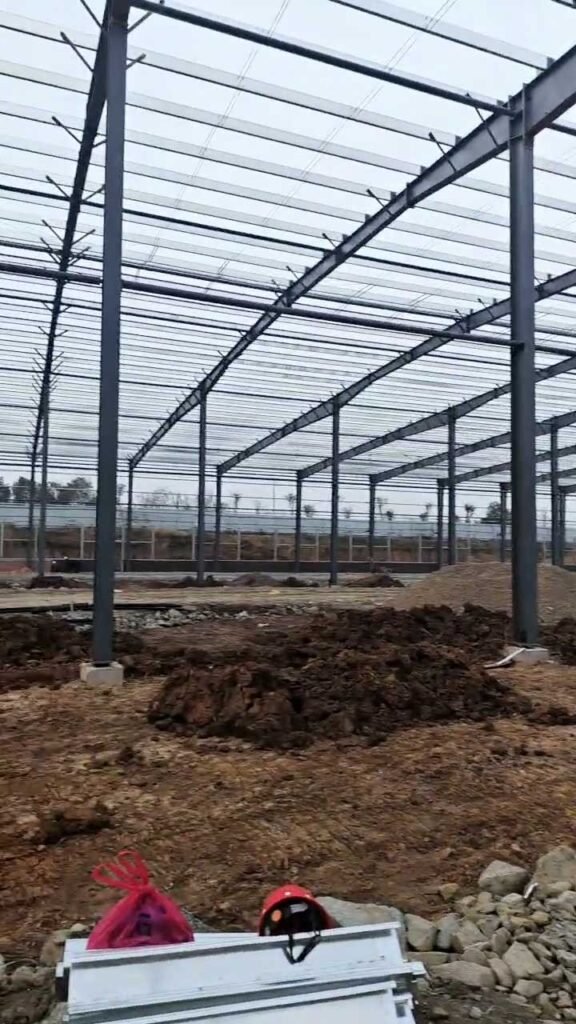
A smart Industrial Storage Solution builds scalability directly into the initial blueprints. If you anticipate doubling your throughput in the next five years, we design the structural end-walls as “expandable frames.” When it is time to grow, you do not need to tear down the building. You simply remove the cladding, bolt on the new structural bays, and extend the roofline without halting your day-to-day operations.
Additionally, we integrate advanced thermal envelopes. For operations dealing with pharmaceuticals, perishables, or precision manufacturing, keeping the Colombian heat out is paramount. We supply insulated metal sandwich panels (utilizing PIR, PUR, or EPS cores) that drastically reduce thermal transfer. This creates a highly stable internal environment, lowering your long-term energy bills and reducing the strain on heavy industrial HVAC equipment.
From integrating structural steel mezzanines for multi-level pick-and-pack stations to supporting 20-ton overhead bridge cranes for heavy manufacturing, the facility is designed around the exact operational demands of your business.
Secure Your Expansion in the Colombian Market
The window for securing prime industrial capabilities in Colombia is highly competitive. Relying on slow, outdated construction methods limits your speed to market and drains your operational capital before your doors even open.
By partnering with an experienced provider who understands the nuances of the NSR-10 code, the challenges of Andean logistics, and the necessity of rapid deployment, you eliminate the guesswork from your expansion plans. You receive a building that is engineered for safety, fabricated for precision, and designed purely for operational profitability.
Our structural engineering team is ready to review your plot dimensions, evaluate your local soil and wind conditions, and develop a customized architectural strategy that aligns with your financial targets.
Request a Warehouse Solution Proposal
Stop losing time and money to unpredictable local construction delays. Contact us today with your project location, intended use, and dimensional requirements. We will provide you with a comprehensive, fixed-cost proposal for a turnkey steel structure built to dominate the Colombian industrial sector.